While going through the changes that will take place to bus service on April 26th, I noticed that UTA is quietly adding bus stops to many of the fast buses that were started in August.
When these bus routes first started, I pointed out that the negligibly increase in speed would not make up for the loss of potential riders due to fewer bus stops. For example my wife works at 3500 East and Bengal Blvd just around the corner from Smith’s. The old 32 bus used to provide direct service from our home to her work. The few times I took her to work I noticed that there was passenger standing at every bus stop along Bengal Blvd to catch the 32. How many of these people still took the bus when faced with a much longer walk just so the bus could be a few minutes faster?
What it comes down to is that the market potential for the slightly faster service does not equal the market penetration of the additional stops. This brings into question how well the 3500 South BRT line will do considering it is replacing the 35, not supplementing it.
UTA is not the only one to fallen into this trap. Amtrak the company that never learns from its history keeps making this mistake. On the northeast corridor between Washington DC and New York it has tried a non-stop or one stop express train several times in order to save a few minutes between the two points. However, every time they try it the train is discontinued in about a year because the time savings (most recently 10 minutes) does not justify the loss of riders from making fewer stops.
Metro in Los Angeles made the same mistake with the Gold Light Rail line. It created an express service but once again the time savings was not enough to justify not stopping. The train loadings become very uneven and this express service quietly died in the latest changes at Metro.
So how does this compare to Europe and Japan who are building a bunch of high speed rail lines or New York City that offers express subway trains?
Do you really think that France and the rest of Europe plus Japan just decide to build a high speed line for the fun of it, or because it would be cool? When they decide on which lines to build a high speed line they look at rail routes that are at capacity already. For example the first TGV route in France was between Paris and Lyon. This route was running over capacity so something had to be done so they built a new rail route. In addition, the TGV did not replace the regular trains between Paris and Lyon, it supplemented them.
In New York the situation is the same. The express subway service supplements the existing local subways that are already at capacity.
So when should fewer stop service be implemented?
Only to supplement existing service when that service is at capacity or you create a line were the time savings will create new marketing dynamics.
Tuesday, April 15, 2008
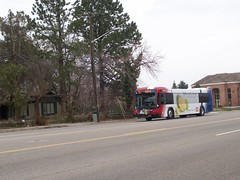


Monday, April 14, 2008
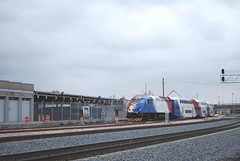
UTA TRAX Train
OK, despite the best efforts of our wonderful state legislators (yeah right) we will soon have several new light rail lines plus our commuter rail network running in the next 10 years. So what's next?
The 2015 network will gives us the basic framework of a good transportation system that will start making transit an alternative to the automobile for more of the population.
Today I will look at possible TRAX lines, in future entries I will go over possibilities for Streetcar and expanded bus service.
New TRAX lines and extensions:
-Davis/Weber County line
While FrontRunner provides high speed rail service through Davis County, the light rail line will provide trunk service having more stops and traveling through the heart of Davis county. While UTA has already talked about this route to Centerville, the route should continue to Farmington then via the US89 corridor to Weber State. From here it will make connections to the transit center.
Even though the route is close to FrontRunner, it will provide more frequent stations, and service markets that will not be served by Front Runner.
-Utah County Extension of the Draper Line.
This line should continue to be expanded until it reaches Provo. Yes, FrontRunner will be providing this service starting in a few years, but once again it is a higher speed, fewer stop service. Plus the TRAX line using the former Union Pacific pre-merger line will service the heart of several Utah County cities.
-The Interstate 215 line
This line will be the most expensive line built as it will require sections either being elevated or tunneled which runs substantially more than surface routes.
Like the name says it will generally follow Interstate 215. The route would connect with the University line at Wasatch and South Campus and could provide service both the Medical Center and Downtown then operate via Wasatch, Foothill, I-215, 4500 South, 2700 South, 2100 South Expressway, and Bangerter Highway connecting up with Airport TRAX to service the Airport.
There is several alternatives to routing this line but there is several things this route would do:
-Connect most of the TRAX lines together
-Provide more convenient east-west travel along the south side of the valley
-Provide service to the eastside of the valley.
-Create new marketing dynamics
FrontRunner and TRAX will provide the trunk routes of the transit system. This network will increase ridership and bring in new revenue.
Next time I will go over the next category of the system which will be the streetcars.

The 2015 network will gives us the basic framework of a good transportation system that will start making transit an alternative to the automobile for more of the population.
Today I will look at possible TRAX lines, in future entries I will go over possibilities for Streetcar and expanded bus service.
New TRAX lines and extensions:
-Davis/Weber County line
While FrontRunner provides high speed rail service through Davis County, the light rail line will provide trunk service having more stops and traveling through the heart of Davis county. While UTA has already talked about this route to Centerville, the route should continue to Farmington then via the US89 corridor to Weber State. From here it will make connections to the transit center.
Even though the route is close to FrontRunner, it will provide more frequent stations, and service markets that will not be served by Front Runner.
-Utah County Extension of the Draper Line.
This line should continue to be expanded until it reaches Provo. Yes, FrontRunner will be providing this service starting in a few years, but once again it is a higher speed, fewer stop service. Plus the TRAX line using the former Union Pacific pre-merger line will service the heart of several Utah County cities.
-The Interstate 215 line
This line will be the most expensive line built as it will require sections either being elevated or tunneled which runs substantially more than surface routes.
Like the name says it will generally follow Interstate 215. The route would connect with the University line at Wasatch and South Campus and could provide service both the Medical Center and Downtown then operate via Wasatch, Foothill, I-215, 4500 South, 2700 South, 2100 South Expressway, and Bangerter Highway connecting up with Airport TRAX to service the Airport.
There is several alternatives to routing this line but there is several things this route would do:
-Connect most of the TRAX lines together
-Provide more convenient east-west travel along the south side of the valley
-Provide service to the eastside of the valley.
-Create new marketing dynamics
FrontRunner and TRAX will provide the trunk routes of the transit system. This network will increase ridership and bring in new revenue.
Next time I will go over the next category of the system which will be the streetcars.
Sunday, April 13, 2008
UTA to have hosts at FrontRunner stations
Article from today's Deseret News:
Hosts to assist riders of FrontRunner
This is a good idea for UTA to provide hosts at the stations when FrontRunner starts. Many people get confused the first time they ride and since there will be so many first time riders on the system it is important to have people there to help.
In addition no matter how well you test the ticket machines and prepare for opening they, it seem that the weirdest bugs will show up as the machines start having their first heavy use.
Hosts to assist riders of FrontRunner
This is a good idea for UTA to provide hosts at the stations when FrontRunner starts. Many people get confused the first time they ride and since there will be so many first time riders on the system it is important to have people there to help.
In addition no matter how well you test the ticket machines and prepare for opening they, it seem that the weirdest bugs will show up as the machines start having their first heavy use.
Saturday, April 12, 2008
Why turning UTA over to UDOT is a bad idea.
Some in the Bus Riders Union (clearly from their rhetoric they are not a transit riders union), apparently think that turning control of the UTA over to UDOT would be the greatest thing since sliced cheese. So would the state running UTA be such a good thing?
First of all lets remember that almost all state dept. of transportation units started off as department of highways but had their name changed to show that they are more than highways. However most DOT's are still dominated by highway hard liners who have no love of transit of any kind.
Not only would the Utah State Highway Department be running UTA under the Bus Riders Union dream, but that would mean our state legislature would have more control over the funds. Lets remember that our state legislature has clearly shown they are very anti-transit and would love nothing more than to transfer those funds to highway projects.
In essence you would have someone from Bluff, Utah deciding how transit funds would be spent in Salt Lake City. How were do you think the guy from Bluff would want money spent, on some bus line in Salt Lake City that only the 'transit dependent' ride or on a highway project near Bluff that would help him or her get reelected?
Now lets take a look at some of the few examples of were a state controls transit funding and operations.
First of all, lets take a look at New Jersey. While New Jersey has an extensive bus and rail network things are all not well in the state. The head of New Jersey transit is the person who is politically connected not the best person for the job. This creates a situation were some projects are develop in such a way that is best for those who are politically connected than the actual people using the service.
Now I know that our friends at the bus riders union hate John Inglish, but what can of person do you think our state legislature would put into the job? Do you really think it would be the best person for the job or will it be some politically connected hack who could care less about the riders?
Another state that runs the transit systems is Maryland who provides transit service in Baltimore. Bus service in Baltimore is poor and it is hard to move about the area. A couple of years ago I was attending a conference in Baltimore and found it nearly impossible to find a motel that I could stay in that would have transit service to downtown.
In addition the transit agencies funding is at the mercy of state government who cut transit funding for a period of years but increased highway spending. This led to less transit service for the 'transit dependent' because of things being controlled by politics. This past session the Maryland legislature passed a fare box recovery requirement for transit in the state. This is one of the those feel good bills that sounds great to create more responsible spending but has unintended consequences.
To put it into perspective lets say that UTA is giving over to UDOT and this same bill passes our legislature and is signed by the governor. What would happen to transit service? Well guess what, TRAX and Frontrunner would still be around because they would meet the fare box recovery target but 99% of ALL bus service would be gone, history, dead. As pointed out, the bus system does not do well when it comes to fare box recovery especially compared to rail. The bus riders union would have been directly responsible for death of most transit service to the 'transit dependent' due to unintended consequences.
Turning UTA over will not give more bus service to the 'transit dependent'. What it will do is make UTA funding political and at the whims of a hostile state legislature who rather see roads funded that buses to the 'transit dependent'.
IF the bus riders union truly cares about the so called 'transit dependent', maybe they should start fighting against some of are auto centric development policies, decisions and subsidies that create a situation that people are forced into housing that is not convenient to transit due to lack of good choices.
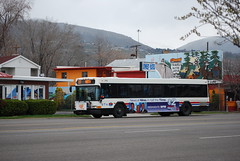
First of all lets remember that almost all state dept. of transportation units started off as department of highways but had their name changed to show that they are more than highways. However most DOT's are still dominated by highway hard liners who have no love of transit of any kind.
Not only would the Utah State Highway Department be running UTA under the Bus Riders Union dream, but that would mean our state legislature would have more control over the funds. Lets remember that our state legislature has clearly shown they are very anti-transit and would love nothing more than to transfer those funds to highway projects.
In essence you would have someone from Bluff, Utah deciding how transit funds would be spent in Salt Lake City. How were do you think the guy from Bluff would want money spent, on some bus line in Salt Lake City that only the 'transit dependent' ride or on a highway project near Bluff that would help him or her get reelected?
Now lets take a look at some of the few examples of were a state controls transit funding and operations.
First of all, lets take a look at New Jersey. While New Jersey has an extensive bus and rail network things are all not well in the state. The head of New Jersey transit is the person who is politically connected not the best person for the job. This creates a situation were some projects are develop in such a way that is best for those who are politically connected than the actual people using the service.
Now I know that our friends at the bus riders union hate John Inglish, but what can of person do you think our state legislature would put into the job? Do you really think it would be the best person for the job or will it be some politically connected hack who could care less about the riders?
Another state that runs the transit systems is Maryland who provides transit service in Baltimore. Bus service in Baltimore is poor and it is hard to move about the area. A couple of years ago I was attending a conference in Baltimore and found it nearly impossible to find a motel that I could stay in that would have transit service to downtown.
In addition the transit agencies funding is at the mercy of state government who cut transit funding for a period of years but increased highway spending. This led to less transit service for the 'transit dependent' because of things being controlled by politics. This past session the Maryland legislature passed a fare box recovery requirement for transit in the state. This is one of the those feel good bills that sounds great to create more responsible spending but has unintended consequences.
To put it into perspective lets say that UTA is giving over to UDOT and this same bill passes our legislature and is signed by the governor. What would happen to transit service? Well guess what, TRAX and Frontrunner would still be around because they would meet the fare box recovery target but 99% of ALL bus service would be gone, history, dead. As pointed out, the bus system does not do well when it comes to fare box recovery especially compared to rail. The bus riders union would have been directly responsible for death of most transit service to the 'transit dependent' due to unintended consequences.
Turning UTA over will not give more bus service to the 'transit dependent'. What it will do is make UTA funding political and at the whims of a hostile state legislature who rather see roads funded that buses to the 'transit dependent'.
IF the bus riders union truly cares about the so called 'transit dependent', maybe they should start fighting against some of are auto centric development policies, decisions and subsidies that create a situation that people are forced into housing that is not convenient to transit due to lack of good choices.
Thursday, April 10, 2008
UTA FrontRunner Train Testing in Salt Lake City
Here is another shot of a Front Runner test train leaving the Intermodal Depot and heading back toward Ogden.

Wednesday, April 09, 2008
UTA Front Runner Train testing near downtown.
On Monday my brand new Nikon D60 camera arrived by way of the big brown truck (and that is a story in itself), so today I decided to go out and get some pictures with it.
Here is the first picture taken with the new camera (except for a couple of practice ones). One of the new Front Runner trains is coming around the bend just north of 200 South as it approaches the intermodal depot.
I was lucky to capture a couple of the test trains today, not knowing when they would show up.
The rail cars are built by Bombardier and are currently being used in Seattle, the San Francisco bay area, Toronto, Vancouver BC, Los Angeles, and Miami. Some of the original ideas for the cars were first brought forth by two of my mentors so seeing here in operation is very special.
I have ridden the cars in Los Angeles and Miami and can tell you the ride is very comfortable even in Miami that uses a very utilitarian interior. I cannot wait for the opportunity to ride these on a semi-regular basis between Salt Lake City and Ogden.
While I didn't get any pictures today, it looks like they are finishing the final touches of the TRAX extension work.
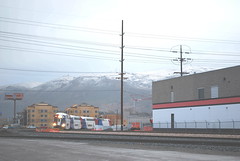
Here is the first picture taken with the new camera (except for a couple of practice ones). One of the new Front Runner trains is coming around the bend just north of 200 South as it approaches the intermodal depot.
I was lucky to capture a couple of the test trains today, not knowing when they would show up.
The rail cars are built by Bombardier and are currently being used in Seattle, the San Francisco bay area, Toronto, Vancouver BC, Los Angeles, and Miami. Some of the original ideas for the cars were first brought forth by two of my mentors so seeing here in operation is very special.
I have ridden the cars in Los Angeles and Miami and can tell you the ride is very comfortable even in Miami that uses a very utilitarian interior. I cannot wait for the opportunity to ride these on a semi-regular basis between Salt Lake City and Ogden.
While I didn't get any pictures today, it looks like they are finishing the final touches of the TRAX extension work.
Tuesday, April 08, 2008
Cache Valley Transit Celebrates 16 Years...
Cache transit system marks 16 years
The Cache Valley Transit System is celebrating 16 years of service, and provides good service throughout the Cache Valley. My wife's niece who is currently going to USU has made extensive use of the transit system despite being raised by a mother who thought transit was beneath her.
A couple of points about what is mentioned in the article.
First of all it talks about a connection to the UTA. With all the traffic currently traveling along US Highways 89/91, providing a connecting bus service over to Logan is becoming more critical every day. That connection will come even more critical once FrontRunner is extended all the way to Brigham City providing that area better transit service than it every has.
The article also mentions how the trolleys were eliminated. However, like most articles it doesn't go into the deeper problems that caused the original streetcars lines to be eliminated which included:
-Streetcar systems were highly taxed and those taxes subsidized roads while buses did not face these taxes.
-Planning policies that focused on auto centric developments
-Policies that said streets would not get funding for improvements if they had streetcars using them
-FDR loosing the mortgage requirements which basically subsidized suburban development and discouraged non suburban style development.
Congrats to Cache Valley on 16 years. The system does face some challenges but good transit service is needed in the area and becoming more important every day.

The Cache Valley Transit System is celebrating 16 years of service, and provides good service throughout the Cache Valley. My wife's niece who is currently going to USU has made extensive use of the transit system despite being raised by a mother who thought transit was beneath her.
A couple of points about what is mentioned in the article.
First of all it talks about a connection to the UTA. With all the traffic currently traveling along US Highways 89/91, providing a connecting bus service over to Logan is becoming more critical every day. That connection will come even more critical once FrontRunner is extended all the way to Brigham City providing that area better transit service than it every has.
The article also mentions how the trolleys were eliminated. However, like most articles it doesn't go into the deeper problems that caused the original streetcars lines to be eliminated which included:
-Streetcar systems were highly taxed and those taxes subsidized roads while buses did not face these taxes.
-Planning policies that focused on auto centric developments
-Policies that said streets would not get funding for improvements if they had streetcars using them
-FDR loosing the mortgage requirements which basically subsidized suburban development and discouraged non suburban style development.
Congrats to Cache Valley on 16 years. The system does face some challenges but good transit service is needed in the area and becoming more important every day.
Monday, April 07, 2008
Another Pedestriam Safety Video
Another of the video series on Pedestrian Safety including stories from Philadelphia.
One of the pieces is on Columbus, Ohio were children are bussed a single block due to the roads being so dangerous.
One of the pieces is on Columbus, Ohio were children are bussed a single block due to the roads being so dangerous.
Friday, April 04, 2008
Becker Supports Streetcar
Here is an article from yesterday's Salt Lake Tribune about Salt Lake Mayor Ralph Becker throwing his support to get the Sugarhouse streetcar project moving faster.
There is an interesting comment from the owner of the SugeHouse BBQ. He worries about loosing parking because he is currently illegally using some one else's property to allow his diners to park. In this case it happens to be UTA former Union Pacific former Rio Grande railroad property. Now can you imagine the screaming that would go on if UTA passengers were using someone else's property to park N' ride. Seems to be a little of a double standard there. At least the owner supports the line.
There has been plenty of comments left by the peanut gallery including one that calls himself "modern transport" who calls for going back to 1950's transportation policies.
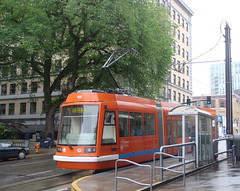
There is an interesting comment from the owner of the SugeHouse BBQ. He worries about loosing parking because he is currently illegally using some one else's property to allow his diners to park. In this case it happens to be UTA former Union Pacific former Rio Grande railroad property. Now can you imagine the screaming that would go on if UTA passengers were using someone else's property to park N' ride. Seems to be a little of a double standard there. At least the owner supports the line.
There has been plenty of comments left by the peanut gallery including one that calls himself "modern transport" who calls for going back to 1950's transportation policies.
Wednesday, April 02, 2008
A Prespective of Montreal...
Ryan Sharp over at Transit Miami recently visited Montreal and has some great comments about the city.
Urban Spotlight: Montreal
Urban Spotlight: Montreal
Skywalk in the news again...
The infamous skywalk for the City Creek project is once again making news. Apparently there is a couple of the city council members who are questioning why it is needed and the developer is doing what developers do best and saying "if you don't allow us to build it the entire project will be jeopardized".
We know were this leads. Just like when Smith's threatened to close the store in Sugarhouse if they couldn't build it the way they wanted to Smith's would close it. Well guess what, the city caved in and Smith's built a typical auto centric grocery store in a walkable neighborhood. Now people walking to the store risk their lives trying to get into it without being hit by a car.
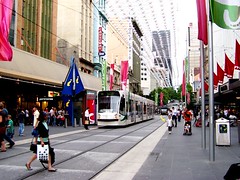
Now lets take a look at Melbourne, Australia. Downtown street, shopping on both sides, tram running down the street, pedestrians all around and no skywalks. So I guess shopping centers can be successful without skywalks.
Will the powers that be pay attention?
We know were this leads. Just like when Smith's threatened to close the store in Sugarhouse if they couldn't build it the way they wanted to Smith's would close it. Well guess what, the city caved in and Smith's built a typical auto centric grocery store in a walkable neighborhood. Now people walking to the store risk their lives trying to get into it without being hit by a car.
Now lets take a look at Melbourne, Australia. Downtown street, shopping on both sides, tram running down the street, pedestrians all around and no skywalks. So I guess shopping centers can be successful without skywalks.
Will the powers that be pay attention?
Monday, March 31, 2008
TRAX welcomed in West Jordan
West Jordan eager for TRAX
What a comparison between the NIMBY minority in Draper who is trying take TRAX away from the best route possible because they feel they are too go for it and the attitude in West Jordan.
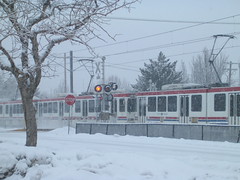
Construction will soon start on the line out to Daybreak which will pass right through the heart of West Jordan.
A big project that West Jordan has been working on is the redevelopment of the shopping center at 7800 South and Redwood Road. The first place I lived in Salt Lake City was at the Southwillow Apts at 7000 South and even back in 1997 the shopping center at 7800 South was dying.
TRAX could give this center new life and if West Jordan allows it to develop properly could be one of the premier Transit Oriented Projects in the area. West Jordan will need to do some taming of the Redwood Superspeedway in the section of it is to become a pedestrian friendly area, but it area does have lots of opportunities.
West Jordan could even do something really special and focus on locally owned retailers for the center and show that a center can focus and market toward local retailers and make a success out of it. However, that wold take not only strong leadership on the side of the city, it would also take a management team of the complex who can make it happen.
It is going to be an interesting 10 years in the Salt Lake Valley...
What a comparison between the NIMBY minority in Draper who is trying take TRAX away from the best route possible because they feel they are too go for it and the attitude in West Jordan.
Construction will soon start on the line out to Daybreak which will pass right through the heart of West Jordan.
A big project that West Jordan has been working on is the redevelopment of the shopping center at 7800 South and Redwood Road. The first place I lived in Salt Lake City was at the Southwillow Apts at 7000 South and even back in 1997 the shopping center at 7800 South was dying.
TRAX could give this center new life and if West Jordan allows it to develop properly could be one of the premier Transit Oriented Projects in the area. West Jordan will need to do some taming of the Redwood Superspeedway in the section of it is to become a pedestrian friendly area, but it area does have lots of opportunities.
West Jordan could even do something really special and focus on locally owned retailers for the center and show that a center can focus and market toward local retailers and make a success out of it. However, that wold take not only strong leadership on the side of the city, it would also take a management team of the complex who can make it happen.
It is going to be an interesting 10 years in the Salt Lake Valley...
Friday, March 28, 2008
Articles on 5600 West and the Transit Riders Union
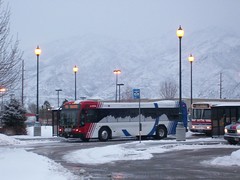
Utah Transit Authority 2007 Gillig Advantage BRT used in Ski Bus service
Originally uploaded by jmdspk
Bus rapid transit now being projected for 5600 West
I already made my opinion of the 5600 Corridor know so I will not repeat but if you did not read it previously here is a link to the entry:
5600 Corridor
The Transit Riders Union and Jobs for Justice continue their misguided quest.
Bus Riders Protest UTA
Of course they still cannot get the facts into their heads:
1. The Voters support TRAX
2. The Riders Support TRAX
3. TRAX cost less per passenger than bus
4. Construction funds are not coming out of operating funds
Thursday, March 27, 2008
More Articles...
Wow, I think we have seen more articles this week than in the last six months. Just points to lots happening in the area which is a good thing. By the way the picture show I took yesterday when I had a couple of hours downtown. I was lucky enough to get my first picture of a Front Runner train testing. Haven't had much luck in getting photographs of them yet.
FrontRunner will roll on April 26
Utah Transit Authority's FrontRunner to open next month
The Fine Print: Transportation fee increases again
UTA Says It Remains Committed to Bus Service
Some may want to respond to this article since Packard is already spewing his nonsense on it.
UTA seeks input on proposed TRAX line
Tammi Diaz from the Transit Riders Union has already responded to this one with more of the Transit Riders Union misinformation.
UTA pitches bus-TRAX combo
So far this looks pretty good.
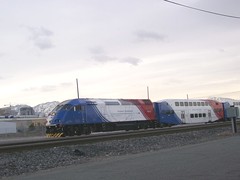
FrontRunner will roll on April 26
Utah Transit Authority's FrontRunner to open next month
The Fine Print: Transportation fee increases again
UTA Says It Remains Committed to Bus Service
Some may want to respond to this article since Packard is already spewing his nonsense on it.
UTA seeks input on proposed TRAX line
Tammi Diaz from the Transit Riders Union has already responded to this one with more of the Transit Riders Union misinformation.
UTA pitches bus-TRAX combo
So far this looks pretty good.
Wednesday, March 26, 2008
Lots of Transit Related Articles Today...
Here are the articles of the day:
New look for lot at University of Utah
Open house to discuss airport TRAX line
Train is out in front: Test runs preparing UTA's FrontRunner for commuters
UTA incorporating smart-tech for fares
The Fine Print: Transportation fee increases again
Woman killed while crossing street
Davis residents to pay transit tax
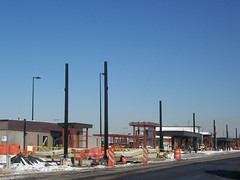
New look for lot at University of Utah
Open house to discuss airport TRAX line
Train is out in front: Test runs preparing UTA's FrontRunner for commuters
UTA incorporating smart-tech for fares
The Fine Print: Transportation fee increases again
Woman killed while crossing street
Davis residents to pay transit tax
Tuesday, March 25, 2008
Transit Related Articles
Utah Transit Authority to release draft environmental study for light-rail extension
North Carolina's CATS posts passenger-count record in February
Interesting article from Charlotte showing how ridership has skyrocketed after their light rail line opened. Having lived in Charlotte for two years I can tell you that their bus system was next to useless (anyone who says UTA is bad should have been forced to ride CATS when I lived there).
Thank you to the Transit Sleuth out of Portland for referring the article above.
Sketch aims to encourage UTA probe
Then there is the Bus Riders Union and its allies. I guess when the facts are not backing you up, you do a dog and pony show in order to get heard even if you are wrong. Don't get me wrong, UTA is far from perfect, however these people don't want good transit service they want pathetic transit service.
Maybe its time to start figuring out where the funding is coming to these people. After all, when the Bus Riders Unions financial statements became well known they started loosing respect. Of course the Bus Riders Union here in Salt Lake has little respect but sometimes even a small group despite they don't represent the majority can do long term harm.
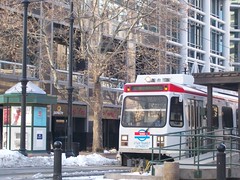
North Carolina's CATS posts passenger-count record in February
Interesting article from Charlotte showing how ridership has skyrocketed after their light rail line opened. Having lived in Charlotte for two years I can tell you that their bus system was next to useless (anyone who says UTA is bad should have been forced to ride CATS when I lived there).
Thank you to the Transit Sleuth out of Portland for referring the article above.
Sketch aims to encourage UTA probe
Then there is the Bus Riders Union and its allies. I guess when the facts are not backing you up, you do a dog and pony show in order to get heard even if you are wrong. Don't get me wrong, UTA is far from perfect, however these people don't want good transit service they want pathetic transit service.
Maybe its time to start figuring out where the funding is coming to these people. After all, when the Bus Riders Unions financial statements became well known they started loosing respect. Of course the Bus Riders Union here in Salt Lake has little respect but sometimes even a small group despite they don't represent the majority can do long term harm.
Monday, March 24, 2008
State Street in Utah County to be Expanded
State Street in Utah County in line for face-lift
Through part of Orem State Street is already 3 lanes in each direction and now UDOT is looking to expanded it to 3 lanes all the way to Pleasant Grove.
While drivers will be happy about the expansion, once again pedestrians will once again the planners will not even take pedestrians into account when expanding the road.
Anyone who has road the 850 State Street bus and then tried to cross the 7 lane wide State Street knows that you are taking your life into your hands when making the attempt. There is no pedestrian escape zones along the median so you must cross the entire 7 lanes in one traffic light circuit. Could that be one of the reason's why you see so few pedestrians on this road?
These seven lane semi super speedways are nothing but barriers dividing the two sides of the street. I am not saying don't build the road, but UDOT needs to do a better job of making these streets less of a barrier and more pedestrian friendly.

Through part of Orem State Street is already 3 lanes in each direction and now UDOT is looking to expanded it to 3 lanes all the way to Pleasant Grove.
While drivers will be happy about the expansion, once again pedestrians will once again the planners will not even take pedestrians into account when expanding the road.
Anyone who has road the 850 State Street bus and then tried to cross the 7 lane wide State Street knows that you are taking your life into your hands when making the attempt. There is no pedestrian escape zones along the median so you must cross the entire 7 lanes in one traffic light circuit. Could that be one of the reason's why you see so few pedestrians on this road?
These seven lane semi super speedways are nothing but barriers dividing the two sides of the street. I am not saying don't build the road, but UDOT needs to do a better job of making these streets less of a barrier and more pedestrian friendly.
Saturday, March 22, 2008
Thursday, March 20, 2008
Video Series on Pedestrian Safety
This is one of a series of videos on Pedestrian Safety. This one deals with an program being done down in Orlando, Florida plus what is being done in a few other cities. There is a section about Greenville, South Carolina which mentions putting sidewalks into areas that don't have them especially around schools (listen up Holladay). It is long at 28-minutes but does provide some ideas that could be implemented here in the Salt Lake region or lessons we should learn. I will post more of this series in the future.
Wednesday, March 19, 2008
Tuesday, March 18, 2008
The F94
In their first posting in months, the planner from the UTA is claiming success for UTA's F94 flex route service. While I agree that the route is providing a service that UTA was willing to abandon, I think success should be measured in different terms that the UTA does.
However, let’s look at the F94 as we have before and see what can be done to make it even more successful. First of all there are a couple of things that is really holding the F94 from being a true success:
First of all, the route only provides every 80 minute service. This makes the service useless for a majority of transit riders thus greatly decreasing how much potential the service has. Second, the route only deviates ¾ of a mile from the route of the old 94 route which makes it too inflexible to truly be called a flex route.
Now take a look at Denver’s Call N Ride system and see how it works. Basically you have cutaway vans based out of a light rail or bus transit station and service is provided a minimum of every 30-minutes (and in my experience the service is much more frequent than every 30-minutes). Call N Ride provides transit service to entire areas providing much better and more convenient service than regular route service could in those places while still providing good connections to the regular route service.
Now let’s take a look at route 525, the former 25 that provides service from TRAX to the Sandy Industrial area and along Monroe. This route would be a perfect route to turn into a Call N Ride route. If people need to be picked up they just give a call or they pick the cutaway van up at the TRAX station. While the Historic Sandy TRAX station may be a little more convenient for this service, traffic along 90th South is just going to get worse so it does make sense to use the Midvale Center TRAX station. The neighborhood will get better bus service with vehicles that make more sense for the area.
Another area were Call N Ride service will make since is along the Daybreak TRAX line. Service could be provided too many areas that currently and will continue to have non-existent bus service. There is areas such as South Jordan and Herriman that regular route service does not work but Call N Ride would make sense.
A side benefit of this type of service is that it can also reduce trips by Paratransit since some Paratransit riders could use regular route service but cannot get to the transit station; this allows them to use the regular route service and still use the mobile van. Considering the financial black hole that even advocates for the physically challenge know Paratransit service to be, reducing any need for Paratransit service makes more service available to all.
The F94 is a start, but to be truly useful transit service it still has a way to go.
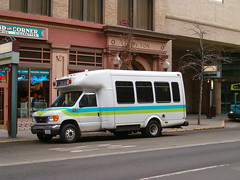
However, let’s look at the F94 as we have before and see what can be done to make it even more successful. First of all there are a couple of things that is really holding the F94 from being a true success:
First of all, the route only provides every 80 minute service. This makes the service useless for a majority of transit riders thus greatly decreasing how much potential the service has. Second, the route only deviates ¾ of a mile from the route of the old 94 route which makes it too inflexible to truly be called a flex route.
Now take a look at Denver’s Call N Ride system and see how it works. Basically you have cutaway vans based out of a light rail or bus transit station and service is provided a minimum of every 30-minutes (and in my experience the service is much more frequent than every 30-minutes). Call N Ride provides transit service to entire areas providing much better and more convenient service than regular route service could in those places while still providing good connections to the regular route service.
Now let’s take a look at route 525, the former 25 that provides service from TRAX to the Sandy Industrial area and along Monroe. This route would be a perfect route to turn into a Call N Ride route. If people need to be picked up they just give a call or they pick the cutaway van up at the TRAX station. While the Historic Sandy TRAX station may be a little more convenient for this service, traffic along 90th South is just going to get worse so it does make sense to use the Midvale Center TRAX station. The neighborhood will get better bus service with vehicles that make more sense for the area.
Another area were Call N Ride service will make since is along the Daybreak TRAX line. Service could be provided too many areas that currently and will continue to have non-existent bus service. There is areas such as South Jordan and Herriman that regular route service does not work but Call N Ride would make sense.
A side benefit of this type of service is that it can also reduce trips by Paratransit since some Paratransit riders could use regular route service but cannot get to the transit station; this allows them to use the regular route service and still use the mobile van. Considering the financial black hole that even advocates for the physically challenge know Paratransit service to be, reducing any need for Paratransit service makes more service available to all.
The F94 is a start, but to be truly useful transit service it still has a way to go.
Monday, March 17, 2008
5600 West Corridor
Developers discovering late-blooming 5600 West area
Here is an article from today's Salt Lake Tribune about development of 5600 West. Having worked at 2100 South and 5600 West from 1998 to 2000, I can attest to the changes that have taken place along the 5600 West Corridor.
However, part of the article details UTA's plans for the corridor and once again they just do not make sense.
First they propose putting in a BRT line. Next they plan to convert the line to full Light Rail configuration within the next 25 years.
This is a case of over engineering a solution to the problem. First of all there isn't even any transit service in this corridor except for a couple of "fast buses" during the peak hours and the 47 connection between 4700 South and 4100 South.
Considering the questionable success of current BRT projects, a much better solution would be to just implement a regular bus route for now from the airport to connect up with South Jordan TRAX line once it opens. This would service a larger market than a BRT line in the corridor.
Then instead of upgrading the BRT route to a full light rail service which would be overkill in the corridor, go back to the original plan and implement a streetcar or a semi-rapid streetcar.
The line could start at Daybreak on the TRAX line, travel with the South Jordan TRAX line where it would connect up with the former Rio Grande/ Union Pacific branch line to Magna. It could travel next to the branch line all the way to 5600 West when it would enter 5600 West travel through the airport Industrial park then hook up with the Airport TRAX line to the airport terminal.
This would allow a relatively fast trip connecting two important TRAX lines. In addition it would cost less to build than a full blown TRAX line which is not needed in this corridor.
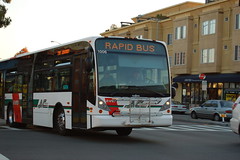
Here is an article from today's Salt Lake Tribune about development of 5600 West. Having worked at 2100 South and 5600 West from 1998 to 2000, I can attest to the changes that have taken place along the 5600 West Corridor.
However, part of the article details UTA's plans for the corridor and once again they just do not make sense.
First they propose putting in a BRT line. Next they plan to convert the line to full Light Rail configuration within the next 25 years.
This is a case of over engineering a solution to the problem. First of all there isn't even any transit service in this corridor except for a couple of "fast buses" during the peak hours and the 47 connection between 4700 South and 4100 South.
Considering the questionable success of current BRT projects, a much better solution would be to just implement a regular bus route for now from the airport to connect up with South Jordan TRAX line once it opens. This would service a larger market than a BRT line in the corridor.
Then instead of upgrading the BRT route to a full light rail service which would be overkill in the corridor, go back to the original plan and implement a streetcar or a semi-rapid streetcar.
The line could start at Daybreak on the TRAX line, travel with the South Jordan TRAX line where it would connect up with the former Rio Grande/ Union Pacific branch line to Magna. It could travel next to the branch line all the way to 5600 West when it would enter 5600 West travel through the airport Industrial park then hook up with the Airport TRAX line to the airport terminal.
This would allow a relatively fast trip connecting two important TRAX lines. In addition it would cost less to build than a full blown TRAX line which is not needed in this corridor.
Friday, March 14, 2008
FrontRunner Locomotives Meet New EPA Guidelines
EPA targets trains, marine engines with new diesel emissions rule
Article about new emissions requirements. The article mentions that the engines themselves are built overseas but does not mention the overall locomotive is assembled in Boise.

Article about new emissions requirements. The article mentions that the engines themselves are built overseas but does not mention the overall locomotive is assembled in Boise.
Thursday, March 13, 2008
Wednesday, March 12, 2008
Transit Riders Union Letter to the Editor Posting
A letter to the editor to the Salt Lake Tribune has been posted to the blog of the transit riders union which clearly shows that they are willing to use anything to advance their political agenda. After reading the letter, I decided to respond…
Your proposal sucks. I do not approve of this
proposal. One of the U. of U. professors pulled a
whine and cheese act and UTA immediately jumped up to
accommodate her.
OK, first of all, if I was reading this response it would go in file 13 ASAP. Talk about an unprofessional response. No one will listen when you spew like this except for the few people who have the same political agenda as you.
UTA did not have a public meeting on this proposal.
UTA did not notify the public when UTA added the 7:09
p.m. 223 bus to the outbound schedule.
UTA would not return "nightride" to the southeast
section of Sugarhouse UTA took away. So, why should
the 100 (plus) of us who used the "nightride" give
approval to this bunk.
Now, I have no idea what this guy is talking about when it comes to the U of U professor and if you read the rest of the letter it is clear he doesn’t know what he is talking about. Throughout the letter he makes statements that are untrue or show we say that they use “creative license” with the facts.
First of all 100 plus did not ride the nightride (he is referring to the old 107). According to ridership records which compares to my observations of this route when it was still running, it averaged 62.9 riders per night (winter months higher, warmer months lower). That averages out to less than seven riders per trip. Of this ridership, 90%+ was north of Interstate 80.
Now you would think from this guy’s attitude that all “evening” service was killed. On the contrary, there is still “evening” service provided to the area by the 21 and other routes that provide service to a majority of the riders who used to ride the 107. In fact there is “evening” service along 3300 south.
Finally he complains that UTA ADDING service to the 223? Talk about a whine and cheese session because UTA didn’t have a formal public hearing about it. Well, I hate to tell you sir but UTA doesn’t have to have a public hearing when adding a run to a route. The last time I checked they need to have a public hearing when they are changing 25% or more of the operation of the route, so one run will not rate a public hearing.
Now let’s look at the next part of the diatribe:
#1 The routes were cut last October because the UTA
managers wanted their bonuses. I was informed by
"insider information" that the managers had received
their bonuses when they made the route cuts. I was
also informed by the "insider" that UTA planned to cut
driver jobs. This is a violation of the contract UTA
and ATU(Amalgamated Transit Union) agreed to recently.
These managers make more money and bonuses then most
other transit managers. What a shame!
Huh? The last time I checked there were no cuts in October since UTA usually changes bus service three times a year and that is August, December, and April. Somehow I get the feeling that some bus driver is feeding this guy a load of bull and he is running with it as “insider information”.
The next part:
#2 UTA lied about the ridership increase. UTA "cooked"
the figures they claimed they had counted during their
recent UTA TRAX survey.
Hate to tell you this, but even with the adjustment in the ridership numbers, ridership is still up thanks to TRAX but we have already seen that you understand how to cook numbers and we shall see more in part 4.
Here is part 3 of the diatribe:
I agreed with The Deseret(Morning) News article of
January 2007 and a BYU economics professors assessment
that the ridership would not increase or get people to
leave their cars and ride public transit.(verbatim
quotes) The Deseret News article stated that using
public tax money would also not get people out of
their cars. The TRAX spurs were a waste of taxpayer
money.
Facts are facts; TRAX is creating new ridership and will continue to do so especially the Daybreak line that will give service to areas that have lousy bus service now. If you look at the lower cost per passenger on TRAX, it will soon pay of its cost of construction or already has.
Should I go into the economics professor? After all if you line up 10 economists in the room they will have 10 different opinions. I had 3 economic professors in college and the three of them could not agree on the day of the week much less anything else beyond the basics. Clearly the BYU professor has his political slant and will not let facts get in his way.
Let’s take a look at number 4. Sorry, but this one shows that the writer is not only wrong but he will take “creative license” with the facts.
“The riders also complain about
the numerous transfers they must make.
Instead of taking 40 minutes to get to the downtown
area it now takes me 60 to 90 minutes. If I decide to
ride mid-day it takes longer. IF, I say, IF I am lucky
and the bus/Trax is on time it takes me 66 minutes.
Every day I catch the 6:18 a.m. 223 Route(20th E. 27th
S.). If it is on time I get to the Stadium Trax
Station at 7:10 a.m. There is a 4 minute wait for trax
then another 10 minutes to ride downtown.”
OK, let’s look at the fact that shows that the writer lied here.
The 223 at 20th E. 27th South does leave at 6:18AM. OK so he told one truth. Now doesn’t it seem odd that it would take a bus from 6:18AM to 7:10AM to get to the University? Well guess what, there is something odd because it is not true. The 6:18AM bus from 20th E. 27th South arrives at Stadium TRAX not at 7:10AM but at 6:35AM. The next bus 30-minutes later does not even arrive at 7:10 but at 7:05AM arriving at the Business Bldg at 7:08AM, so were does this person get his 7:10AM number from?
TRAX then leaves at 6:44AM arriving at the Civic Center Station 6:57AM so a total elapse time of 39 minutes, one minutes less than the 40-minute that it is “claimed” to have taken him before.
Maybe this guy should read the schedules better since it is clear he either does not ride the bus or is just not telling the truth.
Then there is point 5 talking about the Davis county situation. While the county did a poor job of saying what the initiative as for since from my interpretation it was a highways bill only, it is clear that money from the food sales tax is being lost clear and simple.
Here is the next part of the diatribe:
“The situation that pissed me off the most was
hearing from several of my insiders that this U. of U.
professor continues to pull her "whine with her cheese
act" and complain about one specific driver. This
driver does his/her best at the job. The driver read
several complaints that stated the driver was ten
minutes late on several occasions. This driver told me
that the supervisor checked the UTA GPS and found one
time the driver was late 1.5 seconds.”
Here is more of the “insider” information. Here he says the driver does his or her best job. Clearly he is taking information from one source, a dubious one at that, and taking it as fact.
The final part of his diatribe:
I am not able to attend downtown nightlife
functions because UTA took away the Sugarhouse area
"nightride."
Actually as I mentioned before most of Sugerhouse area has better “evening” service than it had under the old system. After all they have the 209, 220, and the 21 that all provide evening service. However, most of those riders were along the stretch that still has good evening service. While it may be a few blocks away, there is evening service on the 33 down on 3300 South.
It is clear that the Transit Riders Union will not be satisfied until they have the service THEY want and everything else is bankrupt just like Los Angeles.
We have seen the damage that can be done when a group gets too powerful and can start dictating policy no matter how poor the policy is. Because of the consent decree in Los Angeles, the Bus Riders Union was able to dictate policy to METRO for 10 years and now the Los Angeles area is seeing bus service cuts because of how badly the Bus Riders Union drained the METRO resources.
While Eric Mann the head of the BRU drives around in his BMW, the bus riders of Los Angeles who he claims he helped now have worse bus service than ever. Let’s make sure that does not happen in Salt Lake City.
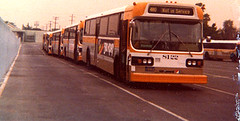
Your proposal sucks. I do not approve of this
proposal. One of the U. of U. professors pulled a
whine and cheese act and UTA immediately jumped up to
accommodate her.
OK, first of all, if I was reading this response it would go in file 13 ASAP. Talk about an unprofessional response. No one will listen when you spew like this except for the few people who have the same political agenda as you.
UTA did not have a public meeting on this proposal.
UTA did not notify the public when UTA added the 7:09
p.m. 223 bus to the outbound schedule.
UTA would not return "nightride" to the southeast
section of Sugarhouse UTA took away. So, why should
the 100 (plus) of us who used the "nightride" give
approval to this bunk.
Now, I have no idea what this guy is talking about when it comes to the U of U professor and if you read the rest of the letter it is clear he doesn’t know what he is talking about. Throughout the letter he makes statements that are untrue or show we say that they use “creative license” with the facts.
First of all 100 plus did not ride the nightride (he is referring to the old 107). According to ridership records which compares to my observations of this route when it was still running, it averaged 62.9 riders per night (winter months higher, warmer months lower). That averages out to less than seven riders per trip. Of this ridership, 90%+ was north of Interstate 80.
Now you would think from this guy’s attitude that all “evening” service was killed. On the contrary, there is still “evening” service provided to the area by the 21 and other routes that provide service to a majority of the riders who used to ride the 107. In fact there is “evening” service along 3300 south.
Finally he complains that UTA ADDING service to the 223? Talk about a whine and cheese session because UTA didn’t have a formal public hearing about it. Well, I hate to tell you sir but UTA doesn’t have to have a public hearing when adding a run to a route. The last time I checked they need to have a public hearing when they are changing 25% or more of the operation of the route, so one run will not rate a public hearing.
Now let’s look at the next part of the diatribe:
#1 The routes were cut last October because the UTA
managers wanted their bonuses. I was informed by
"insider information" that the managers had received
their bonuses when they made the route cuts. I was
also informed by the "insider" that UTA planned to cut
driver jobs. This is a violation of the contract UTA
and ATU(Amalgamated Transit Union) agreed to recently.
These managers make more money and bonuses then most
other transit managers. What a shame!
Huh? The last time I checked there were no cuts in October since UTA usually changes bus service three times a year and that is August, December, and April. Somehow I get the feeling that some bus driver is feeding this guy a load of bull and he is running with it as “insider information”.
The next part:
#2 UTA lied about the ridership increase. UTA "cooked"
the figures they claimed they had counted during their
recent UTA TRAX survey.
Hate to tell you this, but even with the adjustment in the ridership numbers, ridership is still up thanks to TRAX but we have already seen that you understand how to cook numbers and we shall see more in part 4.
Here is part 3 of the diatribe:
I agreed with The Deseret(Morning) News article of
January 2007 and a BYU economics professors assessment
that the ridership would not increase or get people to
leave their cars and ride public transit.(verbatim
quotes) The Deseret News article stated that using
public tax money would also not get people out of
their cars. The TRAX spurs were a waste of taxpayer
money.
Facts are facts; TRAX is creating new ridership and will continue to do so especially the Daybreak line that will give service to areas that have lousy bus service now. If you look at the lower cost per passenger on TRAX, it will soon pay of its cost of construction or already has.
Should I go into the economics professor? After all if you line up 10 economists in the room they will have 10 different opinions. I had 3 economic professors in college and the three of them could not agree on the day of the week much less anything else beyond the basics. Clearly the BYU professor has his political slant and will not let facts get in his way.
Let’s take a look at number 4. Sorry, but this one shows that the writer is not only wrong but he will take “creative license” with the facts.
“The riders also complain about
the numerous transfers they must make.
Instead of taking 40 minutes to get to the downtown
area it now takes me 60 to 90 minutes. If I decide to
ride mid-day it takes longer. IF, I say, IF I am lucky
and the bus/Trax is on time it takes me 66 minutes.
Every day I catch the 6:18 a.m. 223 Route(20th E. 27th
S.). If it is on time I get to the Stadium Trax
Station at 7:10 a.m. There is a 4 minute wait for trax
then another 10 minutes to ride downtown.”
OK, let’s look at the fact that shows that the writer lied here.
The 223 at 20th E. 27th South does leave at 6:18AM. OK so he told one truth. Now doesn’t it seem odd that it would take a bus from 6:18AM to 7:10AM to get to the University? Well guess what, there is something odd because it is not true. The 6:18AM bus from 20th E. 27th South arrives at Stadium TRAX not at 7:10AM but at 6:35AM. The next bus 30-minutes later does not even arrive at 7:10 but at 7:05AM arriving at the Business Bldg at 7:08AM, so were does this person get his 7:10AM number from?
TRAX then leaves at 6:44AM arriving at the Civic Center Station 6:57AM so a total elapse time of 39 minutes, one minutes less than the 40-minute that it is “claimed” to have taken him before.
Maybe this guy should read the schedules better since it is clear he either does not ride the bus or is just not telling the truth.
Then there is point 5 talking about the Davis county situation. While the county did a poor job of saying what the initiative as for since from my interpretation it was a highways bill only, it is clear that money from the food sales tax is being lost clear and simple.
Here is the next part of the diatribe:
“The situation that pissed me off the most was
hearing from several of my insiders that this U. of U.
professor continues to pull her "whine with her cheese
act" and complain about one specific driver. This
driver does his/her best at the job. The driver read
several complaints that stated the driver was ten
minutes late on several occasions. This driver told me
that the supervisor checked the UTA GPS and found one
time the driver was late 1.5 seconds.”
Here is more of the “insider” information. Here he says the driver does his or her best job. Clearly he is taking information from one source, a dubious one at that, and taking it as fact.
The final part of his diatribe:
I am not able to attend downtown nightlife
functions because UTA took away the Sugarhouse area
"nightride."
Actually as I mentioned before most of Sugerhouse area has better “evening” service than it had under the old system. After all they have the 209, 220, and the 21 that all provide evening service. However, most of those riders were along the stretch that still has good evening service. While it may be a few blocks away, there is evening service on the 33 down on 3300 South.
It is clear that the Transit Riders Union will not be satisfied until they have the service THEY want and everything else is bankrupt just like Los Angeles.
We have seen the damage that can be done when a group gets too powerful and can start dictating policy no matter how poor the policy is. Because of the consent decree in Los Angeles, the Bus Riders Union was able to dictate policy to METRO for 10 years and now the Los Angeles area is seeing bus service cuts because of how badly the Bus Riders Union drained the METRO resources.
While Eric Mann the head of the BRU drives around in his BMW, the bus riders of Los Angeles who he claims he helped now have worse bus service than ever. Let’s make sure that does not happen in Salt Lake City.
Tuesday, March 11, 2008
Help Dan Save Traffic....
Before I post a very serious blog, I had to post this for a little comic release.
Monday, March 10, 2008
UTA News...
TRAX service interrupted by severed power cable
TRAX service interrupted
For the second Monday morning in two weeks the overhead power wires for TRAX have been severed just south of Interstate 80. So what is happening here? One time may have been an accident but twice? UTA and others need to consider this an act of sabotage. After all this area gang infested and they could be involved.
It does appear that UTA is doing a better job of communication with this incident sending people to all the TRAX stations to inform what is happening.
Bluffdale may be forced to accept train-stop plan
Once again, while I think Bluffdale is being stupid and has their heads in the sand in not supporting a commuter train station--(will they try to stop the highway?), however the legislature should not be forcing them to take the station any more than the legislature telling Salt Lake that it cannot spend airport funds to help transportation to the airport.
With UTA, who needs an office?
While I am no fan of Lee Benson, he does do a very complimentary article about Wi-Fi on the 472 Express Buses.
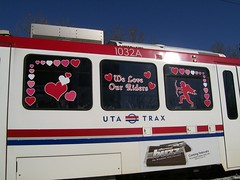
TRAX service interrupted
For the second Monday morning in two weeks the overhead power wires for TRAX have been severed just south of Interstate 80. So what is happening here? One time may have been an accident but twice? UTA and others need to consider this an act of sabotage. After all this area gang infested and they could be involved.
It does appear that UTA is doing a better job of communication with this incident sending people to all the TRAX stations to inform what is happening.
Bluffdale may be forced to accept train-stop plan
Once again, while I think Bluffdale is being stupid and has their heads in the sand in not supporting a commuter train station--(will they try to stop the highway?), however the legislature should not be forcing them to take the station any more than the legislature telling Salt Lake that it cannot spend airport funds to help transportation to the airport.
With UTA, who needs an office?
While I am no fan of Lee Benson, he does do a very complimentary article about Wi-Fi on the 472 Express Buses.
Friday, March 07, 2008
The 3500 South BRT line and Seattle...
OK, what does Seattle have to do with UTA's 3500 South BRT line? Well, the Seattle Transit Blog has done a question and answer session with Metro (their transit system) about what they are calling Rapid Ride.
There is several important points to be taken from this blog:
-First Metro is rightly so saying that BRT is not an alternative to rail, it is being used to provide a faster supplemental service along a busy corridor. It is not being referred to as "just like rail...just cheaper".
-BRT is not being used to replace existing service but is supplementing a busy corridor (got that UTA?)
Here is some of the requirements of the new service:
-High current transit demand and latent transit demand as evidenced by ridership growth, development and travel trends
-Significant local as well as regional trip attractors and generators with all-day, two-way demand characteristics
-While the 3500 corridor does have high current transit demand (although not by Seattle standards), the others are questionable. On the other hand, please tell me what regional trip attractors and generators are present along 3500 South except between TRAX and the West Valley Mall.
I have mentioned before the BRT is going to do little to improve the corridor and most likely just steal riders from local routes. The BRT will not add any new markets and considering UTA is going to kill the regular route 35, there is obviously no need for a supplementary service.
A BRT route from Valley Fair Mall to TRAX to the eastside to the U of U would make more sense. Even better would be a BRT route from Ogden to Salt Lake City. This would not compete against Frontrunner since it would provide much more local service but using the technology would actually made a difference in trip times. After all when you are talking saving a half hour off a two hour schedule, then you are talking some time savings.
Once again this would not be designed to replace the existing 470 but supplement it with faster service. You could actually replace the 455 with this new service and provide local service by reinstating the 471 to all day service. That way you would have faster service along the US89 portion but the 471 would provide local service were it is still needed. This would provide a route that makes sense, can use the faster speeds, create new markets, and actually improve the route network.
The picture is of Eugene's new BRT buses, and yes they do have doors on the left side.

There is several important points to be taken from this blog:
-First Metro is rightly so saying that BRT is not an alternative to rail, it is being used to provide a faster supplemental service along a busy corridor. It is not being referred to as "just like rail...just cheaper".
-BRT is not being used to replace existing service but is supplementing a busy corridor (got that UTA?)
Here is some of the requirements of the new service:
-High current transit demand and latent transit demand as evidenced by ridership growth, development and travel trends
-Significant local as well as regional trip attractors and generators with all-day, two-way demand characteristics
-While the 3500 corridor does have high current transit demand (although not by Seattle standards), the others are questionable. On the other hand, please tell me what regional trip attractors and generators are present along 3500 South except between TRAX and the West Valley Mall.
I have mentioned before the BRT is going to do little to improve the corridor and most likely just steal riders from local routes. The BRT will not add any new markets and considering UTA is going to kill the regular route 35, there is obviously no need for a supplementary service.
A BRT route from Valley Fair Mall to TRAX to the eastside to the U of U would make more sense. Even better would be a BRT route from Ogden to Salt Lake City. This would not compete against Frontrunner since it would provide much more local service but using the technology would actually made a difference in trip times. After all when you are talking saving a half hour off a two hour schedule, then you are talking some time savings.
Once again this would not be designed to replace the existing 470 but supplement it with faster service. You could actually replace the 455 with this new service and provide local service by reinstating the 471 to all day service. That way you would have faster service along the US89 portion but the 471 would provide local service were it is still needed. This would provide a route that makes sense, can use the faster speeds, create new markets, and actually improve the route network.
The picture is of Eugene's new BRT buses, and yes they do have doors on the left side.
Thursday, March 06, 2008
Airport TRAX line...
Airport TRAX funds take twisty path
Well it looks like the funding for the airport TRAX line will happen despite the actions of our state legislature.
Once again Bramble showed his stupidity but saying that Airport funds should be used to help improve the airport. I hate the tell the guy this but giving people the freedom to choose how they get to the airport would be an improvement. But I guess Bramble only thinks its an improvement if it funds roads since a large amount of dollars have gone to improve the roads at the airport.
Instead part of the $10.00 fee for registering cars in the county will go this fund. Actually since that money can only go to highways, other money will replace this money and somehow fund TRAX.
In other words we take from here, give to this place, move this over here, and accomplish the same thing that could have been accomplished much easier if our state legislature would stop trying to control everything.
But there is good news, the legislature is out of session until next year...
Well it looks like the funding for the airport TRAX line will happen despite the actions of our state legislature.
Once again Bramble showed his stupidity but saying that Airport funds should be used to help improve the airport. I hate the tell the guy this but giving people the freedom to choose how they get to the airport would be an improvement. But I guess Bramble only thinks its an improvement if it funds roads since a large amount of dollars have gone to improve the roads at the airport.
Instead part of the $10.00 fee for registering cars in the county will go this fund. Actually since that money can only go to highways, other money will replace this money and somehow fund TRAX.
In other words we take from here, give to this place, move this over here, and accomplish the same thing that could have been accomplished much easier if our state legislature would stop trying to control everything.
But there is good news, the legislature is out of session until next year...
Wednesday, March 05, 2008
TRAX Closure...
Just a reminder that TRAX service will once again be interrupted south of 7200 South on Sunday due to construction of the new State Street Bridge.
It looks a little funny on the UTA website because it says that TRAX service will be interrupted Weekends and Sundays. Only last weekend did they interrupt service on Saturday the rest of the interruptions will only be on Sundays.
However, when you first get on the website before moving on to the actual news release it looks as though they are saying TRAX will be closed weekends and Sundays as though Sundays are not part of the weekend.
About the picture:
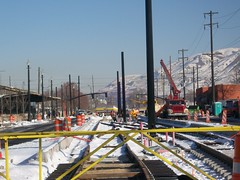
A couple of weeks ago I had an appointment in downtown on a Friday morning so I took some pictures of TRAX construction on the Intermodal extension. After taking pictures of the construction I drove pass the Arena station and saw the decorated windows on one of the TRAX cars sitting there on a University train so I snapped the picture.
Oh and before someone jumps down my throat for not riding the bus to downtown, I had another appointment in an area along Highland with no bus service (if the old 8 was still running that would have been a different story...).
It looks a little funny on the UTA website because it says that TRAX service will be interrupted Weekends and Sundays. Only last weekend did they interrupt service on Saturday the rest of the interruptions will only be on Sundays.
However, when you first get on the website before moving on to the actual news release it looks as though they are saying TRAX will be closed weekends and Sundays as though Sundays are not part of the weekend.
About the picture:
A couple of weeks ago I had an appointment in downtown on a Friday morning so I took some pictures of TRAX construction on the Intermodal extension. After taking pictures of the construction I drove pass the Arena station and saw the decorated windows on one of the TRAX cars sitting there on a University train so I snapped the picture.
Oh and before someone jumps down my throat for not riding the bus to downtown, I had another appointment in an area along Highland with no bus service (if the old 8 was still running that would have been a different story...).
Tuesday, March 04, 2008
Schools and Sprawl
When I attended Railvolution here in Salt Lake City in 2005, one of the sessions I attended talked about how some recommendations for designs promotes more sprawl.
Among them is the design recommendations for new schools. They are designed to encourage sprawl, make it impossible for students to walk from school and close smaller community schools in favor of "super sized schools".
Why Johnny Can't Walk to School
For more information see the Walkable Neighborhoods Blog.

Among them is the design recommendations for new schools. They are designed to encourage sprawl, make it impossible for students to walk from school and close smaller community schools in favor of "super sized schools".
Why Johnny Can't Walk to School
For more information see the Walkable Neighborhoods Blog.
Monday, March 03, 2008
Another Wal-Mart hidden subsidy??
How much does Wal-Mart really cost?
Previously in this blog I have discussed Wal-Mart and its hidden cost. Much like highways, many people don't realize exactly how much Wal-Mart truly cost because many of the subsidies it receives are even the Billion dollars or more of direct subsidies are brushed under the carpet.
Here is another example of a hidden subsidy for Wal-Mart.
UDOT is about to proceed with a huge interchange project and railway overpass in the Springville area. For people familiar with the area will know that the entire area changed with the opening of a Wal-Mart Supercenter.
The problem with a place the size of Wal-Mart is that it concentrates so much traffic into such a small area. In addition anyone who shops at this center comes by car since there is not transit service here except for the nearby Park N Ride lot.
Now there is a project to rebuild the interchange where the Super Wal-Mart is located and a railroad overpass nearby.
While this is one of the major entrances to the city of Springville, the entire character of the area was changed with the Wal-Mart opened. Of the 82 million dollar cost of the project, how much can we contribute the the supercenter? Lets assume that 25% of the project is caused by the Wal-Mart and the rest by growth in the city (I think you would be hard pressed to figure out all of this infrastructure would be needed without Wal-Mart).
That would mean that $20 million of this project is directly contributed to the Wal-Mart being located at that off ramp. Most Wal-Mart's in the area bring an estimated $500,000 a year in sales taxes. That means it would take about 40 years of sales tax revenue for Wal-Mart to pay off its portion of the sales tax.
Now lets say the the businesses that located in the area because of Wal-Mart generate another 250,000 in sales tax revenue, you are still talking 30 years before just this project is payed off by the revenue.
That does not include the other cost that go up with a Wal-Mart such as police and fire.
So how much did your Supercenter truly cost????

Previously in this blog I have discussed Wal-Mart and its hidden cost. Much like highways, many people don't realize exactly how much Wal-Mart truly cost because many of the subsidies it receives are even the Billion dollars or more of direct subsidies are brushed under the carpet.
Here is another example of a hidden subsidy for Wal-Mart.
UDOT is about to proceed with a huge interchange project and railway overpass in the Springville area. For people familiar with the area will know that the entire area changed with the opening of a Wal-Mart Supercenter.
The problem with a place the size of Wal-Mart is that it concentrates so much traffic into such a small area. In addition anyone who shops at this center comes by car since there is not transit service here except for the nearby Park N Ride lot.
Now there is a project to rebuild the interchange where the Super Wal-Mart is located and a railroad overpass nearby.
While this is one of the major entrances to the city of Springville, the entire character of the area was changed with the Wal-Mart opened. Of the 82 million dollar cost of the project, how much can we contribute the the supercenter? Lets assume that 25% of the project is caused by the Wal-Mart and the rest by growth in the city (I think you would be hard pressed to figure out all of this infrastructure would be needed without Wal-Mart).
That would mean that $20 million of this project is directly contributed to the Wal-Mart being located at that off ramp. Most Wal-Mart's in the area bring an estimated $500,000 a year in sales taxes. That means it would take about 40 years of sales tax revenue for Wal-Mart to pay off its portion of the sales tax.
Now lets say the the businesses that located in the area because of Wal-Mart generate another 250,000 in sales tax revenue, you are still talking 30 years before just this project is payed off by the revenue.
That does not include the other cost that go up with a Wal-Mart such as police and fire.
So how much did your Supercenter truly cost????
Saturday, March 01, 2008
Front Runner on Display and TRAX closure
A front runner train will be on Display at Ogden Union Station today and tomorrow at the Hostlers Model Railroad Show. This is a great time to go and see what these great trains are like.
This is also a great place to see what model railroading has to offer. I cannot make it up there this year because of family obligations but I have in previous years and it is an excellent show.
Also remember that TRAX will be closed again from Historic Sandy (9000 South) to Midvale Fort Union Stations (7200 South) for construction work on the new State Street overpass that will eliminate the last piece of single track obstruction on the line.
This is also a great place to see what model railroading has to offer. I cannot make it up there this year because of family obligations but I have in previous years and it is an excellent show.
Also remember that TRAX will be closed again from Historic Sandy (9000 South) to Midvale Fort Union Stations (7200 South) for construction work on the new State Street overpass that will eliminate the last piece of single track obstruction on the line.
Thursday, February 28, 2008
Bluffdale Station still possible?
UTA may get to build Bluffdale station
While I think the Bluffdale city council is a bunch of fools trying to stop a needed commuter rail station, I cannot condone the actions of the state legislature in trying to force the station on the city.
The only thing the legislature is going to do is create resentment within the city.
As I mentioned in the previous article, Bluffdale has their heads in the sand if they do not think growth is coming. Getting people on the commuter rail is going to help Bluffdale deal with the growth.
If there was no station built in Bluffdale, I wonder how long it would be before they would be crying for it? After all, I remember Larry Miller saying that no would ride TRAX to his complex at Jordan Commons so he could care less about a station but look what happened just a few years later.
A station would help Bluffdale, but the legislature should not be forcing down their throats.
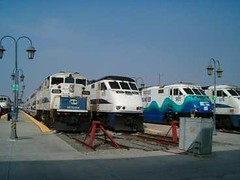
While I think the Bluffdale city council is a bunch of fools trying to stop a needed commuter rail station, I cannot condone the actions of the state legislature in trying to force the station on the city.
The only thing the legislature is going to do is create resentment within the city.
As I mentioned in the previous article, Bluffdale has their heads in the sand if they do not think growth is coming. Getting people on the commuter rail is going to help Bluffdale deal with the growth.
If there was no station built in Bluffdale, I wonder how long it would be before they would be crying for it? After all, I remember Larry Miller saying that no would ride TRAX to his complex at Jordan Commons so he could care less about a station but look what happened just a few years later.
A station would help Bluffdale, but the legislature should not be forcing down their throats.
Wednesday, February 27, 2008
Monday's Incident...
Monday was not a good day for TRAX passengers along the north-south rail line. Something apparently fell from Interstate 80 and damaged the wire that carries the power to the cars. It took many hours to fix the problem so here is my thoughts on the problems.
First of all UTA did what it could at the beginning as they used the good track to turn the section of track into a single track line. The downside of this is because of the way the signaling system works the trains have to travel slower, but for the few times this has happens it is fine.
There is a big rally cry that buses should have been called out immediately. That is all well and good but there is some practicalities that need to be taken into consideration. UTA doesn't have drivers standing around waiting for that one time in years that they need an to get buses to TRAX. It takes time to get the drivers together and put the buses into service.
From reading the comments, some people act as though UTA should have drivers standing by in case that rare incident occurs and they have to use buses. Yet if UTA did have drivers standing around like that they would be attacking UTA for having drivers standing around doing nothing.
What UTA could do better is on the communication side. I was at the Sandy TRAX station when a guy committed suicide in front of the train at that station. Despite there being many UTA officials there, none of them told the passengers what was happening.
While that incident was a few years ago, last year I was heading down to Utah County. I took the first 40 bus (now 45) over to the TRAX station. It turned out that there was a train of the UTDC cars broken down near the 3900 South Station. No trains were coming but no one said anything to the passengers. Even when a out of service train pulled in the operator didn't have the courtesy to tell the waiting passengers what was going on.
Finally after about 30-minutes everything started moving. I was taking the first southbound train of the day to catch the 811 and thought I had missed it and was going to have to wait an half hour. However, UTA did communicate with the 811 driver and told her to wait for train to show up. So in that case they did do a good job communicating.
Yes UTA can improve, but rare incidents are going to happen. UTA needs to be prepared but there is limits to what can be done. What they should work on first, is communication with waiting passengers so that they know what is happening and this includes reminding the operators that they are ambassadors for the transit system so when incidents happen they need to keep their customers informed and not hide behind the operators door.
First of all UTA did what it could at the beginning as they used the good track to turn the section of track into a single track line. The downside of this is because of the way the signaling system works the trains have to travel slower, but for the few times this has happens it is fine.
There is a big rally cry that buses should have been called out immediately. That is all well and good but there is some practicalities that need to be taken into consideration. UTA doesn't have drivers standing around waiting for that one time in years that they need an to get buses to TRAX. It takes time to get the drivers together and put the buses into service.
From reading the comments, some people act as though UTA should have drivers standing by in case that rare incident occurs and they have to use buses. Yet if UTA did have drivers standing around like that they would be attacking UTA for having drivers standing around doing nothing.
What UTA could do better is on the communication side. I was at the Sandy TRAX station when a guy committed suicide in front of the train at that station. Despite there being many UTA officials there, none of them told the passengers what was happening.
While that incident was a few years ago, last year I was heading down to Utah County. I took the first 40 bus (now 45) over to the TRAX station. It turned out that there was a train of the UTDC cars broken down near the 3900 South Station. No trains were coming but no one said anything to the passengers. Even when a out of service train pulled in the operator didn't have the courtesy to tell the waiting passengers what was going on.
Finally after about 30-minutes everything started moving. I was taking the first southbound train of the day to catch the 811 and thought I had missed it and was going to have to wait an half hour. However, UTA did communicate with the 811 driver and told her to wait for train to show up. So in that case they did do a good job communicating.
Yes UTA can improve, but rare incidents are going to happen. UTA needs to be prepared but there is limits to what can be done. What they should work on first, is communication with waiting passengers so that they know what is happening and this includes reminding the operators that they are ambassadors for the transit system so when incidents happen they need to keep their customers informed and not hide behind the operators door.
Tuesday, February 26, 2008
HousePanel OK's UTA Bill
House panel OKs UTA oversight bill
Here is a surprise to no one. A House Panel has passed the bill that gives the state more control over the Utah Transit Authority. Once again the misguided efforts of the Anti-Hunger Coalition that sees the state as their savior is going to cost them in the long run.
Just look at the two people who are pushing this bill.
First you have Wayne Harper out of West Jordan (what is it about West Jordan?), who has in years past tried over and over to have the state take over operation of UTA and thus steal the sales tax money approved for TRAX and move it to roads.
The other person pushing this is Senator Sheldon Killpack who is also shown to be anti-transit and looking to raid the UTA of funds to give to highways (even though all the TRAX money would only be a drop in the bucket).
Clearly neither of these two men have transit in their best interest.
I am sure that once the raiding begins Bill Tibbets and his gang of yellow shirts from the Anti-Hunger Coalition will take none of the blame and wonder were the money has gone and scream up a storm.
Once again as in the issue with the airport TRAX line, it is just amazing how it seems OK in this state for our state legislature to raid the funds of and reduce the power of local government, to take away the voting rights of citizens, and yet the people continue to vote for the clowns. Whatever happened to local control?
Here is a surprise to no one. A House Panel has passed the bill that gives the state more control over the Utah Transit Authority. Once again the misguided efforts of the Anti-Hunger Coalition that sees the state as their savior is going to cost them in the long run.
Just look at the two people who are pushing this bill.
First you have Wayne Harper out of West Jordan (what is it about West Jordan?), who has in years past tried over and over to have the state take over operation of UTA and thus steal the sales tax money approved for TRAX and move it to roads.
The other person pushing this is Senator Sheldon Killpack who is also shown to be anti-transit and looking to raid the UTA of funds to give to highways (even though all the TRAX money would only be a drop in the bucket).
Clearly neither of these two men have transit in their best interest.
I am sure that once the raiding begins Bill Tibbets and his gang of yellow shirts from the Anti-Hunger Coalition will take none of the blame and wonder were the money has gone and scream up a storm.
Once again as in the issue with the airport TRAX line, it is just amazing how it seems OK in this state for our state legislature to raid the funds of and reduce the power of local government, to take away the voting rights of citizens, and yet the people continue to vote for the clowns. Whatever happened to local control?
Monday, February 25, 2008
Bill Passes about Airport TRAX Funding...
The Deseret News has a copy of the article today talking about how our state Senate is trying to rein in on the city of Salt Lake and tell them how to spend their money.
Isn't it interesting that Bramble the Senator from Provo who got this bill passed did not ban the airport from spending money on highways and parking which is were many of the dollars go to.
Now here is the most telling part of the article:
Lawmakers are trying to keep Delta Air Lines happy, in an effort to keep the company's hub in Salt Lake City. Delta Air Lines officials don't want the airport improvement fund raided for light rail, and "I'm not aware of any other industry that is being asked to put a disproportionate share into light rail" said Rob Jolley, a lobbyist for the airline.
"The banking industry hasn't been asked to do that, the real estate industry hasn't been asked to do that," Jolley said.
Then, he sent a clear warning to lawmakers to keep Delta happy, or else.
Isn't there something wrong that the Delta Airline's lobbyist is basically making threats to the state?
So not only do we have the state dictating to Salt Lake on how to spend its money, but you also have a lobbyist for a major corporation telling the state to force a city to do something or else.
If Bamble had any guts, and not just a puppet for this lobbyist he would be making sure that policy is set for what is best for the community, not the threats of a lobbyist.
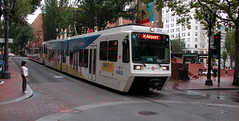
Isn't it interesting that Bramble the Senator from Provo who got this bill passed did not ban the airport from spending money on highways and parking which is were many of the dollars go to.
Now here is the most telling part of the article:
Lawmakers are trying to keep Delta Air Lines happy, in an effort to keep the company's hub in Salt Lake City. Delta Air Lines officials don't want the airport improvement fund raided for light rail, and "I'm not aware of any other industry that is being asked to put a disproportionate share into light rail" said Rob Jolley, a lobbyist for the airline.
"The banking industry hasn't been asked to do that, the real estate industry hasn't been asked to do that," Jolley said.
Then, he sent a clear warning to lawmakers to keep Delta happy, or else.
Isn't there something wrong that the Delta Airline's lobbyist is basically making threats to the state?
So not only do we have the state dictating to Salt Lake on how to spend its money, but you also have a lobbyist for a major corporation telling the state to force a city to do something or else.
If Bamble had any guts, and not just a puppet for this lobbyist he would be making sure that policy is set for what is best for the community, not the threats of a lobbyist.
Sunday, February 24, 2008
Rapid Streetcar for Davis County?
Light rail preferred option in S. Davis
In today's Deseret News there is an article about transit options in Davis county and it looks like the preferred option is going to be a rapid streetcar which is not as expensive as light rail but faster and longer than the streetcar lines I have talked about for the Salt Lake area.
This idea makes good sense for the area. There is not a lot of room to build out a full blown TRAX line in the region, the line will already have commuter rail for longer trips so that leaves the rapid streetcar. This system will greatly increase the number of transit riders.
The picture is of a tram in Strasbourg. The line goes through the downtown area and goes through this central downtown plaza that has no auto traffic then connects a block with other streetcar lines.
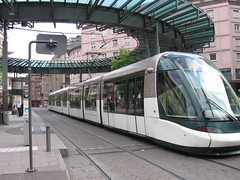
In today's Deseret News there is an article about transit options in Davis county and it looks like the preferred option is going to be a rapid streetcar which is not as expensive as light rail but faster and longer than the streetcar lines I have talked about for the Salt Lake area.
This idea makes good sense for the area. There is not a lot of room to build out a full blown TRAX line in the region, the line will already have commuter rail for longer trips so that leaves the rapid streetcar. This system will greatly increase the number of transit riders.
The picture is of a tram in Strasbourg. The line goes through the downtown area and goes through this central downtown plaza that has no auto traffic then connects a block with other streetcar lines.
Saturday, February 23, 2008
State Says no to Airport Light Rail Funding Proposal
No airport funds for TRAX line, under bill passed by committee
Once again the almighty state legislature is interfering in local decisions. The airport is owned and operated by the city not the state, but our state legislature continues to show they cannot be trusted when it comes to local decisions.
Also let us not forget that these are the same people that Bill Tibbets and his gang of yellow shirts from the Anti-hunger coalition have made their bed with to gain more power within the UTA. Do you really think you can trust the state legislature????
Once again the almighty state legislature is interfering in local decisions. The airport is owned and operated by the city not the state, but our state legislature continues to show they cannot be trusted when it comes to local decisions.
Also let us not forget that these are the same people that Bill Tibbets and his gang of yellow shirts from the Anti-hunger coalition have made their bed with to gain more power within the UTA. Do you really think you can trust the state legislature????
Developers propose freeway deal
Mountain View Corridor speeding up
Developers are donating land to cover the construction of the Mountainview Corridor. Notice that the land only includes the section from 9000 South to Redwood Road which is actually going to be one of the less expensive segments to purchase.
Also they mention the proposed transit line but like several of the streetcar proposals has been downgraded from rail transit to bus service.
Mountain View Corridor speeding up
Developers are donating land to cover the construction of the Mountainview Corridor. Notice that the land only includes the section from 9000 South to Redwood Road which is actually going to be one of the less expensive segments to purchase.
Also they mention the proposed transit line but like several of the streetcar proposals has been downgraded from rail transit to bus service.
Friday, February 22, 2008
Bluffdale still has their head in the sand
Bluffdale Council shuns rail stop
Well it seems that our friends in Bluffdale still have their heads in the sand. Apparently they feel that if they just ignore the growth it will just magically not come to their little slice of paradise.
Instead of doing things will help their residents, that will provide them freedom from having to drive every where that rather force all of their residents to drive and not have any options. A Frontrunner commuter rail stop would give the residents options they do not have now except for their extremely limited bus service.
Clearly no matter how hard they try, growth is heading their way. It is better to deal with it, make some good planning decisions than just pretend it is not happening and think somehow it will pass you by.
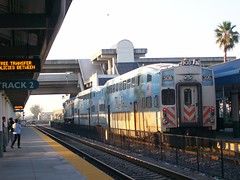
Well it seems that our friends in Bluffdale still have their heads in the sand. Apparently they feel that if they just ignore the growth it will just magically not come to their little slice of paradise.
Instead of doing things will help their residents, that will provide them freedom from having to drive every where that rather force all of their residents to drive and not have any options. A Frontrunner commuter rail stop would give the residents options they do not have now except for their extremely limited bus service.
Clearly no matter how hard they try, growth is heading their way. It is better to deal with it, make some good planning decisions than just pretend it is not happening and think somehow it will pass you by.
Thursday, February 21, 2008
Preview of FrontRunner, Los Angeles Style
Here is a video from someone riding a Los Angeles Metrolink Train. Since our commuter trains will still be running I tried to find a video that showed what it is like to be on one of the trains for those who have more experience.
Some things you will notice about the commuter trains is that they are quieter than TRAX even though they are hold by diesel locomotives. While you will get some swaying once in a while the ride is smoother than riding TRAX.
The Tri-level cars from Bombardier that are used by Metrolink are the same type that UTA has purchased (UTA has also purchased used cars from Chicago and New Jersey) only with different interiors.
This second video is from the Interior of a Metrolink San Bernardino Line train which travels along the San Bernardino Freeway (Interstate 10) from El Monte to Cal State.
Some things you will notice about the commuter trains is that they are quieter than TRAX even though they are hold by diesel locomotives. While you will get some swaying once in a while the ride is smoother than riding TRAX.
The Tri-level cars from Bombardier that are used by Metrolink are the same type that UTA has purchased (UTA has also purchased used cars from Chicago and New Jersey) only with different interiors.
This second video is from the Interior of a Metrolink San Bernardino Line train which travels along the San Bernardino Freeway (Interstate 10) from El Monte to Cal State.
Wednesday, February 20, 2008
Bus Changes for Front Runner
UTA Public Hearing Information
Information on Proposed Changes
UTA is proposing bus changes in Davis/Weber Counties for Front Runner commuter service.
I am surprised they are not making more changes but then again those counties don't have that much service anyway. However why are they not changing the 612, 613, 626, 627, 470 and other routes to service the commuter rail stations better?
Now onto my comments on the changes:
604/610/640 in Roy-While I hate to see bus service routes cut, I think the changes will cover existing service the best way possible. I have ridden all these routes multiple times and the route changes do cover were the ridership is. The times I have ridden the outer ends of the 610 there was been 0 riders. The big problem here is that the route ends before the big development areas.
Once everything settles down it would be nice to see a flex route cover the section of 5500 South out to the new developments and connect with the Commuter Rail route.
Also the modifications to the 640 in the Clearfield area will eliminate some duplication but service the areas were the ridership is.
Also don't be surprised if you see more cuts to 472 once FrontRunner is operating for a period of time. This would be a good time for UTA to add more service along the US 89 Corridor and connect into the FrontRunner at Farmington.
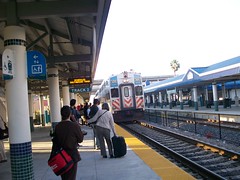
Information on Proposed Changes
UTA is proposing bus changes in Davis/Weber Counties for Front Runner commuter service.
I am surprised they are not making more changes but then again those counties don't have that much service anyway. However why are they not changing the 612, 613, 626, 627, 470 and other routes to service the commuter rail stations better?
Now onto my comments on the changes:
604/610/640 in Roy-While I hate to see bus service routes cut, I think the changes will cover existing service the best way possible. I have ridden all these routes multiple times and the route changes do cover were the ridership is. The times I have ridden the outer ends of the 610 there was been 0 riders. The big problem here is that the route ends before the big development areas.
Once everything settles down it would be nice to see a flex route cover the section of 5500 South out to the new developments and connect with the Commuter Rail route.
Also the modifications to the 640 in the Clearfield area will eliminate some duplication but service the areas were the ridership is.
Also don't be surprised if you see more cuts to 472 once FrontRunner is operating for a period of time. This would be a good time for UTA to add more service along the US 89 Corridor and connect into the FrontRunner at Farmington.
Tuesday, February 19, 2008
Monday, February 18, 2008
City Creek Center, Salt Lake City
Some have asked the question why should City Creek be designed to blend better in with the community. Some say it is not their responsibility to boost sales along Main Street and help the rest of downtown. While yes, they are not responsible for helping the rest of downtown, it is ironic that they would actually benefit by developing their center so it more integrates with the rest of downtown.
What will City Creek add to the area that it does not already have? Well we do know the area is getting a Harmon's Grocery Store but that is actually separate from the rest of the complex. Beyond that what will set this place apart from say Fashion Place Mall or the new Cottonwood Center?
Actually nothing. In my case if I want to shop at either of the two big retailers that will be in the center, I could do that at Fashion Place Mall. Most of the smaller stores in the center will be the typical chain stores found anywhere else including the new Cottonwood Center which is a half hour walk from my apartment.
So what will draw me or someone like me to the center? Not much. Why should I fight traffic or take two buses just to get to a center that has nothing unique in it? It is ironic that Nordstrom's was also involved in the Riverpark Square in Spokane which is much like City Creek except it is enclosed. It suffers because it offers nothing that the suburban malls do not offer it people have little incentive to shop there unless you live in the downtown area or the immediate vicinity (which I did).
Also notice in the design that the open space only opens up to the Church area to the north and a small section to 100 South. Beyond that there is little focus on the rest of downtown. Instead it is designed for people to drive into the center, do there shopping and leave the area and not share them with the rest of the area. In other words Gateway II.
Now just imagine if the complex was designed so it flowed into the rest of downtown. People would be encouraged to walk around the area instead of shopping there and leaving. It would create new retail opportunities. It would give new life to the stores along Main Street. This would create new marketing dynamics. People would come to the area and spend more time. They would be encouraged to stroll the other streets and find unique shopping opportunities. It would give more reasons for people to travel to downtown.
The City Creek project has the potential to greatly increase the marketability of the area, but not as it stands now.
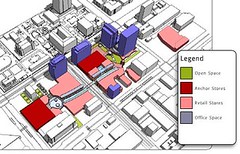
What will City Creek add to the area that it does not already have? Well we do know the area is getting a Harmon's Grocery Store but that is actually separate from the rest of the complex. Beyond that what will set this place apart from say Fashion Place Mall or the new Cottonwood Center?
Actually nothing. In my case if I want to shop at either of the two big retailers that will be in the center, I could do that at Fashion Place Mall. Most of the smaller stores in the center will be the typical chain stores found anywhere else including the new Cottonwood Center which is a half hour walk from my apartment.
So what will draw me or someone like me to the center? Not much. Why should I fight traffic or take two buses just to get to a center that has nothing unique in it? It is ironic that Nordstrom's was also involved in the Riverpark Square in Spokane which is much like City Creek except it is enclosed. It suffers because it offers nothing that the suburban malls do not offer it people have little incentive to shop there unless you live in the downtown area or the immediate vicinity (which I did).
Also notice in the design that the open space only opens up to the Church area to the north and a small section to 100 South. Beyond that there is little focus on the rest of downtown. Instead it is designed for people to drive into the center, do there shopping and leave the area and not share them with the rest of the area. In other words Gateway II.
Now just imagine if the complex was designed so it flowed into the rest of downtown. People would be encouraged to walk around the area instead of shopping there and leaving. It would create new retail opportunities. It would give new life to the stores along Main Street. This would create new marketing dynamics. People would come to the area and spend more time. They would be encouraged to stroll the other streets and find unique shopping opportunities. It would give more reasons for people to travel to downtown.
The City Creek project has the potential to greatly increase the marketability of the area, but not as it stands now.
Wednesday, February 13, 2008
John Inglish Article
Mass Transit Magazine has an feature article on John Inglish. Inglish brags about how great the so called Bus Rapid Transit that is replacing regular service on 3500 South will be.
Thank You to Orphan Road out of Seattle for referring to this article.
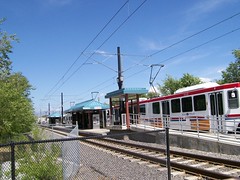
Thank You to Orphan Road out of Seattle for referring to this article.
Tuesday, February 12, 2008
The Cost of Paratransit Service.
In the first part of this series I discuss what was done with the regular bus network in order to comply with the Americans with Disabilities Act. Now its time to discuss the other part of the puzzle, the Paratransit service called Flextrans here in Utah.
The Anti-Hunger Coalition and its band of yellow shirts and the Transit Riders Union both try to portray TRAX as the reason why bus service is being slashed. It is an easy target for those who do not look closely and the numbers and truly sees what is happening. However, TRAX is not to blame when it comes to the cutting of bus service. Just take a look at some of these financial numbers
Just a note: I am using numbers from UTA’s 2006 budget. So that no one could say the ridership numbers were too high, I cut the actual ridership numbers on TRAX by 20% but left the others alone. Of course the some would argue that UTA is padding the numbers but the numbers are in line with transit systems across the nation and the world.
I also want to point out that I am NOT saying Flextrans is not needed, I am just pointing out the cost of the system compared to the rest of the transit system.
So here are some numbers to think about. Looking at costs vs. passengers, TRAX cost $1.37 per passenger. So in other words TRAX is covering its above the rail expenses (meaning direct operating cost) and contributing to overhead. This makes TRAX the second most efficient light rail system getting beat only by San Diego. However, the numbers are in line with the other systems as they are very close with the exception of Los Angeles but that is another story.
On the other hand, it cost $3.31 per passenger on the bus system. So not only is it not covering its direct operating cost, it is not contributing to overhead. This is one an area that UTA can improve since it is one of the more performing systems.
Finally you have Paratransit service. It cost $24.95 per passenger for every passenger that boards the Paratransit service. To put this in perspective if UTA did not have to provide Paratransit service, bus service could be increased 17% percent overnight. In addition Paratransit handles only 4% of the numbers TRAX does and 2.5% of the bus system.
So as you can see, what is costing the bus system is carrying the weight of the Paratransit service not TRAX.
Now the ADA was designed to give those that needed it, equal access which is a good goal. However, wasn’t equal access created by putting wheelchair lifts or the creation of low floor buses? This gives everyone the same access to transit service to everyone. However, the requirement for Paratransit service creates special services that everyone else is not entitled to ride.
Since Paratransit service is needed by those who use it, but is essentially a taxi cab social service, should the transit system budget be responsible to take care of it? Or should it be the responsibility of the social services agencies?
We also know how the Paratransit passengers screamed when UTA started requiring them to pay more for there services than regular bus service (although the amount of difference has dwindled). Should Paratransit riders be expected to pay more for the premium service they require?
These are not easy questions to answer.
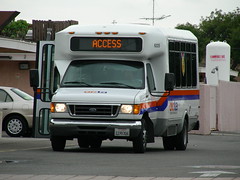
The Anti-Hunger Coalition and its band of yellow shirts and the Transit Riders Union both try to portray TRAX as the reason why bus service is being slashed. It is an easy target for those who do not look closely and the numbers and truly sees what is happening. However, TRAX is not to blame when it comes to the cutting of bus service. Just take a look at some of these financial numbers
Just a note: I am using numbers from UTA’s 2006 budget. So that no one could say the ridership numbers were too high, I cut the actual ridership numbers on TRAX by 20% but left the others alone. Of course the some would argue that UTA is padding the numbers but the numbers are in line with transit systems across the nation and the world.
I also want to point out that I am NOT saying Flextrans is not needed, I am just pointing out the cost of the system compared to the rest of the transit system.
So here are some numbers to think about. Looking at costs vs. passengers, TRAX cost $1.37 per passenger. So in other words TRAX is covering its above the rail expenses (meaning direct operating cost) and contributing to overhead. This makes TRAX the second most efficient light rail system getting beat only by San Diego. However, the numbers are in line with the other systems as they are very close with the exception of Los Angeles but that is another story.
On the other hand, it cost $3.31 per passenger on the bus system. So not only is it not covering its direct operating cost, it is not contributing to overhead. This is one an area that UTA can improve since it is one of the more performing systems.
Finally you have Paratransit service. It cost $24.95 per passenger for every passenger that boards the Paratransit service. To put this in perspective if UTA did not have to provide Paratransit service, bus service could be increased 17% percent overnight. In addition Paratransit handles only 4% of the numbers TRAX does and 2.5% of the bus system.
So as you can see, what is costing the bus system is carrying the weight of the Paratransit service not TRAX.
Now the ADA was designed to give those that needed it, equal access which is a good goal. However, wasn’t equal access created by putting wheelchair lifts or the creation of low floor buses? This gives everyone the same access to transit service to everyone. However, the requirement for Paratransit service creates special services that everyone else is not entitled to ride.
Since Paratransit service is needed by those who use it, but is essentially a taxi cab social service, should the transit system budget be responsible to take care of it? Or should it be the responsibility of the social services agencies?
We also know how the Paratransit passengers screamed when UTA started requiring them to pay more for there services than regular bus service (although the amount of difference has dwindled). Should Paratransit riders be expected to pay more for the premium service they require?
These are not easy questions to answer.
Sunday, February 10, 2008
Wireless on Express Buses
UTA offers wireless on all Express buses
Since the 307, 354 and others have one of the commuter cruisers being wasted on their routes, does that mean they will have the free wireless service also or do they not count because they are not traveling between counties?
Hopefully this will be expanded to more routes in the near future especially TRAX.
Since the 307, 354 and others have one of the commuter cruisers being wasted on their routes, does that mean they will have the free wireless service also or do they not count because they are not traveling between counties?
Hopefully this will be expanded to more routes in the near future especially TRAX.
Thursday, February 07, 2008
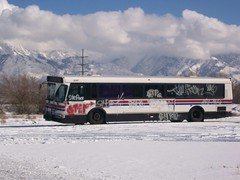
What is Costing UTA?
Today I will begin a four part series on what is really costing the UTA. As regular readers will know, I have been critical of organizations such as the Anti-Hunger Coalition and the Transit Riders Union as they often become pawns of anti-transit forces and also demonize the rail program as being cause of all the problems.
However, in this series I will point out the most costly program the UTA has to deal with and that is satisfying ADA requirements. Let me make it clear I am not trying to debate the needs of the ADA, I am point out what it cost to deal with it. In part one I will deal with the regular bus system, in part two I will discuss Flextrans and in part three I will go over the latest demands of the ADA, and fourth I will discuss some solutions.
In the late 70's wheelchair lifts started appearing on buses. The SCRTD in Los Angeles was one of the first agencies to purchase them with their AMG buses in 1977. However, until the ADA took effect, most transit agencies avoided them.
One of the problems with wheelchair lifts is that they can be extremely costly to operate and have been prone to multiple troubles. In addition the sidewalks need to be designed to be able to let the driver safely deploy the lift and everyone familiar with Salt Lake area sidewalks know they were not designed for that.
As a solution to problem of the lifts the bus manufacturers started coming out with low floor buses such as the Gillig Advantage pictured operating on route 45.
The idea of the low floor bus first came out with the Transbus program by the Federal Government in the late 70's. However most of the current bus manufacturers pulled out the program due to escalating cost, however when the ADA came along the bus manufacturers again started looking at the low floor buses.
There is two advantages of low floor buses:
-No Wheelchair Lift
-Faster loading and unloading of passengers if the transit system takes advantage of them (which UTA has not except in the poorly design BRT scheme on 3500 South).
There also several disadvantages:
-Reduced Seating Capacity
-Increase maintenance cost especially the front end
-Not Customer Friendly
There is other issues but those can be traced to poor build quality due to the transit systems not holding the manufacturers feet to the fire to build a better bus.
In conclusion, transit systems lost capacity and faced increased cost to cooperate the ADA. However, the real cost is Paratransit and in the next part of series I will go over the cost of providing Paratransit (Flextrans) service.
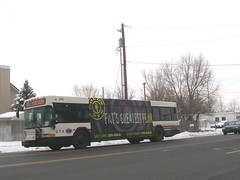
However, in this series I will point out the most costly program the UTA has to deal with and that is satisfying ADA requirements. Let me make it clear I am not trying to debate the needs of the ADA, I am point out what it cost to deal with it. In part one I will deal with the regular bus system, in part two I will discuss Flextrans and in part three I will go over the latest demands of the ADA, and fourth I will discuss some solutions.
In the late 70's wheelchair lifts started appearing on buses. The SCRTD in Los Angeles was one of the first agencies to purchase them with their AMG buses in 1977. However, until the ADA took effect, most transit agencies avoided them.
One of the problems with wheelchair lifts is that they can be extremely costly to operate and have been prone to multiple troubles. In addition the sidewalks need to be designed to be able to let the driver safely deploy the lift and everyone familiar with Salt Lake area sidewalks know they were not designed for that.
As a solution to problem of the lifts the bus manufacturers started coming out with low floor buses such as the Gillig Advantage pictured operating on route 45.
The idea of the low floor bus first came out with the Transbus program by the Federal Government in the late 70's. However most of the current bus manufacturers pulled out the program due to escalating cost, however when the ADA came along the bus manufacturers again started looking at the low floor buses.
There is two advantages of low floor buses:
-No Wheelchair Lift
-Faster loading and unloading of passengers if the transit system takes advantage of them (which UTA has not except in the poorly design BRT scheme on 3500 South).
There also several disadvantages:
-Reduced Seating Capacity
-Increase maintenance cost especially the front end
-Not Customer Friendly
There is other issues but those can be traced to poor build quality due to the transit systems not holding the manufacturers feet to the fire to build a better bus.
In conclusion, transit systems lost capacity and faced increased cost to cooperate the ADA. However, the real cost is Paratransit and in the next part of series I will go over the cost of providing Paratransit (Flextrans) service.
Wednesday, February 06, 2008
Makeup of UTA Board...
Makeup of UTA board could change
Once again Harper, a Republican from West Jordon is pushing a bill to change the make up of the UTA board. This is not the first time as he has tried to disband the UTA and make it part of UDOT on previous occasions.
This time he is trying to change the UTA board so that the legislature and the governor would appoint the top three positions of the UTA board and politicians or their hacks will control the other positions.
But Harper has an ally this time in the Anti-Hunger Coalition. Why are they supporting this? Apparently change for the sake of change. They are not looking at what the affects of the changes will be but it will show that they have actually done something and they desperately hope it will help their political agenda.
However, Harper is not friend of transit. He like many of his fellow legislators are mad that the tax money that the VOTERS approved for transit is actually going to transit and they cannot steal to pay for their pet projects.
As we saw in Los Angeles, the anti-transit forces will often use organizations such as the Anti-Hunger Coalition as pawns in order to advance their goals.
If this passes, look for raids on the funds to build rail transit for other things such as highways because this bill puts the fox in charge of the hen house.
Once again Harper, a Republican from West Jordon is pushing a bill to change the make up of the UTA board. This is not the first time as he has tried to disband the UTA and make it part of UDOT on previous occasions.
This time he is trying to change the UTA board so that the legislature and the governor would appoint the top three positions of the UTA board and politicians or their hacks will control the other positions.
But Harper has an ally this time in the Anti-Hunger Coalition. Why are they supporting this? Apparently change for the sake of change. They are not looking at what the affects of the changes will be but it will show that they have actually done something and they desperately hope it will help their political agenda.
However, Harper is not friend of transit. He like many of his fellow legislators are mad that the tax money that the VOTERS approved for transit is actually going to transit and they cannot steal to pay for their pet projects.
As we saw in Los Angeles, the anti-transit forces will often use organizations such as the Anti-Hunger Coalition as pawns in order to advance their goals.
If this passes, look for raids on the funds to build rail transit for other things such as highways because this bill puts the fox in charge of the hen house.
Tuesday, February 05, 2008
Monday, February 04, 2008
The Truth Behind the Numbers
Some of you may have seen an editorial published in the Los Angeles Times recently. It proves how well numbers can be manipulated for ones sake by just leaving out some important information.
The editorial claimed that transit ridership declined in Los Angeles from 1986 to 2007 by 25% by using ridership numbers from the RTD which was the major transit system at the time to the today's METRO (RTD became METRO in 1994). The writers of the editorial one of whom was a consultant to the Bus Riders Union, claimed it was because the artificially low fares created by a proposition in 1980, ended in 1986 and all that money was transferred to rail construction.
Looking at just those figures any smart person would say that rail construction caused a deep cut in ridership on the bus system. However, there is some convenient facts left out.
The editorial compares the RTD ridership of 1986 to the Metro Ridership in 2007, seems fair right? Wrong.
Here is what transpired over the next 20 years:
-All Express buses operating in the city of Los Angeles (a very large area) and several local routes are transferred from the RTD to the City of Los Angeled Department of Transportation to Operate.
-Most routes in the San Gabriel and Pomona Valleys are transferred from the RTD to the new Foothill Transit Agency.
-Many other routes are transferred to municipal operators.
So in other words a large portion of the route structure of the then RTD and later METRO was transferred to other operations and this has continued.
So in other words the METRO is operating substantially fewer routes than its predecessors the RTD did in 1986. In fact if you look at just the routes it operated in 1986 and that it still operates it would show a large increase in riders.
So in other words, by just leaving out some important information, someone's political agenda is being met, but the public on the whole, if they read the editorial and took it at face value were being misled.
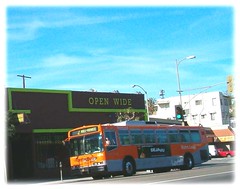
The editorial claimed that transit ridership declined in Los Angeles from 1986 to 2007 by 25% by using ridership numbers from the RTD which was the major transit system at the time to the today's METRO (RTD became METRO in 1994). The writers of the editorial one of whom was a consultant to the Bus Riders Union, claimed it was because the artificially low fares created by a proposition in 1980, ended in 1986 and all that money was transferred to rail construction.
Looking at just those figures any smart person would say that rail construction caused a deep cut in ridership on the bus system. However, there is some convenient facts left out.
The editorial compares the RTD ridership of 1986 to the Metro Ridership in 2007, seems fair right? Wrong.
Here is what transpired over the next 20 years:
-All Express buses operating in the city of Los Angeles (a very large area) and several local routes are transferred from the RTD to the City of Los Angeled Department of Transportation to Operate.
-Most routes in the San Gabriel and Pomona Valleys are transferred from the RTD to the new Foothill Transit Agency.
-Many other routes are transferred to municipal operators.
So in other words a large portion of the route structure of the then RTD and later METRO was transferred to other operations and this has continued.
So in other words the METRO is operating substantially fewer routes than its predecessors the RTD did in 1986. In fact if you look at just the routes it operated in 1986 and that it still operates it would show a large increase in riders.
So in other words, by just leaving out some important information, someone's political agenda is being met, but the public on the whole, if they read the editorial and took it at face value were being misled.
Subscribe to:
Posts (Atom)