Showing posts with label RTD. Show all posts

Tuesday, July 31, 2012

Transit Customer Service from F to A grades

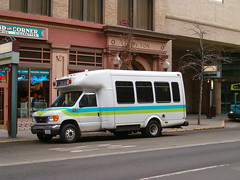
English: by me UTA bus
English: by me UTA bus (Photo credit: Wikipedia)
English: Bus 2909 of TriMet, the public transi...
English: Bus 2909 of TriMet, the public transit agency in Portland, Oregon, is a 2009-built New Flyer D40LFR. It is pictured on Harrison Street at 4th Avenue in downtown Portland, outbound on route 54 to Beaverton Transit Center. (Photo credit: Wikipedia)
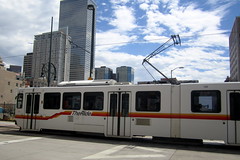
Denver - CBD: RTD Light Rail
Denver - CBD: RTD Light Rail (Photo credit: wallyg)
     The following are three customer service examples from three different transit agencies in the western US. After reading the three incidents and the response from the transit agency, which one of these agencies would you like to be a customer of? The three offer the best examples of a total failure, adequate action, and giving outstanding customer service.


Denver RTD
Grade: F 

      Denver RTD gets the worst grade for customer service. My experience started when I flew into DIA for a meeting and took a RTD bus and light rail to my motel. I boarded one of their MCI commuter cruisers with an all day, all zone pass which I purchased on-line. The driver has to punch the day pass for it to be valid, well the driver did and punched the wrong day. Unfortunately the drivers do not carry day passes so when we got to the light rail station I had to purchase another day pass. 
      First of all I was not mad at the driver and when I talked to Denver RTD customer service I did not mention which bus or time that it happened. A couple of weeks, that's right weeks after I talk to them about the day pass they send me a nasty email saying basically too bad, not our problem. The email was extremely unprofessional and showed a lack of customer care by RTD. 

Portland TriMet
Grade: C

     I have been riding TriMet for about a year now since moving here to Portland. For the most part most of my trips are pretty uneventful except for the random person that has to talk on their cell phone way too loud telling the other person about their sex life and so on.  However, I have had two experiences with TriMet operators in which I took up an issue with their customer service department. I should point out that I have also sent in three commendations for drivers also so I am not only complaining, but also commend those that are excellent in their jobs. 
     In both incidents I got a email from a customer service rep that said sorry you had an issue and said the driver would be talked to. I will say that both letters were written individually and not form letters which I gives points to TriMet. TriMet does the basics in good customer service, nothing more so it gets a passing grade. 


Salt Lake City Utah Transit Authority
Grade: A 

     In my time riding UTA, I only one time sent in a complaint. That day I went to take one bus to a Park N Ride lot to catch a second bus. It was daylight out so that cannot be used as an excuse. The driver of the first bus passed me right on by didn't even bother to slow down. Immediately behind him was another bus deadheading to the Park N Ride lot. This driver hit is breaks but then kept on going. I then waited for the next bus to come along. Because the next was supposed to do a loop before heading to the Park N Ride lot I would miss my next bus. However, the driver of the next bus went ahead and dropped me at the Park N Ride Lot so I wouldn't miss my next bus. 
     The customer service person at UTA offered me two free day passes (since at the time I was not riding on a daily basis so I didn't need the discount on a monthly pass). Of course I didn't complain to get the free day passes and never sent in another complaint. However, UTA did the best job of taking care of the customer and ensuring they will be happy with UTA service. 


     You can clearly see why UTA gets the best grade here. Some would argue that they should not waste the money trying to please a dissatisfied customer however, that response would be narrow minded. Transit systems need to work on their customer service skills just like any other company that provides a service and deals with passengers every day of the week. 


Enhanced by Zemanta

Wednesday, February 23, 2011

A Look at Los Angeles Metro's 176

Logo of the Los Angeles County Metro Rail and ...Image via Wikipedia
Like most transit systems across the country, Metro in Los Angeles has been facing tough economic times. However, like the rest of its brethren in California, they have also been facing a double whammy of recession and money being taken out of transportation to shore up its crumbling general fund by the former governor. Now Metro is proposing to cut even more service in June including route 176 which travels from Highland Park to the El Monte Station at the eastern end of the El Monte Busway.

The 176 is near and dear to my heart because I spent many years living along the route and riding it. Here is the map and schedule of the current 176.

The route first started as a Pacific Electric bus traveling from Mission and Fair Oaks in South Pasadena to Alhambra connecting several of the PE's major rail lines. The bus line was later extended to replace rail service and for many years was route 79 traveling from Main and Garfield in Alhambra through South Pasadena and Highland Park and ended up at Huntington Drive and Monterey Road.

In April, 1976 the RTD, Metro's predecessor, revamped routes in the San Gabriel valley and surrounding areas, and the little 79 was split up into two other lines. The first line, the 143, took the park of the 79 from Highland Park to Huntington and Monterey Rd. and continued all the way to East LA. The 143 was latter merged with route 425 and later renumbered 256 which continues today although it has also faced being axed at one time or another over the last few years.

The 430 took over the other part of the 79 from Highland Park to Alhambra plus portions of other routes to create the present 176. In early 1977, the route was extended from Highland Park to Glassell Park via Ave 50 replacing a short shuttle route. For 30+ years the 430/176 traveled back and forth between Glassell Park and El Monte with little notice until the portion between York and Figueroa in Highland Park to Glassell Park was cut in order to allow Metro to retire its remaining and aged 35 foot RTS buses.

That brings up to the present time and the very real possibility that this route will probably meet its demise in a few months. I am going to use this route as a case study on what can be done to route that has largely been ignored for 30 years to improve its performance, the socially-economic conditions that apply to the line, and some alternatives to the Metro proposal.

In the next entry I will describe the current route and some of the different neighborhoods the bus travels through and other interesting facts about the route.
Enhanced by Zemanta

Monday, May 18, 2009

Colorado Group Suing to Stop Denver Union Station project

Union Station (Denver)Image via Wikipedia

A rail advocacy group is Colorado is suing to stop the current plans for redevelopment of Union Station in Denver.

Rail group sues to block Union Station redevelopment

This is another case of transit agency having the blinders on and not taking into consideration the future including expansion of intercity rail.

Not only are they not taking others into consideration, they are hurting their own potential riders. People who ride the commuter rail from Denver International will have to walk two blocks to catch a light rail train to other parts of the city.

Several times I have ridden Amtrak into Union Station and caught a light rail train over to my motel which sits along side the Southeast light rail line. Now if I had to walk two blocks with my luggage would it just be easier to pay a cab?

At least here in Salt Lake you can catch a commuter train, TRAX and Amtrak in the same location although thanks to the westside NIMBY's it will not be possible to ride from the Airport directly to Central Station which is a downside. However, we know that developers usually come out ahead of good transportation planning...


Reblog this post [with Zemanta]

Saturday, September 06, 2008

Blog Postings from this week...

*Top left: Train 6651 pulls into Millburn on t...Image via Wikipedia First up from the Mobilizing the Region Blog:

In NJ, “Son of Toll Hike” is Born

While Utah looks at the possibility of its first toll road, the New Jersey turnpike authority is looking to increase toll charges in order to replenish the state highway trust fund. A portion would go to the New Jersey Transit project to build additional tunnels from New Jersey to Penn Station in New York to deal with train congestion out of the area.

From the Denver Transit Stop Blog:

Public Private Partnership Pilot Program (Penta P)

This talks about the RTD in Denver looking at Public-Private partnerships in order to get some lines built in its Fastracks program.

The author has an excellent description of the various types of partnerships and how they work so it is differently worth a look.

From the Xing Columbus (Ohio) Blog:

Money Never Disappears for Sprawl

The blog mentions that Ohio has instituted a policy of fix it first meaning that it will fix existing highways before starting new ones.

From the Transit Miami Blog:

Boondoggle

A couple of weeks ago an article was published in some magazine that listed the biggest boondoggles (by who's classification?) and Transit Miami points out while its own project the expansion of Metro Rail has not happened so far, you have to question some of the others on the list including the unique Sydney Opera House.

From the Transbay Blog:

Sunday Streets and More, This Labor Day Weekend

San Francisco closed a street to create a pedestrian fair.

From the Overhead Wire:

Making San Francisco More Accessible by Amtrak

There is a couple of ways to get to San Fransisco by Amtrak. First by long distance train you can get off in either Emeryville or Oakland and take a bus to the San Fransisco or if your on one of the corridor trains you can take BART from Richmond (which I did on multiple occasions).

However, the post points out about the disconnect between local, state and national carriers which was pointed out in the intragration series.

Battlefield NIMBYism


Article from New Jersey were NJ Transit wants to put commuter trains on a existing rail line but people who run a revolutionary war battlefield think railroad tracks are a blight and should be eliminated.

From the RT Rider:

The cost of free parking

Growing a transit lifestyle in barren soil

John talks about difficulties in buidling a transit lifestyle in Sacramento. You can see the comparisons to many places in along the Wasatch Front.

From the N-Judah Chonicles:

Just What IS A "Green Bus Shelter" Anyway?


Putting grass on top of a bus stop shelter makes it a green shelter?

From the CTA Tattler:

Higher gas prices mean big CTA ridership increase

Chicago is also having a major increase in ridership in both rail and bus.


Reblog this post [with Zemanta]

Tuesday, March 18, 2008

The F94

In their first posting in months, the planner from the UTA is claiming success for UTA's F94 flex route service. While I agree that the route is providing a service that UTA was willing to abandon, I think success should be measured in different terms that the UTA does.

However, let’s look at the F94 as we have before and see what can be done to make it even more successful. First of all there are a couple of things that is really holding the F94 from being a true success:

First of all, the route only provides every 80 minute service. This makes the service useless for a majority of transit riders thus greatly decreasing how much potential the service has. Second, the route only deviates ¾ of a mile from the route of the old 94 route which makes it too inflexible to truly be called a flex route.

Now take a look at Denver’s Call N Ride system and see how it works. Basically you have cutaway vans based out of a light rail or bus transit station and service is provided a minimum of every 30-minutes (and in my experience the service is much more frequent than every 30-minutes). Call N Ride provides transit service to entire areas providing much better and more convenient service than regular route service could in those places while still providing good connections to the regular route service.

Now let’s take a look at route 525, the former 25 that provides service from TRAX to the Sandy Industrial area and along Monroe. This route would be a perfect route to turn into a Call N Ride route. If people need to be picked up they just give a call or they pick the cutaway van up at the TRAX station. While the Historic Sandy TRAX station may be a little more convenient for this service, traffic along 90th South is just going to get worse so it does make sense to use the Midvale Center TRAX station. The neighborhood will get better bus service with vehicles that make more sense for the area.

Another area were Call N Ride service will make since is along the Daybreak TRAX line. Service could be provided too many areas that currently and will continue to have non-existent bus service. There is areas such as South Jordan and Herriman that regular route service does not work but Call N Ride would make sense.

A side benefit of this type of service is that it can also reduce trips by Paratransit since some Paratransit riders could use regular route service but cannot get to the transit station; this allows them to use the regular route service and still use the mobile van. Considering the financial black hole that even advocates for the physically challenge know Paratransit service to be, reducing any need for Paratransit service makes more service available to all.

The F94 is a start, but to be truly useful transit service it still has a way to go.

Monday, February 04, 2008

The Truth Behind the Numbers


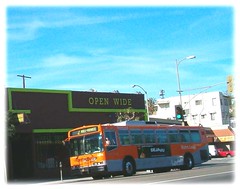
LACMTA 6498
Originally uploaded by jmdspk
Some of you may have seen an editorial published in the Los Angeles Times recently. It proves how well numbers can be manipulated for ones sake by just leaving out some important information.

The editorial claimed that transit ridership declined in Los Angeles from 1986 to 2007 by 25% by using ridership numbers from the RTD which was the major transit system at the time to the today's METRO (RTD became METRO in 1994). The writers of the editorial one of whom was a consultant to the Bus Riders Union, claimed it was because the artificially low fares created by a proposition in 1980, ended in 1986 and all that money was transferred to rail construction.

Looking at just those figures any smart person would say that rail construction caused a deep cut in ridership on the bus system. However, there is some convenient facts left out.

The editorial compares the RTD ridership of 1986 to the Metro Ridership in 2007, seems fair right? Wrong.

Here is what transpired over the next 20 years:
-All Express buses operating in the city of Los Angeles (a very large area) and several local routes are transferred from the RTD to the City of Los Angeled Department of Transportation to Operate.
-Most routes in the San Gabriel and Pomona Valleys are transferred from the RTD to the new Foothill Transit Agency.
-Many other routes are transferred to municipal operators.

So in other words a large portion of the route structure of the then RTD and later METRO was transferred to other operations and this has continued.

So in other words the METRO is operating substantially fewer routes than its predecessors the RTD did in 1986. In fact if you look at just the routes it operated in 1986 and that it still operates it would show a large increase in riders.

So in other words, by just leaving out some important information, someone's political agenda is being met, but the public on the whole, if they read the editorial and took it at face value were being misled.

Wednesday, September 21, 2005

Bus Assignments Need Work

Many years ago I had a close family friend who drove for the Southern California Rapid Transit District. It was not uncommon for the RTD to put a 30-foot bus on a route that should have nothing but a 40-foot bus and would have 40-foot buses on a route that should have only 30 foot buses.

The problem at the time was that the RTD had such a diverse fleet, many different types of buses, from many different sources so it was difficult for them to insure the right bus was on the right line. Of course this was in the days before they high tech computers of today.

Today UTA has a much more standardized fleet than the RTD back in the late 70's early 80's, but seems to have the same trouble with assigning buses even with the advent of computers.

A perfect example of this is route 22. This route is one of the busier routes the UTA has, yet many times it is assigned 35-foot low floor buses. It is bad enough that the low floor buses reduces seating capacity, then you add the fact that you are using a smaller bus often leads to standing room only on the route north of 3300 South. I can see running low floors on this route but they should only have 40-foot buses on this route.

There is no reason why this cannot be done. In fact if you ride the same route every day you will find that often you will ride the same bus number every day. When I road the route 24, I road the same Orion V buses on the regular basis. The other bus I rode was usually assigned bus 9222. So why can't they make sure the routes that need the 40-footers have them?

The situation is gets more ridiculous when there is special events going on. When the American Public Transit Association had there national meeting in Salt Lake, a rodeo was held for bus drivers across the country. Many of the newest Gillig Advantages was pulled from revenue service carrying their customers and used them instead for the rodeo. During this time I rode another very bus route line 37 which runs to Magna. This is another route that runs with standing loads on many runs. Because they wasted buses on the rodeo, they had to assign 35-foot ski buses to this tripper. Not only is the bus smaller but several sets of seats are removed for ski's.

Why? They wanted to show off for APTA and showed how they could care less about their customers that ride with them every day. Why couldn't the rodeo use the ski buses which are sitting anyway? It would make much more sense to use the ski buses on the rodeo and keep the other buses on their regular assignments for their PAYING customers.

The sad thing is that UTA is one of the better transit agencies when treating the customer. However, it is clear that there still needs to be changes at UTA to make it more customer friendly. If it is going to attract the option riders, UTA needs to reinvent is service.
Zemanta Pixie