Showing posts with label Transit Oriented Development. Show all posts

Tuesday, June 18, 2013

Observations from a Chicago Trip


In April, I had the opportunity to attend the American Planning Association conference which was being held in Chicago which also meant that I would have the opportunity to explore its transit system for the first time.

For those that love exploring transit systems, Chicago is a great place to go. Not only does it have its famous "L" system which is operated by the Chicago Transit Authority (CTA), but also CTA buses, METRA Commuter trains which included diesel trains out of 3 stations in the Chicago Loop area, electric line that runs south from a fourth station, the last true interurban line the South Shore, PACE bus service and loads of private bus operations.

METRA Electric train at South Chicago (93rd Street terminus).

Monday, September 20, 2010

Getting riders to entertainment, shopping and employement


While using an existing rail line for light rail service makes since in many respects, one of the downfalls including the North-South TRAX line is that it has a hard time serving major employment and entertainment spots that were designed around the automobile. As Transit Oriented Development becomes more common in the area that will be less of an issue but until then we have to deal with existing development and working around it.

Sandy is a perfect example of the problem. While the 9400 south station directly serves Jordan Commons, other major spots are not close to the TRAX stations. While this would not be a problem in a pedestrian friendly area, I am sure there is no one who would describe the area between the Sandy Center station and the South Towne Mall as being the least be pedestrian friendly, in fact it is very hostile to the pedestrian.

Even mainline bus service has a difficult time serving some of these destinations. After all, you get off the bus and many times you are faced with crossing a huge swath of concrete with cars speeding through it and their drivers not paying attention to anything except to save two seconds.

The best answer would be to provide call 'n ride services such as Denver's at the Historic Sandy and Sandy Civic Center TRAX stations:

Denver Call N Ride


The other solution would be to provide shuttle services from these stations to the major points in the Sandy Area.

Here is an example of a couple of shuttles that could be run that would take people from the TRAX station:

Route A: From the Sandy Civic Center TRAX station via Sego Lily/10000 South, travel north on 300 West to the SLCC campus then return to 10000 South, then via Jordan Gateway, 10600 South and South Riverfront Parkway through the major office complex there. This route probably could run rush hours only but by adding a couple of destinations could become a full time route.

Route B: This route would travel from the Sandy Civic Center TRAX station via Sego Lily, 700 East and 9400 South to Alta View Hospital. After making a loop through the hospital travel 1300 East and 9400 South to the Gravel Pit shopping center. Then via 9000 South, 300 West, 9400 South, State Street, South Town Ridge, Monroe/240 West, 10000 South and 300 West to the SLCC campus. Then via 300 West, 10000 South and 240 West/Centennial before making a loop around the South Towne Mall and then returning to the TRAX station via 200 West/Centennial and 10000 South.

Optimally you would want to run route B as a bidirectional loop meaning that buses would run both directions around the loop to maximize ridership potential. I designed the routes to service the maximum number of important spots as with routes that would see the fewest problems with traffic congestion.

The next question is the most important that who would pay for this? Right now it is not economically feasible for UTA to pay for this kind of service unless it is able to get a grant to provide the service on an extended basis.

Ideally the city of Sandy should be responsible for providing this service and could contract with either UTA or another agency to provide the service (so long as transfer agreements are made with UTA if fares are going to be charged-unless its something small like a quarter). After all the city of Sandy would see the benefits of this service from providing another way to get more shoppers into the area to providing an alterntative to driving for more people especially considering how congested areas such as 9000 South and 10600 South are.

If, and I do mean if, the city of Sandy would really want this kind of service to be a success, they could work with merchants and employers to market the service and encourage ridership. Sandy could do specific branding of the buses making it part of the marketing program which could even include businesses sponsoring a bus like local businesses in Portland sponsor the streetcars in that city.

Of course then Sandy could go really overboard and buy those buses meant to look like old time streetcars but truly are nothing but a bus with uncomfortable seats.

One of the difficult aspects of getting people on transit is getting them to major employment, entertainment, and shopping destinations in a auto centric environment. In the long term land use plans should focus on transit lines but until then we need creative ideas to get people to major destinations.
Enhanced by Zemanta

Wednesday, September 15, 2010

Using Redevelopment and Bus Improvements in a Corridor

Grigio MetroImage by Steven Vance via Flickr
One of the problems we face here in Utah is the lack of regional planning. While we do have the Wasatch Front Regional Council and MAG, they concentrate primarily on highways and the cities still do their own planning. Of course the likely hood of having an effect regional planning organization in Utah is nil considering the political bent of many in the region.

However, I decided to do a what if scenerio. What if we could take a bus route, look at all aspects of that bus route including land use and direct land use and transit planning to improve the route and the neighborhoods it travels through.

Here is the criteria I used to decide which route to focus on:

1. Had to be a frequent service route to provide enough service to be attractive to choice riders.

2. To create better dynamics, the route had to connect with as many other frequent service routes as possible (which eliminated routes such as 35 MAX/35).

3. The route had to have either vacant land or an area in decline in order to optimize the redevelopment opportunities to create transit friendly development.

I decided to focus on the 209 for these reasons:

1. Yes it is a frequent service line

2. The route not only has a large number of connects in downtown but it also connects with many frequent service lines along its route including TRAX, 21, 33, 39 and 45.

3. The area between 2100 South and 4500 south has areas that are in decline and and have opportunities for redevelopment into more pedestrian, transit, and bike friendly neighborhoods.

So lets start off with the basics and look at the route itself.

The route travels from downtown to the Fashion Place West TRAX station via South Temple, 900 East and Winchester.

As I have mentioned many times before, it makes more since to improve bus routes such as the 209 than to do Badly Repackaged Transit which is not just like rail except cheaper which it is not.

Signal Prioritization would be a good step to improve performance but like planning with each jurisdiction having control over their traffic lights, it makes doing it difficult. While the MTA in Los Angeles has been successful with signal prioritization in the city of LA, there is many small cities that Metro Rapid lines pass through that have not implemented them slowing the routes done.

Next up would be to consolidate bus stops that are located too close together and design the remaining bus stops to take advantage of low floor buses by making the curbs equal to the stop on the buses. This along with doing away with the fare free zone allowing buses to board from the front door in both directions will allow the bus to make the trip faster.

A longer term goal would be to change the south end of the line. Instead of traveling on Winchester, the buses should continue south along 900 East. The current portion along Winchester should be replaced by an extension of route 62 from the Fashion Place West TRAX station to the Cottonwood Corporate center and on to the park n' ride lot on Wasatch. This would be a long range goal that is not going happen in the near term.

The 209 should be split into two routes the 208 and the 209 with the 208 traveling 900 East/700 East to 8000 South to State Street to 7720 South and over to the Midvale Center TRAX station. The 209 would turn southeast along South Union and Creek Road like the old 44 then continue on to 3500 South and Bengal Blvd. The only issue would be the snobby NIMBY's along the eastern side of Creek Road would probably oppose having a bus in their neighborhood. Of course these ideas are years away as we have to build ridership on the existing system to make them economically feasible.

The last bus related improvement along the route would be to add bus stop shelters at major stops along the route. However, they need to be designed to fit into the neighborhood and not be the standard ugly glass and metal shelters many transit systems use.

The next step would be redevelopment of several areas along the route that will increase density in important spots which will also increase ridership not only for the 209 but the other frequent service lines that cross the 209.

First up is the intersection of 400 South and 900 East where the University Line TRAX station is located. All four corners of this intersection could be redeveloped with community stores and housing above. The housing could be tailored to the older students at the U or to downtown workers.

Next up would be the Sugarhouse area. Right now the corners at 2100 South are dominated by auto designed stores especially the new Kroger store on the southeast corner (yes I know it says Smith's, but Smith's largely exists in name only it is a Kroger store). There is plenty of possibilities to create a pedestrian, and bike friendly corridor from 2100 South down to I-80 where the new recreational trail will go through. This should be part of the Sugarhouse plan that includes the streetcar connections once it is built.

The intersections of 3300 South, 3900 South and 4500 South are also ripe for redevelopment that should include transit, pedestrian and bike friendly uses that include apartments, homes, and neighborhood retail. The neighborhoods between the intersections would largely remain untouched and still have better bus service.

The biggest obstacle in this part of the corridor would be the Kroger store at 4500 South and 900 East since Kroger has shown to be very anti-pedestrian friendly. They want to the store this way or the highway and are willing to blackmail with the threat of leaving the area to get their way. To top it all off, the center is owned by the Boyer Group which has not shown any friendliness to transit friendly designs.

By making improvements to the bus route and redeveloping under performing real estate you will not only create a better bus line, you will improving the community and building a better base for ridership on UTA lines. You will also create more vibrant community that will be a discouragement to the gangs that seem to be taking over that section of the community.


Enhanced by Zemanta

Wednesday, July 28, 2010

Railvolution in Miami

A two-car train of Siemens S70 light rail cars...Image via Wikipedia


For those interested Railvolution will be held October 18th-21st in downtown Portland.

I will be attending the event for the first time since I did a presentation at Railvolution in Miami helping transit agencies understand the needs of small businesses. This time I will not be there to present but attend the conference.

For those interested in Transit Oriented Development and to have an opportunity to see some of the great successes in the Portland area, I recommend you attend the event.


Enhanced by Zemanta

Thursday, July 22, 2010

Mixed Use Development Vs. Wal-Marts and Malls

CityVista, a mixed-use development, located at...Image via Wikipedia


Many times I have mentioned how it has been shown that smaller businesses actually will produce more sales tax revenue per square foot than a big box store such as Wal-Mart.

Here is a posting from Citiwire.net comparing property tax revenue between a major mall and downtown mixed use development.

Mixed-Use Downtown Development Puts Standard Malls’ Tax Yield to Shame

Also you must remember that stores like Wal-Marts also are well known for fighting to get their property tax bills cut down to almost nothing. So not only does the sales tax revenue not cover their infrastructure and other associated costs, but they also don't generate enough property tax revenue to justify the tax incentives and other subsidies they receive.

Enhanced by Zemanta

Wednesday, July 07, 2010

Some ideas to reuse developments

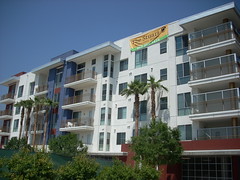
Mixed-use development in Fukuoka, Japan, desig...Image via Wikipedia


Here is a video that I found on the L.A. Creek Freak Website.

While the gas prices mentioned in this video may currently lower than they were back then, but the video does have some great information on how to revitalize our suburban communities into more walkable transit friendly areas.

Part of the video also mentions on how shopping centers in several areas including malls have been reused and redesign to make them more people friendly.

Think about the Dolan Legacy shopping center on the northeast corner of 700 East and 9400 South. While the center only has passable transit service, this area could be redesigned into a more welcoming mixed use development with just some creative thinking.

Another great point made in the video that I have mentioned in the past is the importance of having a mixture of housing price ranges in a development.

One of the problems with existing developments including affordable housing is that it segregates people into different areas which of course leads to the "those kind of people attitudes".

The final part of the video also talks about re-greening areas. Here in Salt Lake there has been talk about restoring City Creek through the downtown area (not counting the fake creek at the City Creek shopping Center).


Enhanced by Zemanta

Sunday, August 24, 2008

Articles from the week...

This file is licensed under the Creative ...Image via Wikipedia From the Mobilizing the Region Blog out of the New York area comes this:

Highway Removal Olympics: Who Will Win the Gold?

San Francisco became famous for becoming the first area to remove a freeway after the 1989 Earthquake did serious damage to the largely completely freeway along the Embarcadero. Instead of a stub freeway they now have a beautiful pedestrian friendly boulevard with streetcar service.

Sadly, here in Utah we went the old direction with the rebuild of I-15 so we lost all the potential that could have been done with putting the freeway in a ditch and then a cap on top of it.

From Light Rail Transit Online comes:

TOD vs."TAD"

This has some good information about TOD developments. We are starting to see some developments coming on line and will see more in the future. I have noticed that more advertisements for housing stating that they are close to a TRAX line.

From the Denver Infill Blog:

The Denver Union Station Story

A great story about the history and future of Denver Union Station. While Salt Lake City let Boyer have their way with the Union Pacific Station, Denver is working to rebuild their magnificent Union Station. While it will not be a perfect situation (the light rail tracks will be about a block away from the completed station), it shows the what can be done.

That article was referred from the Denver Transit Stop Blog which has this story:

Sprawling From Grace

This talks about a video that is going to be shown at the Democratic National Convention in Denver this week. What I found interesting is the part of the video that talks about preventing gentrification and keeping character and diversity in a neighborhood.

From the Transit Sleuth comes this entry:

Last Night Wondering

Adron talks about his day doing things in Portland after work including how transit played a pivotal role in his activities. What this really points out is how Portland has become a city in which you can leave the car at home and hopefully Salt Lake will be there soon.

From Transit Miami comes:

UM: Wising Up To Transit

Apparently freshman are welcome at the University of Miami but their cars are not. The university is located on a Metrorail line and like the U Of U has their own shuttle service around the campus. When I was attending Railvolution last November I made a trip over to Coral Gables which included transferring from MetroRail to a bus to head over the Biltmore Hotel to take some pictures. In the 10 minutes I waited for the Metro Bus I counted at least six U of M shuttle vans stopping at the transit center on their trips around the campus.

From Streetsblog comes this:

The Parking Cure, Step 1: Diagnose the Problem

Previously I talked about how new school guide lines have made new schools walking unfriendly over the course of the last several years in this entry: Schools and Sprawl.

This situation in New York is very similar in that regulations have been enacted over the years that are pedestrian and transit unfriendly and need to be changed.

From the Seattle Transit Blog comes:

News Stands

Could news stands at certain TRAX stations help the newspaper and magazine businesses? They seem to work well in some of the major cities (obviously Seattle is not one of the them...yet), but what about Salt Lake City? Can't use the weather argument because cities with worse weather than us have them.

From the RT Rider comes this information from Sacramento:

RT's worst-case scenario at a glance

RT's current $2.00 fare may go up to $2.25 and severe bus cuts may be necessary. Once again Sacramento like most California systems are dependent on funding from the state and the Govenator is busing trying to transfer funds from transit to highways so they transfer that to other programs.

From Portland Transport:

Streetcar Loop Moves Forward, Your Input Needed on Future Routes

Portland is looking to extend its streetcar line across the Willamette River to the east side of Portland. Portland has been dealing with the federal governments bias toward buses over rail for in trying to get the streetcar off the ground.

From Cap' Transit Rides Again comes:

Cities are Born in Moments of Transition

Interesting perspective on why downtown areas died including highway bypasses.

Reblog this post [with Zemanta]

Friday, July 25, 2008

Layton is in the news...

Melrose CenterImage by Daniel Greene via FlickrHere is some articles from today's Deseret News that deals with development and shopping centers in Layton.

Layton OKs housing units


First of all, let me call your attention to one of the last sentences of the article:

Councilman Renny Knowlton said he's noticed that single home development has slowed down a lot recently.

No kidding? This guy is a smart one.

The town homes approved on Gentile are within walking distance of the Front Runner station, and although not true transit oriented development it can be considered part of the Front Runner station area as the picture shows.


View Larger Map

This next article:

Layton hoping to lure businesses

Shows that Layton is having some Sandy envy. It has to have all the coolest stores and restaurants despite the infrastructure nightmare they create. Hill Field Road is already a traffic nightmare and more stores along the corridor will only worsen the problem. Will these new chain stores bring in enough sales tax revenue to overcome the infrastructure problems that already exist much less would be created? Of course not.

Instead of worrying about having every chain store on the list, how about promoting Layton's unique character. Layton has a nice downtown area that is very close to the Front Runner station. How about promoting some of those small businesses and showing that Layton has something special? After all, chain stores are everywhere but that small business...

Finally there is this article about the shopping center at Fort Lane and Gentile Streets:

Developers are excited about Layton shopping center

Once again, we have developers looking to develop a property that they can depreciate over 7 years and show losses on making big bucks but could care less what happens to the area around the shopping center once they make their money.

Both of the streets are two lane roads. Once again you have to ask, will this center produce enough sales tax dollars to cover the infrastructure cost it creates, not to mention the additional police and fire protection and other city services? Of course the answer to those question is no.

It's time for city governments to start looking beyond just the sales tax revenue brought in and look at the actual long term cost of a project including additional services. Cities should be looking for create unique shopping experiences not worrying if they have every chain store on the list.


Zemanta Pixie

Thursday, July 24, 2008

Salt Lake Tribune Editorial

Utah state welcome signImage via WikipediaHere is an editorial that just appeared in the Salt Lake Tribune. I am sure that it will ruffle a few feathers.

The urban West: Where the federal government can help

I am sure this editorial will get more than a few comments from those who want government out of their lives but won't face the facts that they only got the mortgage on their house because of the government.
Zemanta Pixie

Monday, June 16, 2008

Articles...

Main Street (TTC)Image via WikipediaHere is a article from yesterday's Deseret News covering what has been talked about since Front Runner opened and then an article from today's Salt Lake Tribune about art along the TRAX tracks.

It looks like everyone in planning Front Runner underestimated how popular the Layton Station could be. Truth be told, the way the Federal Transit Administration's policies work rail ridership always is understated while ridership on BRT lines usually gets overstated showing their prefeence for the latter.

Once again part of the problem can be laid directly to the sprawl style development that has taken place in the Layton area. It is very difficult to service the area with conventional bus routes. Eventually the area should be served by the same Call A Ride type vans that we have discussed for areas around the TRAX lines.

Of course the short term solution is to build addition parking but land will have to bought to serve that purpose.

Eventually the Layton Station would be another excellent location for a transit oriented development. Not only does it have Front Runner, it is served by the 470 and as I stated should eventually be served by Call A Ride vans. Integrate the old train station so the restaurant located there can be the focal point of the development plus additional parking. People would then have the choice to live near the station, or commute to the station plus have a host of entertainment options. It is located right next to the historic Main Street area that could be a great drawing card for the area.

The second article which is in today's tribune talks about a grant for artwork along the TRAX lines especially the north-south line. About the only negative of the line is all the graffiti that is along the corridor so replacing it with artwork would be a major improvement. However, the article says that the landowners agree to maintain it for five years so that needs to be enforced because some of the older murals are getting tagged frequently.


Zemanta Pixie

Monday, June 09, 2008

University of Utah embraces TOD

University of UtahImage via WikipediaArticle in the Trib today about plans of the University of Utah to turn itself into a more pedestrian friendly campus. Plans include replacing much of the surface parking with parking garages and concentrating development along the TRAX lines.

The University should be applauded for its efforts over the years to encourage its students to take TRAX and the bus. While Universities much like airports gain revenue from parking which many times will cloud their judgment when it comes to promoting transit service, it is clear that the U of U has seen that transit plays an important role in moving its students.

The boldest part of the plan is to replace the parking lot between the Stadium TRAX station and the Stadium itself with a huge mixed used complex that will include residential, office, retail, restaurants and entertainment. Not only will this benefit students at the U, it will also help those of use who transfer from TRAX to buses at that location. I often transfer from TRAX to the 213 or 220 and it will be nice to be able to do something while waiting for the bus or TRAX. You add the streetcar from my earlier proposal and you have a major entertainment destination. I hope that the University will encourage locally owned businesses to be a major part of this complex and doesn't give into chain phobia.

Another outstanding part of the plan is to replace temporary buildings near the Fort Douglas TRAX stop and replace them with new housing. This will put students directly on the TRAX line and allow them easy access to downtown shopping and entertainment and further reduce the need for the automobile.

By the way lets put some basic economics here. These developments will encourage transit use, not only TRAX but also the bus. It will encourage more people to ride them thus creating more revenue, revenue that then could be used to improve the bus system. As I have stated, the present problem is not the management at UTA, it is the fact that it is hard to take the bus in the Salt Lake Valley and once again not because of the route structure but because our streets, sidewalks and developments do not encourage transit use. Heck, as I have stated a million times, here we are in the 21st Century and when it is dark you need a flash light to flag down a bus do to the lack of streetlights. We have problems in Salt Lake, but the problems isn't were some misguided people think they are.
Zemanta Pixie

Tuesday, April 22, 2008

Transit and Development Opportunities


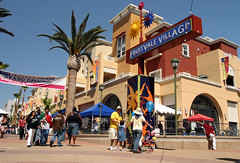
FruitvalePeople2
Originally uploaded by RACTOD
It seems that the transit union wants an easy answer to the problem of the transit dependent. Instead the problems are not going to be fixed by handing the transit system over to an organization that does not have the transit system in its best interest. Instead we need to look at why people who need to ride transit cannot find places to live that are convenient to transit instead of being in an area that doesn't currently support the system.

One of the problems we face here along the Wasatch Front is the lack of a cohesive area wide planning organization. Of course any attempt to create one would fail due to the cities fearing the lost of planning control, so we have to deal with many individual city administrations.

In that context what can be done? First residents of each of the cities need to insure that their planning departments are taking transit into consideration when designing their zoning which includes transit oriented development. However, the best plans can go wrong as we have witnessed in Salt Lake City as the planners and city council cave in to developers and big corporations over and over again.

Every city should be encouraged to create a special zoning area around major transit concentrations. One that will focus on a certain amount of low income housing, nice retail areas that focus on locally owned and operated business that are also transit oriented, plus open space.

There are many areas of the area that this type of zoning would fit into. One example would be the intersection of 4500 South and State Street. Currently an auto centric area that is pedestrian unfriendly but also a couple of blocks from a transit oriented development. This area could be developed to eventually blend into the main transit oriented development at the TRAX station.

The Redwood Road corridor north of Salt Lake Community College all the way to North Temple has areas that would be ripe for this type of development. In fact there is many major intersections throughout the region that developments would improve the neighborhood.

It doesn’t take much imagination to see many spots where this will work. The best areas are ones that could use some redevelopment, are served by two good bus lines (preferably the ones that run every 15-minutes), plus a city administration that is willing to make things happen.

This will allow more affordable housing options that will greatly improve the lives of those who are transit dependent instead of harming them like the transit riders union direction will.

Monday, March 31, 2008

TRAX welcomed in West Jordan

West Jordan eager for TRAX

What a comparison between the NIMBY minority in Draper who is trying take TRAX away from the best route possible because they feel they are too go for it and the attitude in West Jordan.

Construction will soon start on the line out to Daybreak which will pass right through the heart of West Jordan.

A big project that West Jordan has been working on is the redevelopment of the shopping center at 7800 South and Redwood Road. The first place I lived in Salt Lake City was at the Southwillow Apts at 7000 South and even back in 1997 the shopping center at 7800 South was dying.

TRAX could give this center new life and if West Jordan allows it to develop properly could be one of the premier Transit Oriented Projects in the area. West Jordan will need to do some taming of the Redwood Superspeedway in the section of it is to become a pedestrian friendly area, but it area does have lots of opportunities.

West Jordan could even do something really special and focus on locally owned retailers for the center and show that a center can focus and market toward local retailers and make a success out of it. However, that wold take not only strong leadership on the side of the city, it would also take a management team of the complex who can make it happen.

It is going to be an interesting 10 years in the Salt Lake Valley...

Tuesday, January 01, 2008

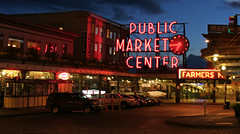
Pike Place Market in Salt Lake?


Pike Place Market
Originally uploaded by michaelrighi
Some people have mentioned that we need a Pike Place market here in Salt Lake City. We already have a farmers market at certain times but do we need something more?

While I love Pike Place Market and a trip to Seattle is not complete without it, the is a Seattle institution and we should not in any way try to duplicate it.

However, that does not say I do not want a place modeled after Pike Place. We can create our own public market place that but with a Utah character.

Look at what makes Pike Place successful: only locally owned businesses are allowed in it and it focuses on what Seattle is know for. There is other small retailers located in the marketplace but it's big focus is on seafood.

We could create a public marketplace that focuses on products grown and made here in Utah. Not only could it focus on the foods of the area but also the arts of the area. They could give local artist that often don't have a chance to make it into the galleries a place to present their wares all year long.

In addition you could have plenty of room for restaurants that would be locally owned and other retailers.

Another thing that makes Pike Place Market a success that it is very accessible, is pedestrian friendly and close to the heart of downtown. Many people venture over to Pike Place on their lunch hours.

If we tried to duplicate Pike Place it would not work because it is unique to Seattle. However, we can create a place that focuses on Utah owned and grown and make a go of it.

Monday, December 24, 2007

UTA Moving toward Rail...

UTA is moving forward with rail

Article on how UTA is getting ready for major construction on rail lines.

Of course they always have to "balance" the article with someone who is still living in the dark ages and in this case it is Taylorsville mayor Russ Wall. He says he wants a more balanced approach with more roads.

Isn't it interesting that they could be calling for a more balanced approach when for the last 60 the highway men have been in charge?

Maybe Mr. Wall needs to look toward the way his own city is developing and realize that he and his cohorts in city government have created the problems they are facing. Just look at the poorly designed developments from 5400 South to Interstate 15 on Redwood Roads. Once again you have developments that increase traffic congestion not help with it. There is nothing in this area to encourage walking and not taking a car from one store to another.

I also wonder where Mr. Wall thinks that new roads will be built. Should they take tax producing properties and make more roads?

Saturday, November 24, 2007

Street Car Part II


PDX0353
Originally uploaded by NeiTech
In my first post about possible streetcar routes we talked about expanding on the concept of the Sugar House trolley to make it even a more useful route.

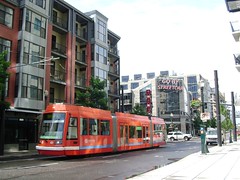
Today's picture is little closer to home than Barcelona as it is from the Portland Streetcar in Portland, Oregon which was the first modern street car line put in.

Our next route proposal will replace part of Route 9. It will start at the Intermodal depot and travel on 600 West to 700 South to 400 West. Along 400 West it will briefly travel the route of the expanded Sugar House Trolley but then turn again on 900 South.

It will travel 900 South until 900 East were it would branch.

Branch one will continue traveling on 900 South to Guardsman Way, then travel Guardsman Way until it meets up with the Medical Center TRAX line and follow that route to the Medical Center.

Branch two will travel along 900 East, 1300 South, 1500 East, and then either turn on 1700 East to Foothill or continue on 1500 East, travel through Sugar House Park and connect up with the Sugar House line. From there it could continue to 2100 South TRAX station and make another connection with TRAX.

There is several positives about this route.

First the section of 900 South from 400 West to 200 East is ripe for quality redevelopment especially affordable transit oriented development.

Second both branches would service the 9th and 9th business center, and the second branch would service the 15th and 15th business center.

The only downside is that NIMBY's along some of the eastern half may bulk at having the streetcar.

Monday, October 01, 2007

Sugarhouse...

Sugar House developers, city planners surprised when expected hostile hearing is amiable

Well Gateway will soon be rising at Highland Drive and 2100 South, Oh I mean new Sugarhouse.
I have said it before, there is nothing in this development that offers anything special. You will have high priced condos, high end chain retailers, and office space. There is nothing that separates this complex from Gateway.

Here is some of the things that I see wrong with this complex:

-Parking entrance will be right on 2100 South. Parking entrances should be in the back of the building. All this creates is a situation that pedestrians will have to cross a driveway that people will barrel in and out of and make crossing it unsafe for pedestrians.

-The parking entrance will also create a barrier from Red Mountain's redoing of the former Granite Furniture Building

-While this fits in to what I already mentioned, the development will focus on Highland Drive leaving the 2100 South area left to itself.

At least this development will be more pedestrian friendly than it's neighbor across Highland Drive. I hope Mr. Mecham works with the community to build a good complex and takes into consideration the walk ability of not only Highland Drive but also 2100 South.

Sugerhouse was a unique area, but the city has slowly let the area's character be destroyed. It's time for the city to take a more active roll in building better communities.

Sunday, September 30, 2007

Challenges in Magna...

Magna: Tying old, new is a challenge

Interesting article on the struggles going on in Magna.

Sadly areas like downtown Magna and it's are have been abandoned in favor of big box centers and pedestrian unfriendly suburban tract homes.

Of course Magna has a lot of potential. After all, it has historic buildings, pedestrian friendly neighborhoods, close to the 2100 South Expressway, one good bus route and a couple of others, the area has mature trees, in other words the potential is there.