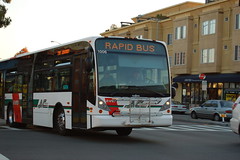
Showing posts with label BRT. Show all posts

Monday, September 02, 2019

Minneapolis Red Line - What is wrong


When I think of a transit line that is referred to as the red line I think of major subway systems such as in Los Angeles or in Washington DC where the red line is a major trunk line, or one of the several light rail systems that have red lines. But in the Minneapolis-St. Paul region the Red Line is actually a bus line that runs from the Mall of America terminus of the Blue light rail line to the side of major road transit center in Apple Valley in the deep suburbs of Minneapolis – St. Paul.

The Red Line began service June 22, 2013 with 15 minute service that was designed to provide close to across the platform connections from the Blue line, however bus service has now been cut back to every 20 minutes. There are currently 5 stations on the route with two infill stations planned and a proposed extension to the city of Lakeview that will add 5 more stations and increase the route mileage from 11 to 16 miles. The service is part of the Metro network that serves the greater Minneapolis-St. Paul region. It is operated by Minnesota Valley Transit Authority which operates transit service in Dakota County that most of the route traverses through.

Monday, July 05, 2010

What kind of advocate are you?

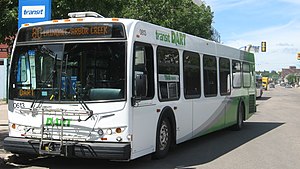
Saskatoon Transit System bus, one of the new m...Image via Wikipedia


What kind of advocate are you?

One of the problems with being a transit advocate is that there is so many competing interest fighting for precious transit dollars and what kind of system that should be operated.

First you have the Free Transit advocates.

This group of people obviously think that transit service should be provided to free to everyone. Some people in this group are so-called advocates for the poor and feel that transit should be a social service. Many of these people feel that service should be provided to every corner of the service area no matter what the cost.

Free Transit advocates are against rail transit. The thought from them is that the sales tax dollars that go to capital projects could instead go to operations despite the fact that it is the voters that approved those taxes for specific projects because they see the need and the potential of those projects.

Free transit advocates also see that there is a problem with our government induced sprawl but there seems to be a disconnect that a somehow a free transit system would magically reduce sprawl. If free transit will reduce sprawl why do two of Utah's free transit systems have a sprawl problem (Park City and Logan)?

Then there is the coverage advocates.

The folks think that transit should reach every corner of the service area including in areas that standard transit service just makes no economic sense. Once again these people feel that service should be provided at all cost no matter what the cost is.

Some people are also free transit advocates. Never ask these people how do you pay for this type of coverage since usually these people feel that someone else should pay for it. Many of them hate the rich and see them as the enemy and want every dollar possible wrung out of them.

Of course these people also see rail projects as the enemy that takes money away from providing service to all corners of the universe.

You also have Bus Rapid Transit advocates.

These people do want better bus service and believe the hype that BRT is rail on rubber tires. They also believe that BRT cost less than light rail since that is what much of the propaganda tells you.

However, what these people do not take into account is operating cost. While BRT maybe cheaper on the capital side (unless you try to be an equal system), there seems to be a disconnect that operating a BRT system that carries the same number passengers as light rail would cost substantially more to operate.

Another group of advocates are rail advocates.

Now many will consider me a rail advocate and you would be right, however I hope I do vary from what I am classifying as a dedicated rail advocate.

The problem I see with many rail advocates is that they see everything as the enemy. If someone questioned a project or its effects they would attack the person and classify them as a pawn of road warriors.

Just like the anti-streetcar people in Centerville, I don't think they are bad people I disagree with their stance and think that if they could experience the potential of the system and experience what the system could offer, it may show them new possibilities.

We also have the road warriors.

These people hate transit but see it as a necessary for those "losers" that cannot afford to buy a car. Otherwise everyone should want to drive a car that there is something wrong with people who don't want to. You will often here them say that everyone wants to drive and that is why transit has a small market share.

They put on the blinders that our present system has been set up by almost 76 years of pro-automotive government interference. They also turn a blind eye that many people who do own homes today could not afford them if it wasn't for the government getting involved in mortgages back during the FDR administration.

So where do I stand?

First of all, I do not see UTA as an enemy because they do not do everything I think they should. UTA is doing the best it can with available resources. As I have said before, when you are dependent on a very volatile form of revenue, then when bad times happen (like right now) revenue will go down and cuts need to happen. Its just something you have to deal with.

Yes, I think UTA can do things better and its our job as transit advocates to turn UTA down that paths not destroy the organization.

Bus service is necessary but in the long run it is going to take rail transit to carry enough passengers to make economic sense. Also, we need to change the way we look at how are cities function to make transit more effective.

The best way to get service to far ends of the system is to make the existing system more economical through more riders. The best way to do that is make transit more attractive to choice riders and develop true TOD.


Enhanced by Zemanta

Wednesday, January 07, 2009

Articles of Note...

Planners want reversible lanes on Foothill Boulevard, but city wants light rail

Foothill is already a nightmare, now planners have a plan to make it even worse. It is nice to see some common sense coming out of Salt Lake City council members, its too bad that the Wasatch Regional Council still wants to play with cars and express buses which are some of the poorest preforming bus routes.

Orem tightens its belt in '09 to stay in the black

Orem is looking to still add more bike lanes and work continues on the BRT project.
Reblog this post [with Zemanta]

Sunday, November 23, 2008

Blog Entries of Note...

Eurostar and Thalys PBA TGVs side-by-side in t...Image via WikipediaFrom the Mobilizing the Region Blog:

Region’s Monumental Interest in TOD Reflected in Panel, Grant Program

Shows some of the progress being made in the New York region when it comes to transit oriented developments.

From the California High Speed Rail Blog:

John Kerry Introduces HSR Bill

Talks about the high speed rail bill that has been introduced by John Kerry. Once again while high speed rail is great for states like California, here in the mountain west we need a more effective long distance network.

BART to San Jose Lives?

Looks like voters in San Jose have approved a measure to increase sales taxes to help pay for the BART extension to San Jose. This one look like it was going down to defeat but now is passing by a slim margin (one thing to note is that it needs 2/3rds to pass so a majority DO want it).

From the Transit Sleuth Blog comes:

Trucking is Headed for Trouble

Adron makes some good points about the current conditions when it comes to interstate freight travel by rail and highway.

From the Overhead Wire Blog:

Too Easy to Build Roads

The Overhead Wire makes comments about the Feds approving the Mountain View Corridor on the west side.

Not a Train, Never Will Be

BRT is not like light rail, never will be.

From Streetsblog LA comes:

Report: Good Transit and Good Jobs Go Hand in Hand

San Francisco Moves Forward With Congestion-Busting Parking Reform

James Rojas on a Future Without Cars

From the RT Rider comes:

Riding on the edge

From the Orphan Road Blog:

Portland Development Commission RFI

From the National Association of Railroad Passengers Blog:

The Changing Transportation Construction Market


Reblog this post [with Zemanta]

Tuesday, September 02, 2008

Utah County Transit News...

Riders waiting at a U.S. bus stop with a shelter.Image via Wikipedia Bus rapid transit OK'd for Provo and Orem

Desired bus/rapid-transit changes in Orem

OK, I have made my feelings very clear on BRT so I will not go over them again. Basically you are going to take a bus route that runs every 15-minutes already (830) make it a little faster but then turn around and put on lower capacity buses (since the 830 still primarily uses Orion V high floor buses).

Orem will install 10 new bus stop shelters along State Street

I am glad to see Orem putting in more bus stop shelters as they are badly needed. I just hope they will maintain them once put in since they are often targets of vandals. Also doesn't help that State Street is a pedestrian nightmare.
Reblog this post [with Zemanta]

Saturday, August 30, 2008

Blog Postings from this week...

LTD's Eugene Station.Image via Wikipedia From the Mobilizing the Region comes:

Congestion Pricing’s World Tour

Talking about cities around the world that are using congestion pricing. The New York Legislature killed congestion pricing for New York City but other cities are using it or proposing it.

From the Light Rail Photos Blog comes:

Eugene BRT

Photos of the BRT line in Eugene, Oregon. Eugene has been used as an example of a successful BRT system (even though it only recently started-it was successful a year before it was running!!). Little hard to compare the new service to existing bus service when the regular bus service required fare payment but the BRT line is Fare Free.

From Steve Munro's Blog out of Toronto:

The Psychology of Free Parking

Steve makes some good points on the arguments people make for having free parking at the park N ride lots. What would be the result if UTA started charging at TRAX stations or the Park N Ride Lots?

From the Transit Miami Blog:

Alvarez Proposes Cutting Bus Routes

In 2002 Miami voted to increase taxes to get an increase in transit service and two extensions of their Metro Rail System. Now bus service is proposed to be cut and there has been little to no progress on the extensions of MetroRail. Compare that to our area where we have seen some great progress in just a short amount of time.

From the blog of the National Association of Railroad Passengers:

Biden Puts the Spotlight on Amtrak

If Obama is elected will it be good news for Amtrak because Biden rides Amtrak?


Reblog this post [with Zemanta]

Saturday, July 26, 2008

Letter to the Editors and an article...

A TRAX train passing the Frank E.Image via WikipediaHere is some letter to the editors and an article from todays newspapers:

UTA offices

The writer must be talking about the new Frontlines offices across the tracks from the Intermodal Hub. I have never been in the offices so I have no idea of what they have done. However, if UTA did use existing facilities they should be applauding for not doing any extensive refurbishing. The building should eventually be replaced by an extension of the Intermodal Hub as the area starts to grow.

MAX gets a C

This is another letter to the editor and talks about the MAX service. The guy gives an A for buses that are state of the art but as I noted there is plenty of issues with these buses and this guy will probably learn they are not that wonderful in the long run.
He also gives the service a bad mark because the light system doesn't always work. On my trip they never worked but I did want to use that against the service since I wasn't sure if it was the actual system, lack of training or the fact that the system isn't 100% operational.
Overall I think this guy gives a fair assessment of the service.

West Valley finds it pays to use Washington lobbyists

West Valley was able obtain more funding for its transit center at the Valley Fair Mall (or is it now going to be The Shops at Valley Center or some name like that?).


Zemanta Pixie

Thursday, July 24, 2008

Articles from the week plus Board Agenda...

Location of Salt Lake City in Salt Lake County...Image via WikipediaFirst of all, here is the agenda for the July 30th Board of Directors meeting of the UTA.

Now some other articles from this week:

Salt Lake City buys property by intermodal hub

Light rail could replace Utah County's future bus rapid transit

-All I will say is that with the cost of putting BRT in the first place, there is little chance that additional money will be spent to convert it in the future. The El Monte Busway and Harbor Freeway Busway in Los Angeles are both "convertable" to rail, but don't hold your breath.

UTA buys building, land in Murray

UTA honors riders with disabilities and operators

County Council's plot twist on zoo issue worthy of Hollywood

(The part concerning transit is near the bottom of the article)
Zemanta Pixie

Tuesday, July 08, 2008

Schedule Changes on Sunday

VIVA York Van Hool bus 5218 at the Richmond Hi...Image via WikipediaThe UTA will be changing schedules this Sunday which is not the normal time they would do it but is being done right now for the introduction of MAX service along 3500 South.

For people that ride buses from the Central Station there is going to be some changes for you as several routes will no longer service the station such as the 200 and 205 while others will start serving the station.

As noted before, the 35 will continue to operate, however it will only run every hour while the new 35M will run every 15 minutes. Riders will benefit in a small way with the new service since the last bus will leave the Millcreek TRAX station at 1:28AM instead of 11:28PM. It will be interesting to see if these later buses last beyond a year since no other service is running at that point.

Now that the UTA has purchased them, I hope that the new Van Hool buses perform better than they have in Oakland and other cities. There has been a large number of complaints about them causing A/C Transit to cancel their most recent purchase.

I also still believe we would be much further ahead by upgrading existing bus service instead of wasting the money on MAX. Follow the Portland system of speeding up bus service with special curbs to give direct access to the low floor buses, getting rid of bus stops that are way too close together (although local stops are needed, you don't want them too close together), and then add the light preference system to the buses. This would do more for the bus system making it more efficient and less costly at a lower cost than MAX.

We shall see...


Zemanta Pixie

Monday, June 23, 2008

BRT Scheme in Provo/Orem moves forward...

Metro system map including future extensions and expansions.Image via WikipediaHere is the latest article on the BRT project in Orem/Provo area.

Parkway may get rapid bus line

According to the article the current 830 line attracts 3000 riders per day but the BRT is supposed to carry 13,000 to 15,000 riders. I just don't see that happening.

Anyone who rides the 830 route will know that most of the riders are heading to local stops along the way especially 700 East and 1230 North, and 550 West. There is also a large amount of travel from BYU to the Mt. Timp Transit Center.

Unfortunately current policy at the Federal Transit Administration supports high ridership numbers for BRT and low ridership numbers for light rail which always makes BRT look better.

My worry is that the BRT will not meet ridership potential and that will give cause for all the anti-transit types in the Orem/Provo are to say "see, you got BRT and it failed so you don't need no light rail". If you look at the Busways in Los Angeles and Pittsburgh you will find that they are carrying below to substantially below what they were projected. The Harbor Freeway Bus way in Los Angeles is lucky to get 5,000 riders while a few miles away sits the Blue Line that carries 78,000 passengers per day.

Another problem I see with the proposal is the idea of running buses every 5 minutes. Once you get buses running that frequently you start getting problems with buses bunching together and schedule problems.

Further you have long term capacity restrictions with BRT. The much touted Orange Line in Los Angeles has hit capacity at 20,000. Metro cannot add more buses and unlike rail you cannot simply add another car to the consist.

What will help this line is Front Runner South allowing people to transfer to and from Front Runner to head for such destinations as UVSU and BYU.

Of course little progress can be expected out of the Utah Valley area so long as their planning is through MAG which is a rural based organization. The needs of Utah County are very different from the needs of the rest of the MAG area but so long as those rural interest have the say, good planning will be stymied.


Zemanta Pixie

Monday, June 16, 2008

Articles...

Main Street (TTC)Image via WikipediaHere is a article from yesterday's Deseret News covering what has been talked about since Front Runner opened and then an article from today's Salt Lake Tribune about art along the TRAX tracks.

It looks like everyone in planning Front Runner underestimated how popular the Layton Station could be. Truth be told, the way the Federal Transit Administration's policies work rail ridership always is understated while ridership on BRT lines usually gets overstated showing their prefeence for the latter.

Once again part of the problem can be laid directly to the sprawl style development that has taken place in the Layton area. It is very difficult to service the area with conventional bus routes. Eventually the area should be served by the same Call A Ride type vans that we have discussed for areas around the TRAX lines.

Of course the short term solution is to build addition parking but land will have to bought to serve that purpose.

Eventually the Layton Station would be another excellent location for a transit oriented development. Not only does it have Front Runner, it is served by the 470 and as I stated should eventually be served by Call A Ride vans. Integrate the old train station so the restaurant located there can be the focal point of the development plus additional parking. People would then have the choice to live near the station, or commute to the station plus have a host of entertainment options. It is located right next to the historic Main Street area that could be a great drawing card for the area.

The second article which is in today's tribune talks about a grant for artwork along the TRAX lines especially the north-south line. About the only negative of the line is all the graffiti that is along the corridor so replacing it with artwork would be a major improvement. However, the article says that the landowners agree to maintain it for five years so that needs to be enforced because some of the older murals are getting tagged frequently.


Zemanta Pixie

Sunday, May 25, 2008

Weekend Articles

Route 76 bus at an El Cerrito del Norte BART station bus bay with bike mountedImage via WikipediaA few articles of note from todays media including articles about the BRT line on 3500 South, an historical article about rail transit in Utah County and a land owner that is not happy with the offer he is getting for his land.

'Bus Rapid Transit' coming soon to 3500 South

First the article about the so-called bus rapid transit line along 3500 South. There has already been delays to the start up of the service due to problems from the manufacturer Van Hool. Van Hool buses are already being used in Oakland by AC Transit and VIVA an agency outside of Toronto. Hopefully UTA will have better luck than those agencies have had in maintaining a bus that is largely going to be an orphan of the fleet.

UTA is claiming a 15-minute savings over the regular route 35, however probably a third of more of that can be directly contributed to not making the UTA Headquarters jog that the current 35 makes.

It seems that most of the BRT propaganda includes the byline that BRT is just like light rail but only cheaper. However, it should be noted that the cost of BRT is only cheaper if you are not comparing equal systems. However, if you attempt to build a BRT line with the same carrying capacity of Light Rail, your true capital cost would be higher, and you would have to add additional operating cost since Light Rail can carry more people at a lesser cost per passenger.

Ridership numbers will be interesting to watch. Their current estimates of 1500 is about 50% more than the old 37, now 35 did going back many years. However, the best that BRT has seemed to do is attract about 13% new riders to transit and that was create new dynamics such as the case of Los Angele's route 720 that combined the Wilshire Line and the Whittier Blvd line into one market thus giving a one seat ride that didn't currently exist.

Mass transit an old idea in Utah County

This is a really nice article showing the early history of rail transit from Utah County to Salt Lake City.

Land Owner says UTA didn't Offer him Fair Deal

Finally there is this article from FOX 13. This is one of those situations that you can see both sides of issue and want to see a fair ending. My guess is the real answer is probably somewhere in the middle. After all most people think what they own is worth more than it actually is. How many people go into car lots to get rid of their car and think it is worth so much more than it actually is? I guess we come attached to something and it takes on more value than reality.


Monday, March 17, 2008

5600 West Corridor


Rapid Bus
Originally uploaded by skew-t
Developers discovering late-blooming 5600 West area

Here is an article from today's Salt Lake Tribune about development of 5600 West. Having worked at 2100 South and 5600 West from 1998 to 2000, I can attest to the changes that have taken place along the 5600 West Corridor.

However, part of the article details UTA's plans for the corridor and once again they just do not make sense.

First they propose putting in a BRT line. Next they plan to convert the line to full Light Rail configuration within the next 25 years.

This is a case of over engineering a solution to the problem. First of all there isn't even any transit service in this corridor except for a couple of "fast buses" during the peak hours and the 47 connection between 4700 South and 4100 South.

Considering the questionable success of current BRT projects, a much better solution would be to just implement a regular bus route for now from the airport to connect up with South Jordan TRAX line once it opens. This would service a larger market than a BRT line in the corridor.

Then instead of upgrading the BRT route to a full light rail service which would be overkill in the corridor, go back to the original plan and implement a streetcar or a semi-rapid streetcar.

The line could start at Daybreak on the TRAX line, travel with the South Jordan TRAX line where it would connect up with the former Rio Grande/ Union Pacific branch line to Magna. It could travel next to the branch line all the way to 5600 West when it would enter 5600 West travel through the airport Industrial park then hook up with the Airport TRAX line to the airport terminal.

This would allow a relatively fast trip connecting two important TRAX lines. In addition it would cost less to build than a full blown TRAX line which is not needed in this corridor.

Friday, March 07, 2008

The 3500 South BRT line and Seattle...


emx
Originally uploaded by MTS Rider
OK, what does Seattle have to do with UTA's 3500 South BRT line? Well, the Seattle Transit Blog has done a question and answer session with Metro (their transit system) about what they are calling Rapid Ride.

There is several important points to be taken from this blog:
-First Metro is rightly so saying that BRT is not an alternative to rail, it is being used to provide a faster supplemental service along a busy corridor. It is not being referred to as "just like rail...just cheaper".
-BRT is not being used to replace existing service but is supplementing a busy corridor (got that UTA?)
Here is some of the requirements of the new service:
-High current transit demand and latent transit demand as evidenced by ridership growth, development and travel trends
-Significant local as well as regional trip attractors and generators with all-day, two-way demand characteristics
-While the 3500 corridor does have high current transit demand (although not by Seattle standards), the others are questionable. On the other hand, please tell me what regional trip attractors and generators are present along 3500 South except between TRAX and the West Valley Mall.

I have mentioned before the BRT is going to do little to improve the corridor and most likely just steal riders from local routes. The BRT will not add any new markets and considering UTA is going to kill the regular route 35, there is obviously no need for a supplementary service.

A BRT route from Valley Fair Mall to TRAX to the eastside to the U of U would make more sense. Even better would be a BRT route from Ogden to Salt Lake City. This would not compete against Frontrunner since it would provide much more local service but using the technology would actually made a difference in trip times. After all when you are talking saving a half hour off a two hour schedule, then you are talking some time savings.

Once again this would not be designed to replace the existing 470 but supplement it with faster service. You could actually replace the 455 with this new service and provide local service by reinstating the 471 to all day service. That way you would have faster service along the US89 portion but the 471 would provide local service were it is still needed. This would provide a route that makes sense, can use the faster speeds, create new markets, and actually improve the route network.

The picture is of Eugene's new BRT buses, and yes they do have doors on the left side.

Saturday, February 23, 2008

Developers propose freeway deal

Mountain View Corridor speeding up

Developers are donating land to cover the construction of the Mountainview Corridor. Notice that the land only includes the section from 9000 South to Redwood Road which is actually going to be one of the less expensive segments to purchase.

Also they mention the proposed transit line but like several of the streetcar proposals has been downgraded from rail transit to bus service.

Monday, January 28, 2008

The UTA BRT line on 3500 South.


Rapid Bus
Originally uploaded by skew-t
For regular readers of this blog, you will remember that I have been critical of UTA and its BRT program on 3500 South. I thought it was a bad idea when the route was going to supplement the 35, now that I have found out they plan to kill the 35, it makes the BRT a bigger fraud than normal BRT schemes.

No transit system that I know of has replaced regular bus service with BRT. They have supplemented the existing service not replaced it so UTA is in uncharted waters, and when it comes to bus service UTA doesn't do well in chartered waters.

So what will this BRT bring to the table.

Is the route at capacity already? NO. While the 35 is one of the busiest in the UTA fleet it is not overburdened. Existing service can handle

Will the BRT create new markets? NO. The route will follow the existing 35 so no new markets are created. In fact by eliminated so many stops and making customers walk so far to bus stops they are actually loosing market not gaining it.

This route carries lots of intermediate traffic. This route needs improvements but this is a down grade in service not an upgrade.

This is an incredible waste of resources. As I have stated previously UTA would have been better off redoing curbs at important stops, assigning all low floor buses, and doing traffic light preemption. It would have cost less and improved the route more than what is being proposed.

In addition they are buying a small fleet of Volvo buses like the one pictured being used by AC Transit in Oakland, California. Not only will create an orphan bus like the 1998 New Flyer Articulated buses, but these buses have been maintenance nightmares. UTA will have to have a special supply of parts just for these buses.

It appears that UTA Customers are going to suffer in order for UTA to implement this project since they have the funding. This is bad transit policy, it is bad customer policy, it is bad marketing policy, it is bad public relations policy.

UTA has a large number of these BRT routes planned. If they are planning on cutting all local service when they are implemented, then these projects need to be killed now, before we pay the price for bad policy.

Rapid Streetcar instead of BRT?

Yesterday I posted an article that talked about the proposal for a Bus Rapid Transit line in the Provo/Orem area.

Here is one alternative: how about a Rapid Streetcar line. So what is a Rapid Streetcar line? Well it is based of the a streetcar operation but makes more limited stops. It does not have the infrastructure requirements of Light Rail, but is faster standard Streetcar.

Here would be the route of the rapid streetcar: From the Orem FrontRunner Station via University Parkway, Sandhill Dr., 1200 South, 400 West, University Parkway, North Canyon, Bulldog Blvd/Campus Drive, 900 North, 900 East, Center, and University Avenue.

While BRT is portrayed as a low cost light rail, however it is not true. If you compare an apples to apples system BRT is MORE expensive than rail, and does not attract the ridership that rail does.

The nice thing about street car and rapid streetcar is that it can be upgraded to full Light Rail much easier than say a BRT line. In fact while many try to claim that BRT can be upgraded to Light rail, the truth is the cost of first BRT and then the upgrading cost there is no way that a BRT would ever come LRT except in limited circumstances.

Sunday, January 27, 2008

Article on Utah County Transit Options

Utah Valley Residents Weigh in on Transit Plans

Brandon Plewe is wrong that Utah County cannot support light rail. The area is developing rapidly and once the transit line was in place it would quickly start attracting development near it.

While Utah County is already getting a commuter rail line, a light rail line as an extension of the existing North-South line will attract different riders than the commuter rail as it has a different marketing matrix.

Plewe is right that the way University is currently designed it does not promote the use of transit. But you don't say it won't work but redesign the street to make it more pedestrian friendly. A perfect example of this would be to put in pedestrian escape zones in the center divider so people don't have to cross all the way. That is called installing effective pedestrian design. Once again our roads are designed by road builders and think about pedestrians as an after thought and this needs to change.

Monday, January 14, 2008

Video about Seoul Bus Service

Here is a video about what the problems that Seoul, South Korea faced with its bus system and what they did to reorganize it.

There are some good ideas here, some UTA is already doing and a push for Bus Rapid Transit which is not the best of ideas. However, it is always good to see what has worked in other places in order to improve transit locally.