Showing posts with label Bus. Show all posts

Friday, June 21, 2013

Now there is two...

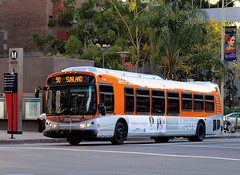
LACMTA Metro Local #8407
LACMTA Metro Local #8407 (Photo credit: L.A. Urban Soul)

Today it was announced that North American Bus Industries better known as NABI has been purchased by New Flyer Industries of Winnipeg Canada for a grand total of $80 million dollars. Although the NABI factor in Alabama will continue to produce buses at this time (currently has 1500 buses on order), it bascially leaves to companies (New Flyer and Gillig) as the major suppliers of transit buses in the United States (plus a few niche players whose orders don't amount to much).

The biggest existing customer for NABI is currently the Los Angeles METRO who purchases most of their buses from the company, having had conflicts with several manufactures in the past although most of those such as Neoplan have already stopped producing buses or the US market.


Friday, January 20, 2012

Six months riding Trimet and Counting...

It has been about six months since I moved to Portland, about 3 months since I updated you on my travels on the Trimet System. Last time my travel was pretty straight forward: Take the 54 and 57 to work, then ride MAX, WES and 78 to PCC Sylvania and back home on the 44 or I would ride MAX, the 6, and 44 to PCC. After Christmas, my life completely changed and I am always riding the 44 to PCC and back but my work schedule has me traveling a lot more which you can see from the number of buses I have rode down below.


Here is a rundown of the rail vehicles I have traveled on:

Manufacturer Information:    # In Fleet      #Ridden       Most Ridden and Notes

1986 Bombardier                    26                 23             107 and 116 (7 Times Each)
*The three I have not ridden 106, 119, and 126 I have never seen them either so not sure if they are still in service, being repainted since many of these cars are getting new paint schemes or just missing them.
1997 Siemens SD660              52                 50              245 (4 Times)
2003 Siemens SD660              27                 All 27         303, 308, 309, 314, 325 (5 Times)
2009 Siemens S70                   22                 20              410 (3 Times)
Streetcars                               10                 All 10          7 (4 Times)
Colorado Railcar Power DMU   3                  All 3            1001 (21 Times)
Colorado Railcar Trailer            1                  1                  Once
Ex-Alaska RDC's                     2                  2                 Once Each                                          


Now for the bus fleet:

Year:    Manufacturer/Model    # in Fleet    #Ridden       Most Ridden and other notes:

1990    Gillig Phantom 40'             63?           18            1420, 1422, 1430, 1458, 1459 (Twice)
*Not sure how many of these are actually still running.
1990    Gillig Phantom 30'             43             12            1609 Twice
1992    Flxible Metro 40'              107           47             1738 (4 Times)
1994    Flxible Metro 40'              26             17             1821 (4 Times)
1992    Flxible Metro 30'              10             9               Each one only once
1997    New Flyer D40LF            22             7               2016 Twice
1997    Gillig Phantom 40'             65             50             2139 (5 Times)
*These are buses normally assigned to the 44 Monday-Friday so its no surprise that I ridden them so many times.
1998    New Flyer D40LF            118           33             2202, 2206, 2210, 2246 (Twice)
2000    New Flyer D40LF            60             16             2518, 2526, 2560 (Twice)
2002    New Flyer H40LF            2               0            
2002    New Flyer D40LF            55             38             2632 (Three Times)
2003    New Flyer D40LF            25             16              2715 and 2719 (Twice)
2005    New Flyer D40LF            39             16              2807, 2825, 2834 (Twice)
2009    New Flyer D40LFR          40             All 40        2908 (6 Times)
*Since these are the regular buses assigned to the 54 and 57 and sometimes the 78, its no wonder I was able to ride all them over a six month period.
 

Although I have a very love/hate relationship with low floor buses:: easier to get on and off, faster wheelchair loading, however they loose capacity, are not the comfortable to ride in, and are not that well put together, I will have to say that the D40LFR's from 2009 do seem to making some headway quality wise.


While Trimet may be a bus fans paradise with the large number of Flexible Metro's still around, Trimet  does have an aging fleet and with Flxible having been out of business for almost 17 years now, I imagine that some parts are now becoming difficult to get. Trimet does have 55 diesel buses on order along with 4 hybrids which are coming from Gillig.

While Trimet has many haters out there including many of its own bus drivers, as a passenger I have to say for the most part Trimet has done an excellent job. Only once has there been a bus break down that affected me and that was when I was still riding the 54 westbound and one of them broke down leaving the garage. However, Trimet while the 54 is run out of the Merlo garage on the westside, they pulled a bus out of the Central Garage on the near east side and the bus was only running a few minutes late.

The only other incident actually worked to my benefit. One of the 1992 Flxible 30' Metros was overheating and it caused the bus to run about 10 minutes late which meant I did not have to way 20 minutes for the next bus to arrive.


Drivers on the other hand are a mix bag. Trimet does have some excellent drivers. I have sent in commendations to Trimet on two of its drivers. The first one was a driver on the 54 who is now working the 67. This person has a wonderful personality, knows how to treat customers, and was always a pleasure to ride with. Sadly the replacement on the 54 has not lived up to him.

The other driver I sent in a commendation for was on the 44. This person is extremely friendly with a wise cracking personality that works perfectly for the clientele on the 44. I rode with him a few times when I needed to make trips to downtown before heading to PCC from Beaverton.

There is only one driver I have come close to filing a complaint about. This person shows a lack of personality when you board the bus and this person gives you a look like the driver would rather cut your throat than have you on the bus. This person never says a word, just gives you the dirty look. If a customer asks this person a question the customer is luck if they get a grunt.

I always try to wish the driver a good day, afternoon, etc. when I get off the bus if the bus is not extremely crowded. One time when getting of the bus I gave this driver the standard good day and I actually got a response of the driver!! The driver say "whatever." I guess its better than a something else the person could have said.

I have ridden with this person on a couple of routes so the person must be extra board. Clearly this is someone who needs to find a job where they do not have to deal with the public.


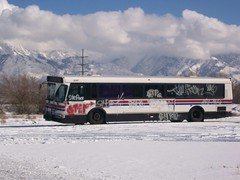
On Tuesday, I had my first encounter of adverse weather conditions on Trimet. Once again Trimet did what it was supposed to do and provided the best possible service under less than ideal conditions. Below is a picture of my 44 to PCC Sylvania on that day.

In fact the bus had to get around several cars that got stuck along Capital Hwy. and SW 49th. The driver did a great job and we arrived at our destination in good time.


In interesting note is that this was my first time every riding a transit bus with chains. The Utah Transit Authority I believe uses chains on its ski buses when conditions are bad but since I am not a skier, I never rode the buses to the ski conditions.

Another interesting note is the bus pictured above is equipped with automatic chains that engage with the flip of a toggle switch. The driver said these buses are the only ones equipped with them. I wonder if these were an add on order from another transit agency (add on orders is when a transit agency adds a bus order to another agencies order to get a better price on buses).


After six months of regularly Trimet, I can say that Trimet does what it is supposed to. Provide the best possible service to the most riders possible with the budget given them. I encounter many people in my travels that want to whine about one thing or another when it comes to Trimet, but overall service does the job it is supposed to.

Is Trimet a perfect agency? Of course not, there is issues that need to be fixed but it does its job well.


Enhanced by Zemanta

Sunday, October 16, 2011

Numbers for the geeks...

Bus 2909 of TriMet, the public transit agency ...Image via Wikipedia
Its been three months since I moved to Portland and started regularly riding TriMet. Since I am a numbers guy I like to keep track of the number of vehicles I ride and how many times I ride them. Not sure if anyone really would care about these numbers except for fans, but here goes.

The routes I ride most often are: 44, 54, 57, 78, MAX, and WES.


Model Information and number:                         Number Ridden:              Most ridden:

Buses:
    
1990 Gillig Phantom 40'     63 buses                  11 Ridden                       1458 (twice)
(not all left in service)
1990/91 Gillig Phantom 30' 43 buses                 None
1992 Flxible Metro    40'    108 buses               15 Ridden                       1738 and 1756 (twice)
(not all in service)
1994 Flxible Metro   40'     26 buses                 7 Ridden                         1821 (twice)
1992 Flxible Metro   30'     10 buses                 None
1997 New Flyer D40LF     22 buses                 4 Ridden                         None more than once
1997 Gillig Phantom           65 buses                 20 Ridden                       5 of them ridden twice
1998 New Flyer D40LF    118 buses                4 Ridden                         None more than once
2000 New Flyer D40LF     60 buses                 2 Ridden                         None more than once
2002 New Flyer DE40LF     2 buses                 None
2002 New Flyer D40LF      55 buses                8 Ridden                         None more than once
2003 New Flyer D40LF      25 buses                9 Ridden                         None more than once
2005 New Flyer D40LF      39 buses                9 Ridden                         2825 Twice
2009 New Flyer D40LFR   40 buses                32 Ridden                       2936 (5 Times)

Rail Vehicles:

1986 Bombardier                26 vehicles           16 Ridden                        116 and 122 (4 times)
1997 Siemens SD660         52 vehicles            22 Ridden                        245 (three times)
2003 Siemens SD660         27 vehicles             9 Ridden                         308 (three times)
2009 Siemans S70              22 vehicles            5 Ridden                          409 (twice)

Colorado Railcar Power        3 vehicles            2 Ridden                          1001 (7 Times)
Colorado Railcar Trailers      1 vehicle              not ridden
RDC's                                  2 vehicles            not ridden

(sorry the columns did not come out properly).

As you can see from the numbers since I ride the 44, 54, and 57 most often on the bus side the buses assigned to those lines (the '97 Gilligs to the 44 and the 2009 DL40LFRs to the 54 and 57) are the ones I have ridden the most.

I ride WES once per day two or three times per week and it seems like every time I get the 1001. I have never been in a RDC before and I am hopping to ride those this Friday if scheduling works out.

If anyone knows how many of the older buses and the Bombardier cars are still in service, I would be interested in finding out.    

I plan to update this as time goes on.
Enhanced by Zemanta

Wednesday, September 21, 2011

Adventures riding TriMet

The southeast side of the bus loop at the Beav...Image via Wikipedia

I just purchased my TriMet monthly pass for October, which is the third one I have purchased since moving to Portland in mid-July. It has been a few years since I have regularly commuted by transit since I could walk to my last job in Salt Lake so taking a transit trip was something special.

For the most part there is little to talk about on my commutes. My trips usually involve trips on bus and then connecting for a three station ride on MAX. I usually enjoy my first bus trip of the day because it is reverse commute to the Beaverton Transit Center and is not very busy. It is long enough that I can get some reading done before arriving at the transit center and connecting to MAX.

On my return trip I usually take MAX to the Goose Hollow station then ride the 6 down to Park in order to go pick up my mail.

For the most part, my commute is pretty routine which is a testament to how well TriMet does work despite the whining by some circles including some of its bus drivers. However every once in a while something will happen that will make the commute interesting and the last couple of days it has been on route 6 despite the fact I only ride it a few blocks.

Yesterday the incident was one that would get your blood pressure up and today's was one that makes you laugh. Yesterday the bus pulled up, and the doors opened. I always wait to see if anyone is getting off. There was one guy sitting near the front but he did not move so after a few seconds I started to board. The guy then starts yelling at me that he is getting off with a walker and why didn't I clear the way for him. I just moved around him and sat down. He then yelled at me some things that I will not repeat and got off the bus.

Then there was today. There was already a bus sitting in the bus stop area but he wasn't departing for 15 minutes. Another 6 came and pulled up behind him with the regular driver I usually have on this run. A Asian lady gets off the bus with when of those folding shopping carts. The problem is as you can see from the google view the bus cannot park perfect so there is always a gap between the bus door and the curb.


View Larger Map

As the lady gets off the bus she the small wheels on the back of her folding car come off. She starts yelling at one in particular in her native language, then walks to the wall on the other side of the sidewalk leaving her cart stuck between the bus door and curb.

The driver tries to shut the door to move the cart but it just fell back in. I guess he expected either me or the other passenger to move it but after a moment he put the parking brake on and moved the cart himself.

The bus pulled away with the lady just staring at her cart.

Starting Monday my journeys will become longer so I should have even more interesting encounter as a TriMet rider.
Enhanced by Zemanta

Friday, December 03, 2010

The Balancing Act of Paratransit Service

This is a sample of all services provided unde...Image via Wikipedia
I have commented many times on the difficulties presented to transit agencies with the passing of the Americans with Disabilities Act. One of the biggest difficulties is the bill created an unfunded mandate that transit agencies need to provide services to those with disabilities but provided no money to actually provide the service.

Notice, I am NOT saying that people with disabilities should not have transportation however, what we have to recognize the the service is costly and the funding has to come out of a transit agencies operating budget which means that route service has to be cut to provide paratransit service.

Depending on the transit agency, the average cost to provide service is anywhere from $25.00 to $35.00 per rider which is several times higher than providing regular bus service or even more times higher per passenger for most light rail services.

However, the ADA did not just require transit agencies to provide a totally separate transit system. It also required transit agencies to make their regular bus service accessible. At first this included adding wheel chair lifts. For some agencies such as RTD in Los Angeles this was not a big deal since they started ordering buses with wheelchair lifts back in 1977 with the 200 buses they received from American Motors General.

Gradually transit bus manufacturers and transit agencies transitioned from high floor buses with wheelchair lifts to low floor buses. While the wheelchair lifts were expensive to maintain the low floor buses have their own disadvantages including lower passenger capacity and other design issues.

To reduce the cost of Paratransit service transit service has a couple of alternatives to make it more efficient.

Once solution that many transit agencies have done is contracting out Paratransit service to private operators. Of course transit agencies are ripped to shreds over the service provided by the contractors and how they do not care about the disabled. The question has to be asked, since the service is essentially a glorified taxi service and not true transit service, are transit agencies doing the right thing by contracting out the service.

Another way to reduce the price of Paratransit service is for agencies to limit those who ride paratransit service to those most in need. Those who do not meet the standards for Paratransit service then have to ride regular bus service. While that reduces cost it is also fodder for activist and also slows down regular transit service since it takes longer to get those people on and off the bus service.

A third way that transit agencies are reducing the cost of Paratransit service is to only provide service to the 3/4 of a mile limit from a regular bus routes that is mandated federally. Once again this is extremely controversial and is blasted by those located outside that service area.

Finally you have the Flex and Call N Ride routes that Denver and Salt Lake have implemented that provides both regular route and off route service with small vans that substitute for regular paratransit service.

Whichever route a transit agency decides to take to reduce the cost of Paratransit service, they will be criticized for the decisions they will make. However, transit systems have a fine balancing act of providing transit service to the maximum number of people possible with limited funds (that are even more limited during these economic times).

Of course the ultimate solution would be to build livable cities that someone with limited mobility can get the services they need without long trips. One of the often overlooked aspects of livable development is that if people with disabilities are able to live with easy reach of businesses and services they use frequently, they fewer trips they will need on Paratransit service.

Until then transit agencies will have to continue to do the balancing act will continue between cost and needs.

Enhanced by Zemanta

Thursday, September 23, 2010

Transit station for downtown?

Picture of the STA Plaza in Downtown Spokane, ...Image via Wikipedia
I have seen comments in the past that we need a bus station in downtown Salt Lake City. We already have Central Station but is located on the far west side of downtown and for people transferring between routes is out of the way.

In addition the station is not truly a central station but nothing more than a glorified TRAX/Front Runner station with a Greyhound component. Hopefully the station will become a true central station over time but we shall see.

While at first thought a bus station in the downtown area would seem like a good idea considering the number of bus routes in the downtown area, the success of such bus stations in other cities have been mixed at best.

For many years the RTD (now MTA) in Los Angeles maintained a large bus station in downtown Los Angeles that was shared with Greyhound. The station was built on what was the approach tracks for the Pacific Electric and their grand Main Street Station. By the 1980's because of cost and the general decline of the neighborhood RTD stopped using the station and it was eventually abandoned by Greyhound.

Spokane, Washington is probably a good example of trying to build something in order to solve a problem that only created more problems. Until their new bus station was built all the bus routes in the downtown area would converge at the intersection of Riverside and Howard. Area businesses complained about the "wall of buses" that would block their streets and bring too many undesirables to the area so it was decided to replace the wall with a bus station (a historic irony is that most of the businesses that complained so much went out of business within a few years after the buses moved a block away to the new transit station).

The bus station was originally designed to be the lobby of a high rise that was to be built above the station however the high rise project was stopped by Spokane's decades long lack of an economy and by CAVE people who didn't like the idea of public-private partnerships (the Spokane area has a big block of CAVE people - Citizens Against Virtually Everything-or in Spokane's case are against everything).

In addition instead of having the bus station become part of the street life in the area, it was instead design to flow people into the skywalk system. However, by the time the transit station was completed the skywalk system was on life support and there was attempts to bring life by to the sidewalks in the area. While there is still some retail and some fast food restaurants to access across the street via the skywalk, the lack of good pedestrian flow to the street side has been a major issue for the bus station. In addition the bus station is often criticized for having too many young people around and scaring off the normals.

Compare that to Denver who has not one but two bus stations located in the downtown core. The difference in Denver is that local bus routes still serve the surface streets with express and regional service routed through the bus stations. Denver's stations are also located underground and where more successful with selling the air rights above the stations. Both stations are connected by Denver's free 16th Street Mall shuttle buses that make frequent trips between the two stations.

Denver is now in the process of replacing the smaller of the two stations with a new larger bus station as part of their Union Station redevelopment project. The bus station will still be underground but will also be a connection from the new light rail station to Union Station which will not only be serving Amtrak but also Denver's new commuter trains that will be running in the next few years.

Another problem that can crop up with downtown bus stations is the value of the property they sit on. In one smaller east coast city, property values and development started hopping in the downtown area so city officials wanted rid of the transit center so the property could be developed into more "useful" purposes. The bus station was not seen as an asset, or part of the downtown area, it was seen as a nuisance taking up valuable land resources.

Looking at the Salt Lake situation, the question is, where would you put the station in order for it to be convenient to a majority of the downtown users, convenient for all the bus lines to get to, and would have enough area for operations?

An ideal situation would have been to integrate it into the design of City Creek Center, although the developers of that project may have seen bus riders as undesirable in their new complex. Most of the other areas would be on the west side of downtown which would place it too close to the already existing Central Station.

The best current solution for Salt Lake City would be to put in dedicated bus lanes to improve bus flow and make bus waiting areas as welcoming as possible. This will do more for transit ridership and the riders than building a duplicate transit center.

Any city or transit system should learn the following lessons if deciding to build a transit center:

-What will be the long term cost of operations and can the transit system afford it on the long term?

-Will the station be designed to flow into the surrounding area or be cut off from the street?

-How will you deal with the perception that too many of a certain type of people hang out at the transit station (whether it be homeless, teenagers, or some other group that others consider undesirable).

-Will air rights above the station be sold and if there is a desire for that will public opinion and the area's economics allow it?

-If real estate starts to boom, will your property be protected from having a hostile city council from keeping the transit center off the land to sell it to a developer?

The number one reason to build a transit center/bus station in a downtown area should be to provide the best possible service to customers, not as a redevelopment solution or a way to move buses somewhere else. Build a transit center for the wrong reasons is only asking from it to fail in the long run.

Enhanced by Zemanta

Monday, August 16, 2010

Getting to the Great Outdoors

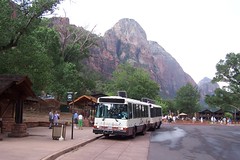
Shuttle Busses at Zion LodgeImage by J. Stephen Conn via Flickr
The Mobilizing the Region blog from the New York/New Jersey/Connecticut tri-state area has an interesting blog entry about America’s Great Outdoors Initiative.

Getting to “America’s Great Outdoors”

One of the major points made in the entry is that the Obama Administration is holding get meetings about the great outdoors but there is almost no talk about transportation issues when it comes to the "Great Outdoors".

One of the biggest problems our great outdoors are facing right now is transportation. While many national parks have shuttle systems and other tour options, only Utah's Zion Park has gone to the extreme of banning cars because of how many traffic jams is being created by automobiles in the park.

On the other hand the Grand Canyon proposed building a light rail system to make it easier to shuttle around the park but was stopped by conservative politicians in the Grand Canyon state.

However, while some parks such as Zions may be dealing with transportation within the park, most parks and the administration is doing nothing about getting people TO the national parks and other outdoor activities.

For example, while have to use the shuttle buses to travel through Zions in the peak season, unless you take one of the tour buses from the Las Vegas area your only option in reaching Zions by automobile. Arches on the other has the opposite problem. While there is private carriers that provide service from the Salt Lake area to Moab, the only way to access Arches without a car is by escorted tours. The problem with escorted tours is they give you little freedom and can be very costly.

Yellowstone National Park is another example of a park that is having issues with the number of automobiles using it. However, once again the non-automobile options are very limited. While they have restarted bus service around the park, the options for getting there is limited. You can use AllTrans from Salt Lake City to Jackson you have to take a tour from there. Until a few years ago Greyhound offered a daily bus from Salt Lake City to Bozeman via West Yellowstone but that route died when Greyhound went through one of its reorganizations a few years ago.

Glacier and Yosemite are probably two of the best options if you are doing a national park car free. To visit Glacier you can take Amtrak to West or East Glacier and take the shuttle options for there. Yosemite on the other hand has train and bus service to Merced where you can take Yosemite transportation to the park from there.

Lets take a look closer to home. Previously I have gone over my problems with the UTA's ski bus service. However, the service does provide a good function by getting people to ski areas and reduce the need to drive especially during the dangerous conditions that occur in winter.

The question is, what do people do the rest of the year to reach the mountains? UTA does provide two round trips a day up to the Alta/Snowbird area when the ski buses are not running, they are useless for most people trying to access recreation areas. For example when I go hiking near Brighton there is no option except to drive.

While it is great to encourage people to use the great outdoors, we also need to look at how people are going to travel and get around once they get there.
Enhanced by Zemanta

Thursday, June 10, 2010

The New Flex Routes


Monday I had an opportunity to ride one of the 3 new Flex routes that started back on May 3rd. The routes are funded by a Federal Grant administered through UDOT.

Many routes across the nation have been started on these Federal Grants. The thought is that once these routes are running the agency will find the funding to keep them operating. However, many of the routes that are started under these programs are ones that are not economically justifiable in the first place under current funding and often times die a quick death once the federal funding runs out especially in our current period of extremely tight budgets.

Here are my concerns with these three federal routes and especially the 626 that I rode:

1. Currently the 626 is using a bus out of Ogden's paratransit pool which does not have a headsign. What is annoying about this is that how does the average person figure out if this a paratransit van or a Flex route van. I would think they would at least put a hand written sign in the window so someone at the Clearfield or Roy stations would know that this is a Flex Route bus and not a paratransit bus.

When I rode the bus out of Roy there was two other Paratransit vans sitting at the station at the time so I had to ask the driver which one was the 626. I have noticed that many of the new paratransit vans are now equipped with headsigns to alliviate this problem with the new flex routes, can't one of these be transferred to Ogden?

Not only does a headsign help passengers figure out which van is the one they need, but it also a source of free advertising. People along the route see that they now have transit service and while they may not ride it themselves will let other possible passengers know about it.

2. Another problem with the 626 is the lack of bus stops signs. While Gordon ave had a few bus stops signs, most of the route only has signs where they are needed to tell the driver to make a turn. While I am not sure about Clearfield, there was not even a bus stop sign at the Roy Station.

Bus stops signs make riding the bus more comfortable for new riders because they know where they have to go out and catch the bus. For regular riders this may seem like a non-issue but for non-regular riders the signs show them that there is a route and where is goes.

3. As I mentioned in my trip report, unless something dramatic happens, I do not see this 626 lasting when the federal funding runs out. There was only one other passenger who rode the bus besides myself but hopefully over time that will increase once people know that the route exists.

4. If you look under schedules on the UTA website you will find the 626 under Salt Lake County (crazy, I had no idea Clearfield or Roy where in Salt Lake County), yet if you go into Weber and Davis County schedules the 626 is no where to be found.

Many consider the UTA website on the horrible side already, this is just another example of how the website is to use for non-regular riders. If you where looking on the website for this schedule and did not see it under Weber or Davis Counties, would you go looking for it under Salt Lake County?

5. Another issue with the route is that it serves nothing except rural and suburban residential areas. There is plans to build an auto-centric development at the corner of 4000 South and 3500 West but right now that is nothing but a sign. Otherwise you could not even get to a grocery store on this route without taking another bus however, the schedule is designed only for commuters so few would take it anyway.

On the other had the Herriman Flex does serve major shopping areas however, if you need to travel far, you may need to transfer up to 3 times to get anywhere since the only connection the Herriman Route makes is with the Riverton FLEX Route.

The new Alpine/American Fork Flex route is the best route since it not only serves major shopping destination but you can also make connections with major inter-county routes at the American Fork Park N Ride Lot.

6. I did notice while riding the 626 there was a large number of recreational trails located along the route. While the paratransit van did not have bicycle racks, there is plenty of room inside the bus for bicycles, this would be an excellent opportunity to promote the route as a way to reach the trails and parks along the way. Once the again the schedule is not conducive right now to that but it is a way to think "outside the box" and promote transit use.

I proposed a route similar to this a couple of years ago, the route makes since especially as a flex route since it serves such a semi-rural suburban area that does not justify full bus service but UTA has some work to do to make the service successful and worth keeping beyond the federal grant period.

In addition UTA needs to also work with the communities and organizations along the route and they need to step up to the table to help make this service a success.
Enhanced by Zemanta

Wednesday, March 31, 2010

UTA Press Release

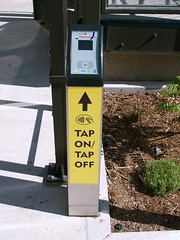
RFID credit card payment on FrontRunner and TRAXImage by Steven Vance via Flickr


FOR IMMEDIATE RELEASE
Contact: Gerry Carpenter, 801-859-6095

Date: March 31, 2010 Press Release


UTA To Adjust Bus and Rail Services

Service changes include the end of seasonal ski service


Beginning Sunday, April 4, Utah Transit Authority will make a number of changes to its bus and rail services. UTA will also end regular ski service to resorts in Big and Little Cottonwood canyons. Major changes are given below by service type. The reductions in service are a result of significantly reduced sales tax revenues due to the economic recession. For a full list of changes, go to www.rideuta.com/changeday.


Bus


In Davis and Weber counties, express routes 474 and 476 will be eliminated. Route 472 will not be discontinued as originally proposed; it will continue with seven trips in the morning and seven trips in the afternoon. The number of stops will be reduced to serve the three park-and-ride locations not conveniently located near a FrontRunner station: Riverdale, Layton Hills Mall and Kaysville.


In Salt Lake County, Sunday service will be eliminated on routes 39, 45 and 72. Saturday service will be eliminated on routes 9, 11, 17, 228, 232 and 248. Route 551 will be eliminated.


Other service changes are being made to increase efficiency and reliability, or to eliminate individual low-ridership trips. Several routes currently using North Temple will be rerouted in anticipation of the North Temple viaduct closure on April 18. See the UTA website for a full list of changes by route.


UTA’s regular seasonal ski service will also be discontinued effective April 4. Limited off-season worker trips in the morning and evening will continue to serve Little Cottonwood Canyon.


FrontRunner


Effective April 4, mid-day FrontRunner service will be reduced to hourly during off-peak hours. For northbound travelers, trains will run hourly between approximately 9 a.m. and 1 p.m. For southbound travelers, trains will run hourly between approximately 10 a.m. and 3 p.m. FrontRunner will continue to run at 30-minute frequency during peak commute hours. One new early morning trip will be added on weekdays, departing Ogden at 4:16 a.m. Evening FrontRunner service will shift to hourly after approximately 7 p.m. northbound and 8 p.m. southbound. The last northbound trip will be at 10:57 p.m.


Other changes include a schedule adjustment on Saturdays to improve connection times and a change to southbound trips from Pleasant View in the afternoon, which will require a transfer at Ogden station.


TRAX


As previously proposed, a reduction in the number of trips for direct Sandy-to-University trains will go into effect May 3 to coincide with the end of the semester at the University of Utah. UTA will continue to provide 15-minute TRAX service to the U of U and Sandy all day, but riders travelling during off peak hours will need to transfer at Gallivan Station.


For more information, visit www.rideuta.com/changeday.


###


Established in 1970, UTA has become a multi-modal transportation leader that is 100 percent accessible with 69 light rail vehicles, 35 commuter rail cars and more than 600 buses. UTA’s TRAX light rail system is currently averaging more than 40,000 riders a day along its 15-mile Salt Lake-Sandy line and the 4-mile University Line. UTA is an ISO 14001:2004 9001:2000 certified agency. During the 2002 Winter Olympic Games, UTA’s transit system was declared a great success on the international scene - carrying more than four million Olympic riders.


Follow UTA on Twitter:@RideUTA 18-UTA-033110


Reblog this post [with Zemanta]

Wednesday, June 17, 2009

More on FLEXTRANS...


Over the last few months I have watched in interest the battle over raising fares on the Paratransit service known as Flextrans. Those of you who read my blog on a regular basis know my feelings on what is wrong with Flextrans so I will not repeat it too much here.

What is really frustrating about this whole debate is that there is no willing to compromise to make a better solution especially on the part of special needs advocates. They would advocate cutting regular bus service to keep Flextrans at its present levels no matter what the cost. You would think that this would put a certain group who shall remain names and worthless in a pickle because they want more bus service not less however, thanks to one of the local road warriors they have come up with a solution.

The road warrior has advocated making the people on TRAX "pay the price" for daring to actually want to ride TRAX by making them pay a surcharge to keep the overpriced Flextrans service running everywhere possible.

So let me get this right, we will take the group using the most cost effecient form of transit in the area who already pay taxes to keep FLEXTRANS running, and make them pay even more for the service that by law they have no right to ride. Of course the road warrior will always remind you that they are paying for transit if they don't ride it but lets remember that at least they have the right to ride it, TRAX riders cannot ride FLEXTRANS.

That brings up one of the biggest problems that has been created by the Fedrally unfunded mandate the ADA. As I remember the ADA had the noble purpose of giving people with disabilities equal access and that included transit service. Part of that included putting in high cost wheelchair lifts and kneelers on the high floor buses that were a maintance nightmare. Then we moved on to the low floor buses which is a boone not only to the handicapped but also to the elderly and others who had a hard time getting up the steps. The problem of course is that the low floor buses seat fewer passengers and do not hold up compared to their high floor brethren.

However, the ADA also created a second transit system for those who could not reach the regular bus route and that is where FLEXTRANS comes in. So not only do we have equal access to transit but we have a special privilage service that only a select group get to ride. Now this would be problem if the cost were reasonable but instead, it cost 20 times more per passenger than does someone boarding TRAX or 10 times more than a passenger on the bus.

Up to this point UTA like many transit systems provided FLEXTRANS service beyond the federal requirements. However, as the cost has gone up, tax revenue has gone down, and other transit funding sources have dried up, it is becoming clear that something must be done to make FLEXTRANS more effecient and cutting out areas that are not required by ADA is a good place to start.

Am I saying that people outside the area should be left out in the cold so to speak? Of course not but we also need to realize that is not a transit issue but a community issue.

The County Council has chimed in on the issue and opposed the FLEXTRANS price increases. However, once again the council doesn't offer any solutions to the problem, they just want to score some political points by saying they were not in favor of the price increase. If the county council really wants to do something, maybe they should come up with some funding alternatives for the service since this is a community issue.

Clearly we need long term solutions to the high cost of FLEXTRANS and the disabled advocates need to come to the table with some good ideas instead of the usual dog and pony shows.


Reblog this post [with Zemanta]

Thursday, January 15, 2009

Article...

TRAX, bus fares will drop to $2 in spring

For now there will be fuel surcharges. However, at this point I would not hold my breath on them staying off as the price of fuel goes back up.

Utah County FrontRunner expansion on track

Rails are arriving for the new line.

Tuesday, September 02, 2008

Utah County Transit News...

Riders waiting at a U.S. bus stop with a shelter.Image via Wikipedia Bus rapid transit OK'd for Provo and Orem

Desired bus/rapid-transit changes in Orem

OK, I have made my feelings very clear on BRT so I will not go over them again. Basically you are going to take a bus route that runs every 15-minutes already (830) make it a little faster but then turn around and put on lower capacity buses (since the 830 still primarily uses Orion V high floor buses).

Orem will install 10 new bus stop shelters along State Street

I am glad to see Orem putting in more bus stop shelters as they are badly needed. I just hope they will maintain them once put in since they are often targets of vandals. Also doesn't help that State Street is a pedestrian nightmare.
Reblog this post [with Zemanta]

Sunday, August 17, 2008

Saturday trip to Ogden...

UTA TRAX Sandy train at the Gallivan Plaza sto...Image via Wikipedia Yesterday I had another experience at riding Front Runner.

I took the 2:25pm out of Central Station up to Ogden. Arriving at Central Station I was amazed at how many people were getting off the train and heading for TRAX. I knew that the Italian festival was going on in front of the Rio Grande depot but did not expect such crowding on a Saturday. While my train wasn't full it still had a pretty good crowd.

I forgot to bring along my schedules when I left home and didn't think to get one while on Front Runner so I went into the transit center to get them. I knew what times my buses were supposed to come but wanted the schedules in case something happened.

While the schedule racks were well equipped, there were no Front Runner timetables. In fact all the Front Runner timetables were stored next to the ticket windows but were not accessible due to a gate being down on the weekend.

After running into the transit center I got on the 603 which was a 2007 Gillig BRT bus in order to ride over to Washington Blvd to connect with the 612. The last time I was in Ogden I saw several Chinese restaurants along the southern portion of the 612 so I was planning to head to one of them.

I was delayed in boarding while a woman helped putt her elderly mother on the bus who needed to transfer to the northbound 612. There was also a family sitting near the front with a couple of children. I didn't pay attention to the two woman sitting on the left side of the bus as I passed them at sat down in the left side seats before the step to the rear of the bus.

As I sat down the one woman wearing jean shorts and a tube top on the left side of the bus was trying to collapse her baby stroller. She started getting really mad at it and after a couple of minutes threw the baby stroller out the door of the bus, then put a cigarette in her mouth and walked out and started smoking (at the time I thought the baby was still in it but the other woman was holding the baby).

After a couple of minutes she finished her cigarette, finally collapsed the baby seat then came in and slammed it onto the empty area above the right front tire. You could see the family on the right get upset when she slammed the baby stroller next them as it hit the side window very hard. The woman then looked at them and said "Don't give me a dirty look, just get the **** off the bus if you don't like it".

Yes this woman had some anger issues to deal with. The mother of the family on the right went up and said to the driver that she was nervous riding with that woman on the bus but the driver just kept looked in the mirror at angry woman as she bent over above the other woman who turned out to be her mother who was holding the baby.

Then angry woman made a couple of more comments to the mother on the right as the bus headed over to Washington Blvd which fortunately is a short ride. I got off the bus quickly and walked over to catch the 612. There is only supposed to be a 4-minute wait for the 612 but it was no were in sight. When I saw the northbound 612 show up I walked over to that bus since I still could not see the southbound coming.

I board the bus that was fairly crowded. I ended up sitting on the seat directly in front of the back door. The family from the 603 was sitting on the left side of the bus while the mother of the angry woman from the 603 sat in the same seat as I did on the 603. The angry woman's mother showed all the signs of being a meth user.

I knew there was some fast food places at 12th Street so I decided to head up there. We ended up stopping at every stop along the way and by the time I got off the bus was standing room only. After a quick lunch at Wendy's I took the 612 back to 25th street. This trip was very uneventful except for one woman who got on with a baby stroller with the driver telling her she need to have it collapsed before boarding the bus.

Instead of riding the 603 three blocks to Union Station I just walked.

Since I still didn't have a timetable for Front Runner, I went over and boarded the train after it pulled in at 8:25pm and waited for its 9:08pm departure. Just before departure a police officer walked through and checked everyone's tickets.

The trip down to Salt Lake City was pretty uneventful except for a couple of people who got into argument in the transition area at the end of the car although nothing ever came of it. When we arrived at Central Station at 10:15pm there was a huge crowed getting on who started pushing on before we could even get off the train. Some of them were even dressed in pretty formal attire.

I had a few minute wait until the next Sandy train departed. The northbound Front Runner left with a full load of passengers despite it being 10:25pm. There was even a large group to get on our southbound TRAX train. I knew since I was getting off at the 4500 South station the best place to sit was the very back of the train so that is were I decided to sit.

There was good crowds greeting the train at very stop and we had a full seated load by the time we left the Courthouse TRAX station. Upon arriving at the Ballpark station it was clear the Bee's game just let out and there was a wall of people ready to board the train. From the stop until I got off at Midvale North station the train was standing room only.

Overall, this trip was a mix of everything. From the people getting on Front Runner in formal wear to the angry woman it was a mixture of extremes. What is clear is that that we have a developing system that is becoming a vital regional resource. I was able to travel by UTA bus, Front Runner commuter rail, and UTA TRAX service to make a trip across the region. This is how the system is supposed to work, I was able to take multiple forms of transit to reach my destination in relative convenience.


Reblog this post [with Zemanta]

Thursday, July 31, 2008

Fares going up again??

A Capital Area Transportation Authority paratr...Image via WikipediaUTA has announced that it is looking to adding another surcharge to transit fares in October. While no one wants to see the increase in fares, we have to face facts that diesel is at an all time high. While some use this to attack TRAX and Front Runner, the true problems are the bus system and the paratransit system.

As I have pointed out in the past the paratransit system is an unfunded mandate through the ADA from the federal government that cost us $25 to $35 per rider. Yet the people who use the taxi service feel that they are entitled to pay the same fares or slightly more than bus riders that cost substantially less.

Also these vans that often run around the area with either one or at the most a couple of passengers also take fuel to run them so when the cost goes up, it is put on all of us to pay for it.

Another issue that is coming back to hurt us is our lack of density outside the Salt Lake area. While some people try to point out that fares are less in a city like San Francisco, we also have to remember they have a much higher density covering a much smaller area. UTA has to cover service from Payson to Brigham city that means you have buses covering a lot of miles and some very weak lines covering that area.

We need long term solutions to get more ridership on the buses. Even the increases we currently have are only a drop in the budget to what is really needed to make our bus system less costly. Sadly some people want instant solutions that will only do long term harm.


Zemanta Pixie

Monday, June 09, 2008

University of Utah embraces TOD

University of UtahImage via WikipediaArticle in the Trib today about plans of the University of Utah to turn itself into a more pedestrian friendly campus. Plans include replacing much of the surface parking with parking garages and concentrating development along the TRAX lines.

The University should be applauded for its efforts over the years to encourage its students to take TRAX and the bus. While Universities much like airports gain revenue from parking which many times will cloud their judgment when it comes to promoting transit service, it is clear that the U of U has seen that transit plays an important role in moving its students.

The boldest part of the plan is to replace the parking lot between the Stadium TRAX station and the Stadium itself with a huge mixed used complex that will include residential, office, retail, restaurants and entertainment. Not only will this benefit students at the U, it will also help those of use who transfer from TRAX to buses at that location. I often transfer from TRAX to the 213 or 220 and it will be nice to be able to do something while waiting for the bus or TRAX. You add the streetcar from my earlier proposal and you have a major entertainment destination. I hope that the University will encourage locally owned businesses to be a major part of this complex and doesn't give into chain phobia.

Another outstanding part of the plan is to replace temporary buildings near the Fort Douglas TRAX stop and replace them with new housing. This will put students directly on the TRAX line and allow them easy access to downtown shopping and entertainment and further reduce the need for the automobile.

By the way lets put some basic economics here. These developments will encourage transit use, not only TRAX but also the bus. It will encourage more people to ride them thus creating more revenue, revenue that then could be used to improve the bus system. As I have stated, the present problem is not the management at UTA, it is the fact that it is hard to take the bus in the Salt Lake Valley and once again not because of the route structure but because our streets, sidewalks and developments do not encourage transit use. Heck, as I have stated a million times, here we are in the 21st Century and when it is dark you need a flash light to flag down a bus do to the lack of streetlights. We have problems in Salt Lake, but the problems isn't were some misguided people think they are.
Zemanta Pixie

Thursday, February 07, 2008

Friday, December 09, 2005

700 East Loses Service

Well it looks like the December service changes will have little effect on most riders. The Ski Bus service starts up again with some realignments but otherwise there is little change.

The biggest change will the the lost of bus stops along 700 East.

For many years during rush hours, buses traveling in the rush hour direction would run as limiteds from 900 South to 4500 South making stops only at signalized intersections. However the bus stops where never properly marked as which stops would be served and which ones where not which created confusion amoung riders and created a lost opportunity to create new riders.

Now instead of fixing the problems with the existing service, the UTA has made the unilateral decision just to cut all the non signalized bus stops along this route. So instead of making a bad situation better they decided to make it worst.

What would have been a better solution to the problem was to make one of the 3 routes that service 700 East a local route and make the others limiteds. The 27 would have been the ideal candidate to make a local route while the 21, 32, and 44 should have all been made full time limited stop routes.

Once again UTA is looking at numbers and not considering their riders. They need to make the transit system friendly in order to capture the choice customers. The people making the decisions do not ride the bus enough to understand the needs of the riders. Too often they look at charts made by computers and do not understand why things are they way they are. There needs to be a change of thinking to improve the UTA.
Reblog this post [with Zemanta]

Friday, November 04, 2005

UTA Poorly Serves Destinations

If you are traveling to the University of Utah, Gateway Center, the Delta Center or any other destination served by directly by TRAX, you will have an easy time getting there. But if your destination is served by a bus, good luck, you might be able to get there or you many not because UTA poorly serves destinations.

A perfect example of this is the Southtown Mall. You can get close by TRAX but from there you have to take a bus. On Saturdays you may be able to get a bus in an hour or so but that is it. On weekdays you have a little more luck as couple of routes do serve the mall but UTA does a poor job of directing people from TRAX to the mall. There is no signs telling people when a where a bus heads to the mall. Considering it is a major destination, UTA should improve getting people to the mall especially since its one of the few malls that actually allows buses to service the mall.

Jordan Commons and the Southtown Expo center are another pair of destinations that has pathetic bus service. The route only runs Monday through Friday (although night service does run on Saturdays). Jordan Commons went to the point of renting a Double Decker bus to run from the Sandy Civic Center TRAX station to Jordan Commons. However, these places will get a TRAX station that should be opening next spring.

Another major destination is Jordan Landing. This relatively new shopping center was designed to be transit center. However route 82 that directly serves the center has been cut back to Weekdays only and if you want to travel there on Saturdays you have to ride the 42 which is a north/south route. In addition if you ride the 42 you a have to walk almost a full block then cross a very dangerous intersection and take your life into your hands.

This is just a few examples of major destinations that are poorly served by the UTA. When UTA reorganizes its bus service in the next year it needs to look at the places that people want to travel and ensure that bus service is provided to those destinations.
Reblog this post [with Zemanta]