Showing posts with label Bus Riders Union. Show all posts

Monday, September 28, 2009

Post 1000...

Los Angeles Union StationImage by kla4067 via Flickr

Welcome to post number 1000 from Transit in Utah.

This post has been a few weeks in the making, not because it's going to be anything spectacular but because I have been so busy with outside activities that posting here has taken a back seat.

However, I plan to get on the train again so to speak and do more regular postings again.

In post number 500, I talked about where this blog started and where it was going so this time I decided to focus a little more on about me without revealing too much that you don't really care to know.

First of all, despite what one misguided member of the Bus Riders Union and probably a few others, I do not, have not and probably will never work for the Utah Transit Authority.

I have been a transit and rail travel advocate for many years, too many that I want count. I started off advocating better bus service in my native land of Southern California, and helped push LA toward having a effective rail system.

I moved out of Southern California before many of those systems came on line but it is nice seeing progress despite all the political BS that occurs in that area. Of course here in Utah we have are own version but that's another story...

Advocacy toward better rail passenger service grew out of transit advocacy or was it the other way around?

While I support an effective rail passenger system, I am not a big fan of Amtrak. I believe that Amtrak is hindrance to better rail passenger service instead of being a benefit. I see many of the same troubles that infect transit systems also infects our national rail passenger system.

Being a small business owner and being involved in business for many years gives another perspective on both transit and rail transportation.

Over the years I have seem many steps forward but just as many steps backward. Hopefully we can continue being a voice of how to make our area more livable.


Reblog this post [with Zemanta]

Saturday, August 09, 2008

3 Years Old...

Salt Lake City from space.Image via WikipediaToday, this blog turns 3 years old. Now that may not sound like much, but in the blog world I guess that is doing pretty good. Looking through most of the transit rated blogs I read regularly only a couple of them have last longer than this blog.

Just a couple of days ago I look at some of this blogs early posts and it turns out that one of the early ones was talking about how difficult UTA's Trip planner is to use, I guess some things just never change.

When I first started this blog, I primarily focused on UTA and its service. But over time and after learning from some of my fellow bloggers, I started talking about other things that effect transit service including development patterns. I also started doing a lot of reading and research including reading the book Big-Box Swindle: The True Cost of Mega-Retailers and the Fight for America's Independent Businesses which shows why some development happens and how much in subsidies companies such as Wal-Mart, IKEA, and Corabella's get in subsidies that in turn harm small business owners.

The big changes occurred when the bus changes happened last year. There is two things that I disagree with UTA about and they work together and that is the concept of duplication and using marketing matrixes to increase ridership potential. UTA falls into the same trap most other transit services fall into and that is considering duplication a bad thing. Here is a perfect example of duplication: State street before TRAX started. Routes 12, 22, 24, and 25 would all travel down State Street then branch off south of 6200 South. This allows riders to pick up passengers at outlining points then combine to provide frequent service in the main corridor.

When I was going over my proposals for bus service some time ago had a branch of the current 220 (then line 8) branching at Fort Union Blvd and traveling to the Fort Union TRAX station and providing every 30-minute service along Fort Union Blvd. This in connection with an every 30-minute service route 72 would provide alternating every 30-minute service along Fort Union Blvd. Current Transit Mentality thinking is that this is a bad thing because it is duplication. However, it is creating a matrix of additional single trip destinations and actually promote additional ridership.

However, lets look at the more positive things that have happened in the last three years. We had tax votes in Utah County to put on a tax for Front Runner and Salt Lake County to build four new TRAX lines by 2015. In addition, we have seen the first Front Runner started and the extension of TRAX to the Central Station.

However, a lot changed after the bus changes back in August. First of all I did not like all the changes that took place. After all, the bus my wife could ride to work , the 32 was discontinued with no replacement service (the 307 doesn't count because it travels in the wrong direction for her). To make some people happy some service was restored including a bus along 100 South from the U to downtown which is ridiculous since there is already service on South Temple and 200 South which was also restored.

However, some people unhappy with the changes got together and formed the Bus Riders Union basing it on the damaging BRU in Los Angeles but changed the name Transit Riders Union as though they were out to support all transit riders. While I know there is people who really care and want to see good transit service, there is very dangerous elements with the transit riders union including a group of people who actually would nothing more than all transit service be eliminated and the funding transfered to highways.

In addition the BRU in Los Angeles has been disaster. METRO caved into the BRU demands instead of fighting the lawsuit. BRU wanted no standees on the buses. That meant that METRO had to add lots of new buses that greatly increased cost (it is ironic that Curitiba that BRT promoters show off as nirvana only works because buses run at 300% capacity). In the long run buses outside the BRU's "special areas" loss service and they are looking to loose even more service over the next few years because of how much money METRO bled over the addition bus service that it could not afford.

The only person that truly benefited from the BRU was their leader Eric Mann who drives around in his brand new BMW (shouldn't the head of the BRU ride the bus?).

While UTA is not perfect, UTA actually provided better service than any system serving a similar sized city. What UTA faces that many other transit systems its size do not is covering the amount of miles it covers. It has to service all the way from Brigham City to Payson, Grantsville to the ski areas to the east, in areas with very low density.

The final issue with the UTA service is the unfunded federal mandate called paratransit. It is considered taboo even to bring this subject up but I will continue to do it. I am not saying the service is not needed but we must face facts. We actually have one of the lower cost paratransit system's in the nation but it still cost between $25 and $35 per rider. Since this was implemented it has taken 25% of the transit funding away from the buses. We need long term solutions to help provide this service.

So where do we go from here?

By 2015 we should have three new TRAX lines plus the extension of the current North-South line down to Draper done.

On the Federal side, while I am not hopefully that anything will ever pass, we need more fairness in the tax right offs for developers. Currently everything is skewed toward new developments and against rebuilding. In addition everything is skewed toward the big businesses against smaller independent businesses. We also need to put an end to the 70 years of pro-highway social engineering that has taken place since FDR.

On the local side, hopefully the rise in gas prices is making people wake up that good transit service is needed and that all the sprawl will eventually catch up with us. Instead of trying to destroy transit service in Salt Lake by having UDOT take it over and put the funding in highways, we need to focus on building livable communities that encourage transit service which will increase bus ridership and make help make the service less costly.

We have seen a lot of progress in 3 years, but there is much to be done. The problems that face us will not be solved by getting rid of one person or a group of people at UTA. What is going to solve the problems is people working together to make our communities better and more livable. It will not happen overnight, but think about what we can accomplish in a generation.

Zemanta Pixie

Thursday, June 05, 2008

The BUS Riders Union shows its true colors

Apparently the bus riders union is getting desperate. Having lost its bid to stop the fuel tax surcharge, now it is attacking light rail head on posting an article by Randal O'Toole describing how Light Rail is a failure.

I have spent the last few hours deciding if I should even bother with this, but considering the bus riders union is trying to pass off this misinformation campaign I decided I should go over the facts.

O' Toole has long been a apposed to transit, especially rail transit and uses the fact that he is a foamer to qualify himself as an expert. For those who don't know the term foamer it is used to describe rabid railfans, the types you see carrying the scanners and in general wearing shirts and hats from current or dead railroads.

So lets go over what O' Toole claims and go over some facts.

1. His first point is that Light Rail Cost tax dollars to build.

Well yes, it does cost money to build but so does any infrastructure project. How many billions will go to the new Mountainview Corridor highway? However, clearly the taxpayers of the counties affected have seen the benefits of the projects and support them.

2. Light Rail does not get people out of cars.

Just look at the numbers created by TRAX. TRAX is now carrying 33% of all transit riders in the 6 counties that UTA serves. That's right folks, even though the bus network covers six counties an hundreds of miles, our 24 mile light rail system is carrying 33% of the entire transit load. Also, consider that TRAX by 2000 was carrying the same number of passengers as every major bus route including routes such as Redwood, 900 East and Highland that did not directly compete with TRAX. Also, since ridership did not dip that much on these routes it is clear that TRAX was carrying

Here is another illustration using Los Angeles, the Blue Line between Los Angeles and Long Beach is now carrying upwards of 80,000 people per day (while a nearby busway carries 5,000). If you were to replace that line with buses you would have to run articulated buses with crush loads every 60 to 120 seconds to carry the numbers that the Blue Line is carrying. The Blue line replaced an express bus (that originally replaced the red car interurbans), that ran every 20 to 30 minutes and only carried a few thousand passengers a day plus a local route that carried even less.

Light rail does attract those out of cars.

3. Light Rail can inconvenience riders.

O' Toole tries to claim that transit systems that put in light rail lines loose overall ridership. Clearly this is not true as ridership on UTA has gone up substantially. Even a better indicator is that revenue has gone up consistently since TRAX has gone into service. Yes some people have to transfer who didn't previously, but overall service is improved. Also, the problem with buses being cut isn't the cost of light rail since it cost less per passenger than buses, its that there is not enough people riding the current bus system with shows other issues besides the light rail.

4. Light Rail increases congestion.

Apparently because lights are timed for light rail trains it increases congestion. However, if you were running BRT, then you would have buses holding signals so wouldn't that increase congestion also? Also the lack of light rail would put more buses in the downtown region so that would also create more congestion. In other words we are grasping at straws here.

5. Light Rail benefits Downtown Property Owners at the expense of others elsewhere.

O' Toole uses one study to say that money is repositioned to downtown thanks to Light Rail. Could it be that people are more likely to come to downtown when they don't have to deal with traffic and parking issues. Personally, I only went downtown once or twice in the two years before TRAX started but after it started running I would go downtown much more frequently because the parking and traffic hassles were history.

6. Light Rail Does not stimulate local economic development.

More nonsense from O'Toole here. He claims that the only economic development is created by taxpayer subsidies to developers. Of course you will never here O' Toole mention the subsidies that go to big box retailers and other developments that are not transit related since they are apparently OK.

7. Light Rail Increases Energy Consumption And Greenhouse gases.

Here he attacks the TRAX directly saying because of TRAX buses are running empty causing energy consumption to go up. Then he says that bus ridership in Salt Lake went down 50% when TRAX started although the truth is bus ridership has remained relatively flat for 15 years. Of course there was areas that were loosing riders namely the Ogden area and Provo/Orem but the last time I checked TRAX did not go into those areas.

8. Light Rail diverts tax dollars that could go to more worthy transportation projects.

Here is were O'Toole and the BUS riders union shows its true colors. He states that money should be going to highways that buses could use and not rail transit. Apparently he believes the voters of Utah and other areas are stupid because they support transit. We already know that the BUS riders union will seek the support of those who want to steel the TRAX funds to support highways and this is even more proof.

I would urge everyone to go comment on the Bus Riders Union blog entry and tell them how you feel.
Zemanta Pixie

Tuesday, April 22, 2008

Transit and Development Opportunities


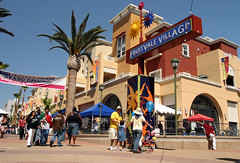
FruitvalePeople2
Originally uploaded by RACTOD
It seems that the transit union wants an easy answer to the problem of the transit dependent. Instead the problems are not going to be fixed by handing the transit system over to an organization that does not have the transit system in its best interest. Instead we need to look at why people who need to ride transit cannot find places to live that are convenient to transit instead of being in an area that doesn't currently support the system.

One of the problems we face here along the Wasatch Front is the lack of a cohesive area wide planning organization. Of course any attempt to create one would fail due to the cities fearing the lost of planning control, so we have to deal with many individual city administrations.

In that context what can be done? First residents of each of the cities need to insure that their planning departments are taking transit into consideration when designing their zoning which includes transit oriented development. However, the best plans can go wrong as we have witnessed in Salt Lake City as the planners and city council cave in to developers and big corporations over and over again.

Every city should be encouraged to create a special zoning area around major transit concentrations. One that will focus on a certain amount of low income housing, nice retail areas that focus on locally owned and operated business that are also transit oriented, plus open space.

There are many areas of the area that this type of zoning would fit into. One example would be the intersection of 4500 South and State Street. Currently an auto centric area that is pedestrian unfriendly but also a couple of blocks from a transit oriented development. This area could be developed to eventually blend into the main transit oriented development at the TRAX station.

The Redwood Road corridor north of Salt Lake Community College all the way to North Temple has areas that would be ripe for this type of development. In fact there is many major intersections throughout the region that developments would improve the neighborhood.

It doesn’t take much imagination to see many spots where this will work. The best areas are ones that could use some redevelopment, are served by two good bus lines (preferably the ones that run every 15-minutes), plus a city administration that is willing to make things happen.

This will allow more affordable housing options that will greatly improve the lives of those who are transit dependent instead of harming them like the transit riders union direction will.

Saturday, April 12, 2008

Why turning UTA over to UDOT is a bad idea.

Some in the Bus Riders Union (clearly from their rhetoric they are not a transit riders union), apparently think that turning control of the UTA over to UDOT would be the greatest thing since sliced cheese. So would the state running UTA be such a good thing?

First of all lets remember that almost all state dept. of transportation units started off as department of highways but had their name changed to show that they are more than highways. However most DOT's are still dominated by highway hard liners who have no love of transit of any kind.

Not only would the Utah State Highway Department be running UTA under the Bus Riders Union dream, but that would mean our state legislature would have more control over the funds. Lets remember that our state legislature has clearly shown they are very anti-transit and would love nothing more than to transfer those funds to highway projects.

In essence you would have someone from Bluff, Utah deciding how transit funds would be spent in Salt Lake City. How were do you think the guy from Bluff would want money spent, on some bus line in Salt Lake City that only the 'transit dependent' ride or on a highway project near Bluff that would help him or her get reelected?

Now lets take a look at some of the few examples of were a state controls transit funding and operations.

First of all, lets take a look at New Jersey. While New Jersey has an extensive bus and rail network things are all not well in the state. The head of New Jersey transit is the person who is politically connected not the best person for the job. This creates a situation were some projects are develop in such a way that is best for those who are politically connected than the actual people using the service.

Now I know that our friends at the bus riders union hate John Inglish, but what can of person do you think our state legislature would put into the job? Do you really think it would be the best person for the job or will it be some politically connected hack who could care less about the riders?

Another state that runs the transit systems is Maryland who provides transit service in Baltimore. Bus service in Baltimore is poor and it is hard to move about the area. A couple of years ago I was attending a conference in Baltimore and found it nearly impossible to find a motel that I could stay in that would have transit service to downtown.

In addition the transit agencies funding is at the mercy of state government who cut transit funding for a period of years but increased highway spending. This led to less transit service for the 'transit dependent' because of things being controlled by politics. This past session the Maryland legislature passed a fare box recovery requirement for transit in the state. This is one of the those feel good bills that sounds great to create more responsible spending but has unintended consequences.

To put it into perspective lets say that UTA is giving over to UDOT and this same bill passes our legislature and is signed by the governor. What would happen to transit service? Well guess what, TRAX and Frontrunner would still be around because they would meet the fare box recovery target but 99% of ALL bus service would be gone, history, dead. As pointed out, the bus system does not do well when it comes to fare box recovery especially compared to rail. The bus riders union would have been directly responsible for death of most transit service to the 'transit dependent' due to unintended consequences.

Turning UTA over will not give more bus service to the 'transit dependent'. What it will do is make UTA funding political and at the whims of a hostile state legislature who rather see roads funded that buses to the 'transit dependent'.

IF the bus riders union truly cares about the so called 'transit dependent', maybe they should start fighting against some of are auto centric development policies, decisions and subsidies that create a situation that people are forced into housing that is not convenient to transit due to lack of good choices.

Tuesday, March 25, 2008

Transit Related Articles

Utah Transit Authority to release draft environmental study for light-rail extension

North Carolina's CATS posts passenger-count record in February

Interesting article from Charlotte showing how ridership has skyrocketed after their light rail line opened. Having lived in Charlotte for two years I can tell you that their bus system was next to useless (anyone who says UTA is bad should have been forced to ride CATS when I lived there).

Thank you to the Transit Sleuth out of Portland for referring the article above.

Sketch aims to encourage UTA probe

Then there is the Bus Riders Union and its allies. I guess when the facts are not backing you up, you do a dog and pony show in order to get heard even if you are wrong. Don't get me wrong, UTA is far from perfect, however these people don't want good transit service they want pathetic transit service.
Maybe its time to start figuring out where the funding is coming to these people. After all, when the Bus Riders Unions financial statements became well known they started loosing respect. Of course the Bus Riders Union here in Salt Lake has little respect but sometimes even a small group despite they don't represent the majority can do long term harm.

Wednesday, March 12, 2008

Transit Riders Union Letter to the Editor Posting

A letter to the editor to the Salt Lake Tribune has been posted to the blog of the transit riders union which clearly shows that they are willing to use anything to advance their political agenda. After reading the letter, I decided to respond…

Your proposal sucks. I do not approve of this
proposal. One of the U. of U. professors pulled a
whine and cheese act and UTA immediately jumped up to
accommodate her.

OK, first of all, if I was reading this response it would go in file 13 ASAP. Talk about an unprofessional response. No one will listen when you spew like this except for the few people who have the same political agenda as you.

UTA did not have a public meeting on this proposal.
UTA did not notify the public when UTA added the 7:09
p.m. 223 bus to the outbound schedule.

UTA would not return "nightride" to the southeast
section of Sugarhouse UTA took away. So, why should
the 100 (plus) of us who used the "nightride" give
approval to this bunk.

Now, I have no idea what this guy is talking about when it comes to the U of U professor and if you read the rest of the letter it is clear he doesn’t know what he is talking about. Throughout the letter he makes statements that are untrue or show we say that they use “creative license” with the facts.

First of all 100 plus did not ride the nightride (he is referring to the old 107). According to ridership records which compares to my observations of this route when it was still running, it averaged 62.9 riders per night (winter months higher, warmer months lower). That averages out to less than seven riders per trip. Of this ridership, 90%+ was north of Interstate 80.

Now you would think from this guy’s attitude that all “evening” service was killed. On the contrary, there is still “evening” service provided to the area by the 21 and other routes that provide service to a majority of the riders who used to ride the 107. In fact there is “evening” service along 3300 south.

Finally he complains that UTA ADDING service to the 223? Talk about a whine and cheese session because UTA didn’t have a formal public hearing about it. Well, I hate to tell you sir but UTA doesn’t have to have a public hearing when adding a run to a route. The last time I checked they need to have a public hearing when they are changing 25% or more of the operation of the route, so one run will not rate a public hearing.

Now let’s look at the next part of the diatribe:

#1 The routes were cut last October because the UTA
managers wanted their bonuses. I was informed by
"insider information" that the managers had received
their bonuses when they made the route cuts. I was
also informed by the "insider" that UTA planned to cut
driver jobs. This is a violation of the contract UTA
and ATU(Amalgamated Transit Union) agreed to recently.
These managers make more money and bonuses then most
other transit managers. What a shame!

Huh? The last time I checked there were no cuts in October since UTA usually changes bus service three times a year and that is August, December, and April. Somehow I get the feeling that some bus driver is feeding this guy a load of bull and he is running with it as “insider information”.

The next part:

#2 UTA lied about the ridership increase. UTA "cooked"
the figures they claimed they had counted during their
recent UTA TRAX survey.

Hate to tell you this, but even with the adjustment in the ridership numbers, ridership is still up thanks to TRAX but we have already seen that you understand how to cook numbers and we shall see more in part 4.

Here is part 3 of the diatribe:

I agreed with The Deseret(Morning) News article of
January 2007 and a BYU economics professors assessment
that the ridership would not increase or get people to
leave their cars and ride public transit.(verbatim
quotes) The Deseret News article stated that using
public tax money would also not get people out of
their cars. The TRAX spurs were a waste of taxpayer
money.

Facts are facts; TRAX is creating new ridership and will continue to do so especially the Daybreak line that will give service to areas that have lousy bus service now. If you look at the lower cost per passenger on TRAX, it will soon pay of its cost of construction or already has.

Should I go into the economics professor? After all if you line up 10 economists in the room they will have 10 different opinions. I had 3 economic professors in college and the three of them could not agree on the day of the week much less anything else beyond the basics. Clearly the BYU professor has his political slant and will not let facts get in his way.

Let’s take a look at number 4. Sorry, but this one shows that the writer is not only wrong but he will take “creative license” with the facts.

“The riders also complain about
the numerous transfers they must make.
Instead of taking 40 minutes to get to the downtown
area it now takes me 60 to 90 minutes. If I decide to
ride mid-day it takes longer. IF, I say, IF I am lucky
and the bus/Trax is on time it takes me 66 minutes.
Every day I catch the 6:18 a.m. 223 Route(20th E. 27th
S.). If it is on time I get to the Stadium Trax
Station at 7:10 a.m. There is a 4 minute wait for trax
then another 10 minutes to ride downtown.”

OK, let’s look at the fact that shows that the writer lied here.
The 223 at 20th E. 27th South does leave at 6:18AM. OK so he told one truth. Now doesn’t it seem odd that it would take a bus from 6:18AM to 7:10AM to get to the University? Well guess what, there is something odd because it is not true. The 6:18AM bus from 20th E. 27th South arrives at Stadium TRAX not at 7:10AM but at 6:35AM. The next bus 30-minutes later does not even arrive at 7:10 but at 7:05AM arriving at the Business Bldg at 7:08AM, so were does this person get his 7:10AM number from?

TRAX then leaves at 6:44AM arriving at the Civic Center Station 6:57AM so a total elapse time of 39 minutes, one minutes less than the 40-minute that it is “claimed” to have taken him before.

Maybe this guy should read the schedules better since it is clear he either does not ride the bus or is just not telling the truth.

Then there is point 5 talking about the Davis county situation. While the county did a poor job of saying what the initiative as for since from my interpretation it was a highways bill only, it is clear that money from the food sales tax is being lost clear and simple.

Here is the next part of the diatribe:

“The situation that pissed me off the most was
hearing from several of my insiders that this U. of U.
professor continues to pull her "whine with her cheese
act" and complain about one specific driver. This
driver does his/her best at the job. The driver read
several complaints that stated the driver was ten
minutes late on several occasions. This driver told me
that the supervisor checked the UTA GPS and found one
time the driver was late 1.5 seconds.”

Here is more of the “insider” information. Here he says the driver does his or her best job. Clearly he is taking information from one source, a dubious one at that, and taking it as fact.

The final part of his diatribe:

I am not able to attend downtown nightlife
functions because UTA took away the Sugarhouse area
"nightride."

Actually as I mentioned before most of Sugerhouse area has better “evening” service than it had under the old system. After all they have the 209, 220, and the 21 that all provide evening service. However, most of those riders were along the stretch that still has good evening service. While it may be a few blocks away, there is evening service on the 33 down on 3300 South.

It is clear that the Transit Riders Union will not be satisfied until they have the service THEY want and everything else is bankrupt just like Los Angeles.

We have seen the damage that can be done when a group gets too powerful and can start dictating policy no matter how poor the policy is. Because of the consent decree in Los Angeles, the Bus Riders Union was able to dictate policy to METRO for 10 years and now the Los Angeles area is seeing bus service cuts because of how badly the Bus Riders Union drained the METRO resources.

While Eric Mann the head of the BRU drives around in his BMW, the bus riders of Los Angeles who he claims he helped now have worse bus service than ever. Let’s make sure that does not happen in Salt Lake City.

Saturday, December 22, 2007

Video Being used by Bus Riders Union

As anyone who regularly reads my blog, you will know that I am opposed to the Bus Riders Union. In Los Angeles 10 years after the BRU won a court order to improve bus service, service is at an all time low and the only people who won were the lawyers who got rich and Eric Mann who was the head of the BRU with a salary close to John Inglish's. The BRU caused the MTA in Los Angeles to spend money it did not have, run routes that did not make sense, and keep fares artificially low.

While I was not happy with the changes that UTA made in some areas, we also have to recognize that the funding will only go so far.

The only way the BRU achieved what it did in Los Angeles was by race baiting and dealing with a board that more interested in scoring points than what was best for transportation.

Meanwhile our local BRU is trying to do the same here in Salt Lake City. They have this video being showed which is very interesting. First it is 19 minutes of bashing UTA but lets look at some of the issues:

1. Icy Driveway
-Sounds like a problem with the owner of their nursing facility not UTA's. If it is a problem talk to their landlord.

2. Narrow Sidewalk
-Once again how is this UTA's problem. They would not route a bus down a side street were these people are so what is the complaint to UTA here? While I agree that narrow sidewalk's are a problem, that problem rests with poor urban planning, not UTA.

3. Sidewalks not Shoveled
-This sounds like a problem for the city not UTA. How is UTA to blame for this?

4. Roots of a Tree Damaging Sidewalk
-Once again this is not a problem of UTA's it is a city problem

5. A Truck from an Auto Repair Shop Blocking the Road
-Once again this is a problem with the auto repair shop, not UTA. Maybe if they would nicely go and talk to the owner he would take care of the problem. Instead they will probably go in and threaten a lawsuit or something and just alienate the small business owner not win the owner over.

6. Complains that bus stop has grassy area in front of it. Sprinklers turned on in summer.
-Ok, here is a problem that UTA can deal with but it is not UTA's fault that a property owner turns on the sprinklers. What if they went in and talked nicely to the landlord and told them their problem?

7. Drivers come flying out of the Maverick parking lot that is on the corner.
-Can we once again say a city planning issue not UTA's fault. There is not much UTA can do abut having driveways near a bus stop.

Once you get to the end of the video you do see that the bus does come behind their building were an old bus stop was. OK, I see it is reasonable that a bus stop be reestablished there if it is safe, but they also want nite ride like the old 107 so they will not be shut in at night. Well that is a little more trickier isn't it. How much is it going to cost to restore the nite ride service? More importantly how much is it going to cost?

Here is the link to the video complaint:
BRU Video

Restoring the bus stop they complain about should not be a big problem after all, but restoring the nite ride would be extremely expensive. This is were the danger is. While I think UTA can do a better job with it routes instead of using the transit mentality of "no duplication" and create routes using a marketing matrix system, you cannot run routes into the night if they are getting only one, two or no riders.

As much as I depended on the old 124 when I lived in Sandy and worked to 10:00pm at night, the 124 was only carrying one or two people and many times no one. If I was still living in this apartment I would not have a night ride and would face an hour walk home. However, bus service cannot be justified when so few are using it. Otherwise we would have the massive bus cuts that Los Angeles area is now facing.

Now if we could get more people on the bus during the day, which would require a more marketable service, our bus service would be bring in enough revenue to justify the nite service. Until that time UTA cannot run a bunch of nite ride service with few to no riders.

Tuesday, December 04, 2007

Transit Related Articles...

UTA begins bus service to ski resorts

Those wasted capital resources start getting there 4 months of work.

Man jumps in front of TRAX; no passengers hurt

You have to feel sorry for the operator of the train as it is something that you will never get over.

Murray celebrates its new development


Lets hope the city of Murray does a better job with this development than they did with the development along 5300 South.

UTA chief has routinely failed

Looks like Drew Chamberlain has crawled from underneath the rock that he should go back under. Lets see, TRAX ridership is not down 30%, and Commuter Rail will provide congestion relief to anyone who uses it just like TRAX. Since he is also trying to get Inglish fired I wonder if he will make a deal with the devil like his buddy Rubin did in Los Angeles and support the Bus Riders Union.

Saturday, September 29, 2007

Danger with the Bus Riders Union

I have mentioned it before but after the complaint session this past week about the service cuts and the calls for a bus riders union, I think it's time for me to go over again the problems I have with it and the problems it can cause especially since I saw some of the rhetoric coming out at the protest.

The biggest thing I see happing is a direct attack on the rail programs. By demonizing the rail programs they create an us versus them attitude which will only lead to failure on both sides. First and foremost the voters want rail and have voted for it twice. Rail construction is not taking away from bus service.

In fact by making blatant attacks on TRAX and FrontRunner they are actually doing more harm than good. If you look at what financial numbers the UTA presents (which are not that great but they are all we have to work with), there are some things that are clear:
1. That revenues have gone up over the last 10 years.
2. That revenues went up substantially when both TRAX lines opened
3. That bus ridership has gone down over the last 10 years (and it started before TRAX).
4. That TRAX gets 14 million riders per year and the bus system gets only 21 million
TOTAL and that includes they entire system.

So what the numbers say is that the two TRAX lines are carrying 2/3rds as many riders as the entire bus system.

What this says is the problem is not TRAX but the bus system and how UTA is running it. Also you have to look at our cities as a whole and why they are not attracting bus riders.

Instead of looking at TRAX as the big evil one take a look at some issues that UTA has:
1. Poor equipment utilization: Ski Buses and Fast Buses are an example.
2. Almost no bus shelters in the system: Considering are weather extremes shelters are needed. Denver is doing a much better job providing shelters. Blame UTA and the cities.
3. UTA is falling into the same transit mentality planning which says duplication is bad (only in the way UTA does it: 307 and 320 on top of each other, the old 11 and 7 on top of each other, the list goes on).
4. UTA by trying to avoid duplication actually worsens it's market penetration possibilities and decreases ridership potential.
5. The UTA has gone to a grid systems. Grid systems have proven they only work if bus service is more frequent than every 20-minutes. While that is good for their new frequent routes, all the other routes are hurting because of the grid design.
6. Where UTA has made people transfer, like on Redwood, State, crosstown routes at TRAX, they did not create time transfers. In fact in some cases the if you are traveling westbound and need to transfer to a route beyond TRAX, the bus you needs leaves 2 minutes before you get there. UTA needs to work on timed transfers.
7. The way the buses like 4500 South/4700 South, 3900 South/4100 South were cut at TRAX also shows that UTA doesn't understand marketing dynamics. Life doesn't end at the TRAX stations it is only a stopping point.

UTA has problems but attacking the rail program is not the solution but attacking the direct issues with the bus system is.