Showing posts with label Paratransit. Show all posts

Monday, July 12, 2010

Reducing Unnecessary Auto Trips

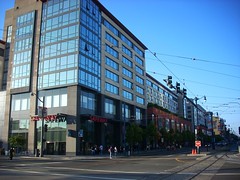
Transit oriented development at 4th & King Str...Image by LA Wad via Flickr


Trip Numbers

Anyone who has paid attention to transit advocacy over the years have been hit in the face by the road warriors with the statement: "Transit represents only a small portion of trips".

First of all when it comes to numbers, numbers can be manipulated any way you want to make your point especially if you have a agenda to extend. What the trip numbers don't tell you is several things:

  1. They do not compare how many trips are taking in a particular corridor say from the area of the Sandy TRAX station to downtown.
  2. Second, this numbers also include business trips including commercial deliveries and pick ups.
Second, the logic of the road warriors is that all these people driving instead of other options "choose" to drive. The truth is that people have little choice but to drive but there are ways to reduce the driving numbers.

Do we have choice?

The question is, do people choose to drive or is there no alternatives.

As I said in my posting about Density, TOD and TAD, few people have the choice to reduce auto trips. Even higher density development throughout the area is truly auto centric and does nothing to reduce auto trips.

As I mentioned in that article, if a person needs some basic supplies at a grocery store or basic convenience items the only choice is to talk a mile or more but more realistically is to get into the car and drive.

Statistics show that many auto trips are less than two miles in length.

Reducing Trips with TOD

As I mentioned in the TOD article, one of the important aspects of TOD is to reduce unnecessary auto trips. This is done by providing businesses such as cleaners, restaurants, small grocery stores near these developments.

If people live in these developments, they can quickly walk to these services without getting in their car. When I lived in Charlotte, North Carolina back in 1990-1992 my apartment complex had a shopping center within its confines. In fact several apartment complexes were withing walking distance of this shopping center.

Instead of driving to the grocery store or other stores in the shopping center I could walk reducing many unnecessary auto trips. In fact my walk to the shopping center was probably less than many people's trips across the Wal-Mart parking lot.

Not only do these provide services for the residents in the TOD developments but they can also reduce trips for those that park at transit stations. A person could get off their TRAX train, grab their dry cleaning, pick up a gallon and milk and head home. The alternative is the person first gets off TRAX, drives to the dry cleaners, then drives to a grocery or convenience store, then finally drive home.

Reducing Paratransit Trips:

As I have mentioned before, the biggest cost facing transit systems is the unfunded mandate to provide ADA Paratransit service. I am not saying this service is necessary for the people that use it, but what the Federal Government did was burden transit systems to provide service without any additional funds to provide it.

However, one of the benefits of TOD is that it gives those with physical disabilities the ability to live in areas where they don't need paratransit service as frequently as they do now. Not only does this allow the mobility impaired to have more options but it will reduce the number of extreme paratransit trips.

Government and Other Services

Another problem with our current system is the how hard it is to access many government and other services such as libraries, government buildings, and post offices.

Post Offices

Few people realize that until a couple of years ago the Postal Service did not have to abide by our current bad zoning ordinances much less any transit friendly ones. Many post offices are extremely pedestrian unfriendly such as the one in Midvale despite it being close to the Midvale Central TRAX Station.

Also many main post offices have been moved to where it is convenient for their trucks to hub not for their customers. For example the one at 2100 South and Redwood is close to transit but is very hostile to pedestrians.

The future of the postal service is beyond the scope of this blog but there needs to be a thoroughly study on what its future is. Should people living in urban areas continue to subsidize the mail delivery in rural areas? How much is it costing to provide home mail delivery service across the suburbs?

One solution would be to put small contracted postal stations in TOD developments in addition to other retail development. Like other services the postal service should concentrate new post offices close to transit connections.

Libraries:

Libraries are another government service that need to focus their locations where transit access is easy and convenient.

Lets take a look at the Holladay library as an example since I frequent that one. While it is currently on a bus line by moving it either to the new a few blocks away to either the new Holladay Village center or to the largely abandoned center at the northwest corner of Murray-Holladay and Highland that badly needs to be re-purposed.

Another solution would be to create pick up points at TOD developments so that people could order books and pick them up on the way home from work or while running other errands.

Other Government Services

Too many recent government buildings have focused on building Taj Mahals facilities that have poor access for citizens. New government buildings should be designed economically and with easy acccess for transit riders and pedestrians.

Final Thoughts

This was a small example of how we can reduce short auto trips.

It will take collaboration between private businesses, government agencies, and other organizations that provide services. It will not happen overnight and will have resistance, but in the long term a more sustainable area will be created.


Enhanced by Zemanta

Thursday, June 10, 2010

The New Flex Routes


Monday I had an opportunity to ride one of the 3 new Flex routes that started back on May 3rd. The routes are funded by a Federal Grant administered through UDOT.

Many routes across the nation have been started on these Federal Grants. The thought is that once these routes are running the agency will find the funding to keep them operating. However, many of the routes that are started under these programs are ones that are not economically justifiable in the first place under current funding and often times die a quick death once the federal funding runs out especially in our current period of extremely tight budgets.

Here are my concerns with these three federal routes and especially the 626 that I rode:

1. Currently the 626 is using a bus out of Ogden's paratransit pool which does not have a headsign. What is annoying about this is that how does the average person figure out if this a paratransit van or a Flex route van. I would think they would at least put a hand written sign in the window so someone at the Clearfield or Roy stations would know that this is a Flex Route bus and not a paratransit bus.

When I rode the bus out of Roy there was two other Paratransit vans sitting at the station at the time so I had to ask the driver which one was the 626. I have noticed that many of the new paratransit vans are now equipped with headsigns to alliviate this problem with the new flex routes, can't one of these be transferred to Ogden?

Not only does a headsign help passengers figure out which van is the one they need, but it also a source of free advertising. People along the route see that they now have transit service and while they may not ride it themselves will let other possible passengers know about it.

2. Another problem with the 626 is the lack of bus stops signs. While Gordon ave had a few bus stops signs, most of the route only has signs where they are needed to tell the driver to make a turn. While I am not sure about Clearfield, there was not even a bus stop sign at the Roy Station.

Bus stops signs make riding the bus more comfortable for new riders because they know where they have to go out and catch the bus. For regular riders this may seem like a non-issue but for non-regular riders the signs show them that there is a route and where is goes.

3. As I mentioned in my trip report, unless something dramatic happens, I do not see this 626 lasting when the federal funding runs out. There was only one other passenger who rode the bus besides myself but hopefully over time that will increase once people know that the route exists.

4. If you look under schedules on the UTA website you will find the 626 under Salt Lake County (crazy, I had no idea Clearfield or Roy where in Salt Lake County), yet if you go into Weber and Davis County schedules the 626 is no where to be found.

Many consider the UTA website on the horrible side already, this is just another example of how the website is to use for non-regular riders. If you where looking on the website for this schedule and did not see it under Weber or Davis Counties, would you go looking for it under Salt Lake County?

5. Another issue with the route is that it serves nothing except rural and suburban residential areas. There is plans to build an auto-centric development at the corner of 4000 South and 3500 West but right now that is nothing but a sign. Otherwise you could not even get to a grocery store on this route without taking another bus however, the schedule is designed only for commuters so few would take it anyway.

On the other had the Herriman Flex does serve major shopping areas however, if you need to travel far, you may need to transfer up to 3 times to get anywhere since the only connection the Herriman Route makes is with the Riverton FLEX Route.

The new Alpine/American Fork Flex route is the best route since it not only serves major shopping destination but you can also make connections with major inter-county routes at the American Fork Park N Ride Lot.

6. I did notice while riding the 626 there was a large number of recreational trails located along the route. While the paratransit van did not have bicycle racks, there is plenty of room inside the bus for bicycles, this would be an excellent opportunity to promote the route as a way to reach the trails and parks along the way. Once the again the schedule is not conducive right now to that but it is a way to think "outside the box" and promote transit use.

I proposed a route similar to this a couple of years ago, the route makes since especially as a flex route since it serves such a semi-rural suburban area that does not justify full bus service but UTA has some work to do to make the service successful and worth keeping beyond the federal grant period.

In addition UTA needs to also work with the communities and organizations along the route and they need to step up to the table to help make this service a success.
Enhanced by Zemanta

Wednesday, April 01, 2009

The proposed Paratransit Fare increases

For those in the Salt Lake area, you are now well aware that UTA is proposing to raise Paratransit fares to $4.00 per person or double of regular fare. Once again the a small and vocal group will be attacking UTA for this proposal and probably bring out their dog and pony show.


However, it is important to take a closer look at the Paratransit service is, how it came to be and how much it actually cost.


Paratransit service was created out of the ADA law back in the early 90’s. While the Federal Government forced transit systems to provide the service, there provide no operating funds to make the service happen. Overnight anywhere from 25 to 50% of a transit agencies funding was diverted to create ADA approved Paratransit services.


The problem with Paratransit service is that it is more of a taxi service than a transit oriented service. People who are not capable of taking regular bus service are picked up at their homes and taken to work, appointments or shopping. While this service caters to a very small group of people, the cost to provide the service is substantial.


As I have noted before, it cost about $1.75 per passenger on TRAX, $3.75 on the bus and about $35.00 on Paratransit. The cost of providing transit services is not just a problem for UTA but for transit systems across the nation.


Transit systems are caught in the middle between a group of people who think that everyone should have a bus on their front door step and the politicians who have starved transit to death and put unrealistic requirements on how well they perform.


We must face the facts that we are paying the price for 70+ years of auto centric development that makes transit more expensive that it would be otherwise. As more baby boomers get up there in age, this will have an even more dramatic effect on mobility of our society.


Finally, it has to be pointed out once again that most transit funding comes from one of the most volatile forms of taxing, the sales tax. When the funding is need the most during hard economic times, it is going down. Until a stable source of funding can be found and a sure fire system to keep politicians from steeling it away from where the voters approved it to go like in California, transit systems will continue to suffer when a sales tax dollars go down during recessions.


While it is easy to go and blame the UTA, there are many more problems that are too hard for many to comprehend. Instead they will go out and complain about the big evil UTA, call for John Inglish’s head, because it is the easy thing to do while looking for the root causes would take time and effort.

Tuesday, March 18, 2008

The F94

In their first posting in months, the planner from the UTA is claiming success for UTA's F94 flex route service. While I agree that the route is providing a service that UTA was willing to abandon, I think success should be measured in different terms that the UTA does.

However, let’s look at the F94 as we have before and see what can be done to make it even more successful. First of all there are a couple of things that is really holding the F94 from being a true success:

First of all, the route only provides every 80 minute service. This makes the service useless for a majority of transit riders thus greatly decreasing how much potential the service has. Second, the route only deviates ¾ of a mile from the route of the old 94 route which makes it too inflexible to truly be called a flex route.

Now take a look at Denver’s Call N Ride system and see how it works. Basically you have cutaway vans based out of a light rail or bus transit station and service is provided a minimum of every 30-minutes (and in my experience the service is much more frequent than every 30-minutes). Call N Ride provides transit service to entire areas providing much better and more convenient service than regular route service could in those places while still providing good connections to the regular route service.

Now let’s take a look at route 525, the former 25 that provides service from TRAX to the Sandy Industrial area and along Monroe. This route would be a perfect route to turn into a Call N Ride route. If people need to be picked up they just give a call or they pick the cutaway van up at the TRAX station. While the Historic Sandy TRAX station may be a little more convenient for this service, traffic along 90th South is just going to get worse so it does make sense to use the Midvale Center TRAX station. The neighborhood will get better bus service with vehicles that make more sense for the area.

Another area were Call N Ride service will make since is along the Daybreak TRAX line. Service could be provided too many areas that currently and will continue to have non-existent bus service. There is areas such as South Jordan and Herriman that regular route service does not work but Call N Ride would make sense.

A side benefit of this type of service is that it can also reduce trips by Paratransit since some Paratransit riders could use regular route service but cannot get to the transit station; this allows them to use the regular route service and still use the mobile van. Considering the financial black hole that even advocates for the physically challenge know Paratransit service to be, reducing any need for Paratransit service makes more service available to all.

The F94 is a start, but to be truly useful transit service it still has a way to go.

Tuesday, February 12, 2008

The Cost of Paratransit Service.


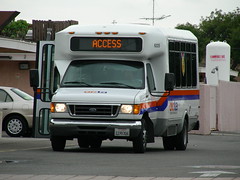
OCTA Access
Originally uploaded by So Cal Metro
In the first part of this series I discuss what was done with the regular bus network in order to comply with the Americans with Disabilities Act. Now its time to discuss the other part of the puzzle, the Paratransit service called Flextrans here in Utah.

The Anti-Hunger Coalition and its band of yellow shirts and the Transit Riders Union both try to portray TRAX as the reason why bus service is being slashed. It is an easy target for those who do not look closely and the numbers and truly sees what is happening. However, TRAX is not to blame when it comes to the cutting of bus service. Just take a look at some of these financial numbers

Just a note: I am using numbers from UTA’s 2006 budget. So that no one could say the ridership numbers were too high, I cut the actual ridership numbers on TRAX by 20% but left the others alone. Of course the some would argue that UTA is padding the numbers but the numbers are in line with transit systems across the nation and the world.

I also want to point out that I am NOT saying Flextrans is not needed, I am just pointing out the cost of the system compared to the rest of the transit system.

So here are some numbers to think about. Looking at costs vs. passengers, TRAX cost $1.37 per passenger. So in other words TRAX is covering its above the rail expenses (meaning direct operating cost) and contributing to overhead. This makes TRAX the second most efficient light rail system getting beat only by San Diego. However, the numbers are in line with the other systems as they are very close with the exception of Los Angeles but that is another story.

On the other hand, it cost $3.31 per passenger on the bus system. So not only is it not covering its direct operating cost, it is not contributing to overhead. This is one an area that UTA can improve since it is one of the more performing systems.

Finally you have Paratransit service. It cost $24.95 per passenger for every passenger that boards the Paratransit service. To put this in perspective if UTA did not have to provide Paratransit service, bus service could be increased 17% percent overnight. In addition Paratransit handles only 4% of the numbers TRAX does and 2.5% of the bus system.

So as you can see, what is costing the bus system is carrying the weight of the Paratransit service not TRAX.

Now the ADA was designed to give those that needed it, equal access which is a good goal. However, wasn’t equal access created by putting wheelchair lifts or the creation of low floor buses? This gives everyone the same access to transit service to everyone. However, the requirement for Paratransit service creates special services that everyone else is not entitled to ride.

Since Paratransit service is needed by those who use it, but is essentially a taxi cab social service, should the transit system budget be responsible to take care of it? Or should it be the responsibility of the social services agencies?

We also know how the Paratransit passengers screamed when UTA started requiring them to pay more for there services than regular bus service (although the amount of difference has dwindled). Should Paratransit riders be expected to pay more for the premium service they require?

These are not easy questions to answer.

Thursday, February 07, 2008

What is Costing UTA?


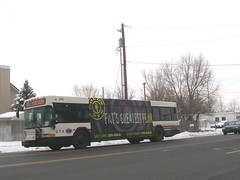
UTA Route 45 Gillig Advantage
Originally uploaded by jmdspk
Today I will begin a four part series on what is really costing the UTA. As regular readers will know, I have been critical of organizations such as the Anti-Hunger Coalition and the Transit Riders Union as they often become pawns of anti-transit forces and also demonize the rail program as being cause of all the problems.

However, in this series I will point out the most costly program the UTA has to deal with and that is satisfying ADA requirements. Let me make it clear I am not trying to debate the needs of the ADA, I am point out what it cost to deal with it. In part one I will deal with the regular bus system, in part two I will discuss Flextrans and in part three I will go over the latest demands of the ADA, and fourth I will discuss some solutions.

In the late 70's wheelchair lifts started appearing on buses. The SCRTD in Los Angeles was one of the first agencies to purchase them with their AMG buses in 1977. However, until the ADA took effect, most transit agencies avoided them.

One of the problems with wheelchair lifts is that they can be extremely costly to operate and have been prone to multiple troubles. In addition the sidewalks need to be designed to be able to let the driver safely deploy the lift and everyone familiar with Salt Lake area sidewalks know they were not designed for that.

As a solution to problem of the lifts the bus manufacturers started coming out with low floor buses such as the Gillig Advantage pictured operating on route 45.

The idea of the low floor bus first came out with the Transbus program by the Federal Government in the late 70's. However most of the current bus manufacturers pulled out the program due to escalating cost, however when the ADA came along the bus manufacturers again started looking at the low floor buses.

There is two advantages of low floor buses:
-No Wheelchair Lift
-Faster loading and unloading of passengers if the transit system takes advantage of them (which UTA has not except in the poorly design BRT scheme on 3500 South).

There also several disadvantages:
-Reduced Seating Capacity
-Increase maintenance cost especially the front end
-Not Customer Friendly

There is other issues but those can be traced to poor build quality due to the transit systems not holding the manufacturers feet to the fire to build a better bus.

In conclusion, transit systems lost capacity and faced increased cost to cooperate the ADA. However, the real cost is Paratransit and in the next part of series I will go over the cost of providing Paratransit (Flextrans) service.