Showing posts with label Paris. Show all posts

Friday, August 13, 2010

Perils for Pedestrian Video

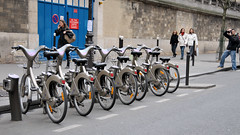
Paris Bicycle for rentImage by Serge Melki via Flickr
I has been a few months since I posted one of these videos so I decided to was time.

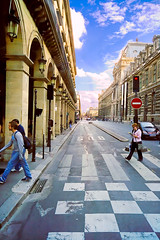
This episode is from Paris, France. It is interesting to see the city of Paris which we think as a more pedestrian and transit friendly city still has its own problems that create problems for pedestrians.

Also some great information on the bicycle sharing program that has been going on in Paris. Like anything it has its troubles but overall the program has been working well. There is also some good comments on the usually comments you get when you attempt to take away parking.

The video also shows you how simple the bicycle sharing program is.

Perils For Pedestrians Paris

Enhanced by Zemanta

Tuesday, July 13, 2010

Observations from Paris from Jarret at Human Transit

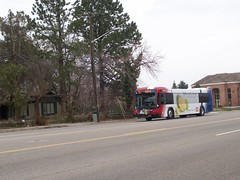
Bus LaneImage by thorinside via Flickr


Jarrett from the Human Transit Blog has an interesting post about the city of Paris.

paris: the street is ours!

Jarrett points out many streets in Paris not only have dedicated bus lanes that can be used by bicycles but also have dedicated bike lanes.

However, while the lanes would be great would they last here in the United States in our auto dominated society? Chances all the answer is no.

Jarrett points out that many times the lane appears empty despite it carrying more people than the general purpose lane. However, auto drivers will see a lane that is not congested like their lane so their sense of entitlement will click in and say they should be entitled to use that lane because it is not being used enough.

We have see this here in Utah with the HOV lanes. Many drivers say they are entitled to use the HOV lanes and make every excuse in the book why they should. Eventually the lanes will be opened to other traffic during off peak before gradually being degraded during rush hour.

This is one of the fears with dedicated bus lanes for BRT such as those on 3500 South and what is planned in Orem/Provo. In Los Angeles the El Monte busway opened as a dedicated busway but now is open to car pools and is just as congested and sometimes more congested than the regular lanes. Because of the mistaken belief that the lanes were not carrying enough traffic now the lanes are actually carrying less because they are congested.

It would be wonderful to see this design on streets such as State and 200 South that would allow faster movement of buses and safer movement of bicycles. Yet, it will take a major change of attitude before it becomes workable here in the United States.
Enhanced by Zemanta

Wednesday, January 21, 2009

Blog Entries of Note...

{{w|Ray LaHood}}, member of the United States ...Image via WikipediaFrom Streetsblog San Francisco:

Bike, Ped Improvements Part of Portland’s Stimulus Plan

Many places are being criticized because their stimulus plans is too highway oriented but Portland is looking to finance bike and pedestrian improvements.

Obama Nominee Ray LaHood Appropriated Big Money to Road Lobby

Obama's nominee of LaHood has been criticized across the board and will most likely be the most dividing nominee of the Obama administration.

From the Daybreak Blog:

Daybreak's New Community

Daybreak is creating a community that is for the over 50 crowd. However, it will not be an exclusive area, just one that has the features that the over 50 crowd is looking for. With this part of the population getting bigger and needing more pedestrian friendly environments, it is nice to see Daybreak comeing to the table.

From the Bike Utah Valley Blog:

Why we Build Roads Instead of Transit

Some common sense from Brad down in Utah County.

From the Denver Infill Blog:

#7: Downtown Streetcars!

People in Denver like many other cities across the country are starting to consider streetcars as an alternative to buses.

From the Mobilizing the Region Blog:

The Latest Stimulus News from D.C.

The blog shows the breakdown of where the money for transit will go as apposed to the money that will allocated for highway projects.

From the California High Speed Rail Blog:

"A Revolution In Travel Habits"

Spain is seeing big changes in riding habits since the opening of the new high speed rail line between Madrid and Barcelona.

From the Amtrak Tracking for my Commute Blog:

2nd Hudson Rail Tunnel Clears Key Federal Hurdle


New Jersey Transit is getting closer to building the new tunnels under the Hudson that will connect the Northeast corridor to New York City. While on the face of it this is a project that will give badly needed capacity, it is also a project that shows the typical transit menatily blinders that keep from seeing the bigger picture. The new project will not connect up with other regional carriers and not improve transportation throughout the region.

From Streetsblog:

Streetfilms: Sharing Street Space in Paris

How Paris drivers share the road with bicycles.

From the Cap'N Transit Rides Again Blog:

The Failing Railbanks

Railbanking seemed like such a good idea. Take a rail line that is not currently being used by may be needed in the future then rail bank it as a trail for the time being then reactivate the rail line when needed. However, the trail advocates want the trail to themselves and fight to keep rail lines from being reactivated.


Reblog this post [with Zemanta]

Tuesday, June 17, 2008

Making Salt Lake Bicycle Friendly

The Salt Lake City, Utah Image via WikipediaHow are we going to make our area more bicycle friendly?

The City of Salt Lake is turning 200 South into a more bicycle friendly street but what else is being done to encourage the use of bicycles? After all, much of the valley is pretty flat which makes it perfect bicycling territory, but we still have few facilities for bicycles.

I have to admit I have not rode a bicycle since I was in Jr. High School because it just became to dangerous to ride. I was living in Southern California at the time and there was no bike lanes so the bicycle ended up being parked.

Recently I did purchase a new bike for recreational riding along the Jordan River Trail. There is few bicycle lanes or other facilities near me so my riding will be limited to the trails.

So what are the answers?

In some European cities bicycles have their own separate area. You will have car lanes to one side, then dedicated bicycle lanes and finally the actual sidewalks. This gives bicycles their own right of way so they are not interfering with automobiles or pedestrians and their right of way is not invaded.

The city of Portland is making bike lanes much more noticeable by painting them and then also have large areas at intersections for bicycles to wait.

Another area where Salt Lake City could catch up is Bicycle shares. While I was on vacation back in May there was an article about this in one of the local papers. We need to adapt a system such cites of Paris have with bike sharing. There you put in a credit card deposit and then you can rent a bike relatively cheaply for a certain amount of time. There is talk of putting such a facility in at the Central Station but there will need to be more facilities to make the project workable.

The wonderful blog Transit Miami often has several previous entries about trying to make their area more bicycle friendly and yesterday had a link to the city of Cambridge that is one of the most bicycle friendly cities in the country.

Bicyclist can also help the cause by not doing things like running red lights that only hurt the cause of making the area more bicycle friendly.
Zemanta Pixie

Tuesday, April 15, 2008

Fast Buses get more stops...

While going through the changes that will take place to bus service on April 26th, I noticed that UTA is quietly adding bus stops to many of the fast buses that were started in August.

When these bus routes first started, I pointed out that the negligibly increase in speed would not make up for the loss of potential riders due to fewer bus stops. For example my wife works at 3500 East and Bengal Blvd just around the corner from Smith’s. The old 32 bus used to provide direct service from our home to her work. The few times I took her to work I noticed that there was passenger standing at every bus stop along Bengal Blvd to catch the 32. How many of these people still took the bus when faced with a much longer walk just so the bus could be a few minutes faster?

What it comes down to is that the market potential for the slightly faster service does not equal the market penetration of the additional stops. This brings into question how well the 3500 South BRT line will do considering it is replacing the 35, not supplementing it.

UTA is not the only one to fallen into this trap. Amtrak the company that never learns from its history keeps making this mistake. On the northeast corridor between Washington DC and New York it has tried a non-stop or one stop express train several times in order to save a few minutes between the two points. However, every time they try it the train is discontinued in about a year because the time savings (most recently 10 minutes) does not justify the loss of riders from making fewer stops.

Metro in Los Angeles made the same mistake with the Gold Light Rail line. It created an express service but once again the time savings was not enough to justify not stopping. The train loadings become very uneven and this express service quietly died in the latest changes at Metro.

So how does this compare to Europe and Japan who are building a bunch of high speed rail lines or New York City that offers express subway trains?

Do you really think that France and the rest of Europe plus Japan just decide to build a high speed line for the fun of it, or because it would be cool? When they decide on which lines to build a high speed line they look at rail routes that are at capacity already. For example the first TGV route in France was between Paris and Lyon. This route was running over capacity so something had to be done so they built a new rail route. In addition, the TGV did not replace the regular trains between Paris and Lyon, it supplemented them.

In New York the situation is the same. The express subway service supplements the existing local subways that are already at capacity.

So when should fewer stop service be implemented?

Only to supplement existing service when that service is at capacity or you create a line were the time savings will create new marketing dynamics.