Showing posts with label Public transport. Show all posts

Monday, April 04, 2011

Guest Post

Interior of the upper level of a Bombardier bi...Image via Wikipedia
This is a guest post by All Resort Transportation a privately run transportation company based in Utah. 

Will The Utah Transit System Stand Up To a Disaster?

I began this post planning to write about the current situation with public transit in Utah, and then the earthquake struck in Japan and suddenly any of our problems in this state seemed absurdly miniscule by comparison. When the 8.9 (or 9.0, depending on your source) earthquake struck and caused the tsunami, it killed thousands and uprooted hundreds of thousands, destroying homes, roads, and anything else that was in its way.

The earthquake was felt as far away as Tokyo, which is some 150 miles or south of the epicenter. Despite the distance, the shaking was bad enough that the city shut down the transit system until they could be sure that it was structurally safe to use. Cities like Tokyo rely on their public transit systems, and when it was shut down for safety reasons, literally millions of people were stranded in the city with no way to get home or communicate with loved ones.

The Ramifications of the Shut Down
The commuter lifestyle is a little different in Japan than it is in Utah (not a big surprise there). Sometimes people will commute for hours in one direction to get to work, and some estimates say that more than 10 million people use the public transit system every day. Shutting any of these services down for even a short time would have serious ramifications, and after the earthquake millions of residents were stuck without an option.

Officials shut down the trains and subways because they needed to ensure that everything was still safe. Some lines were down for around six hours and others for much longer. Hotels were immediately flooded with people looking for a place to stay, and the government began opening schools and official buildings where people could seek shelter and sleep when it got too cold outside. We saw a lot of pictures of people curled up on the floor in the train stations and others standing in line to use a pay phone since the cell networks were immediately overloaded.

After a day, most of the transit infrastructure in Tokyo was up and running again, but it was still a little sporadic. Because of the power issues caused by the loss of the nuclear plants up north, Tokyo is planning on rolling blackouts to help conserve energy. This is leading to a slightly more erratic train schedule, but commuters seem to be dealing with it as well as could be expected.
How Would Utah Do?

Obviously, in Utah we don’t have near that many people relying on the public transit system. According to UTA, TRAX is averaging about 58,000 riders a day, though the number is increasing. Public transportation is growing all over the country, and we’ve had a big push to expand our system here. Utah transportation will probably never be as complex as it is in huge places like Tokyo, but the rising population and rising gas prices are building more and more reliance on new transit options.
Right now, Utah is developing its public transit system on a number of fronts. Currently, the FrontLines 2015 Project includes:
• Mid Jordan TRAX Line – Covering Murray, Midvale, West and South Jordan
• West Valley City TRAX Line – Running between South Salt lake and West Valley City
• Draper TRAX Line – A light rail service that runs through Draper and Sandy
• Airport TRAX Line – Get from downtown SLC to the airport
• FrontRunner Provo to Salt Lake City Line – A high speed commuter rail between these cities
On top of these projects, transit studies are currently going on in Surgarhouse, South Davis, Taylorsville, Murray, and Ogden. While it’s hard to imagine public transportation becoming as ingrained in our culture as it is in Japan, all these new developments will certainly increase the number of people who rely on everything from train lines to a Salt Lake airport shuttle. Then we have to ask: how well would we do in a disaster? Are we prepared to deal with that kind of challenge?

The tragedy in Japan is on a scale that most of us can’t really comprehend, and the impact of it was felt all over the country in many unexpected ways. The transit system may seem like a comparatively small thing, but Tokyo’s infrastructure was able to bounce back because they constructed their system to deal with natural disasters. If Utah is going to succeed with its transit initiatives, there are some definite lessons it could learn.


Enhanced by Zemanta

Thursday, September 23, 2010

Transit station for downtown?

Picture of the STA Plaza in Downtown Spokane, ...Image via Wikipedia
I have seen comments in the past that we need a bus station in downtown Salt Lake City. We already have Central Station but is located on the far west side of downtown and for people transferring between routes is out of the way.

In addition the station is not truly a central station but nothing more than a glorified TRAX/Front Runner station with a Greyhound component. Hopefully the station will become a true central station over time but we shall see.

While at first thought a bus station in the downtown area would seem like a good idea considering the number of bus routes in the downtown area, the success of such bus stations in other cities have been mixed at best.

For many years the RTD (now MTA) in Los Angeles maintained a large bus station in downtown Los Angeles that was shared with Greyhound. The station was built on what was the approach tracks for the Pacific Electric and their grand Main Street Station. By the 1980's because of cost and the general decline of the neighborhood RTD stopped using the station and it was eventually abandoned by Greyhound.

Spokane, Washington is probably a good example of trying to build something in order to solve a problem that only created more problems. Until their new bus station was built all the bus routes in the downtown area would converge at the intersection of Riverside and Howard. Area businesses complained about the "wall of buses" that would block their streets and bring too many undesirables to the area so it was decided to replace the wall with a bus station (a historic irony is that most of the businesses that complained so much went out of business within a few years after the buses moved a block away to the new transit station).

The bus station was originally designed to be the lobby of a high rise that was to be built above the station however the high rise project was stopped by Spokane's decades long lack of an economy and by CAVE people who didn't like the idea of public-private partnerships (the Spokane area has a big block of CAVE people - Citizens Against Virtually Everything-or in Spokane's case are against everything).

In addition instead of having the bus station become part of the street life in the area, it was instead design to flow people into the skywalk system. However, by the time the transit station was completed the skywalk system was on life support and there was attempts to bring life by to the sidewalks in the area. While there is still some retail and some fast food restaurants to access across the street via the skywalk, the lack of good pedestrian flow to the street side has been a major issue for the bus station. In addition the bus station is often criticized for having too many young people around and scaring off the normals.

Compare that to Denver who has not one but two bus stations located in the downtown core. The difference in Denver is that local bus routes still serve the surface streets with express and regional service routed through the bus stations. Denver's stations are also located underground and where more successful with selling the air rights above the stations. Both stations are connected by Denver's free 16th Street Mall shuttle buses that make frequent trips between the two stations.

Denver is now in the process of replacing the smaller of the two stations with a new larger bus station as part of their Union Station redevelopment project. The bus station will still be underground but will also be a connection from the new light rail station to Union Station which will not only be serving Amtrak but also Denver's new commuter trains that will be running in the next few years.

Another problem that can crop up with downtown bus stations is the value of the property they sit on. In one smaller east coast city, property values and development started hopping in the downtown area so city officials wanted rid of the transit center so the property could be developed into more "useful" purposes. The bus station was not seen as an asset, or part of the downtown area, it was seen as a nuisance taking up valuable land resources.

Looking at the Salt Lake situation, the question is, where would you put the station in order for it to be convenient to a majority of the downtown users, convenient for all the bus lines to get to, and would have enough area for operations?

An ideal situation would have been to integrate it into the design of City Creek Center, although the developers of that project may have seen bus riders as undesirable in their new complex. Most of the other areas would be on the west side of downtown which would place it too close to the already existing Central Station.

The best current solution for Salt Lake City would be to put in dedicated bus lanes to improve bus flow and make bus waiting areas as welcoming as possible. This will do more for transit ridership and the riders than building a duplicate transit center.

Any city or transit system should learn the following lessons if deciding to build a transit center:

-What will be the long term cost of operations and can the transit system afford it on the long term?

-Will the station be designed to flow into the surrounding area or be cut off from the street?

-How will you deal with the perception that too many of a certain type of people hang out at the transit station (whether it be homeless, teenagers, or some other group that others consider undesirable).

-Will air rights above the station be sold and if there is a desire for that will public opinion and the area's economics allow it?

-If real estate starts to boom, will your property be protected from having a hostile city council from keeping the transit center off the land to sell it to a developer?

The number one reason to build a transit center/bus station in a downtown area should be to provide the best possible service to customers, not as a redevelopment solution or a way to move buses somewhere else. Build a transit center for the wrong reasons is only asking from it to fail in the long run.

Enhanced by Zemanta

Monday, September 13, 2010

Old Streetcars and Urban Transit

f-market-wharves-by-ferry-buildingImage by christine.ricks via Flickr
Saturday the Transport Politic had an article about New York studying the concept of using historic streetcars in a section of Brooklyn:

New York to Study Red Hook Streetcars, But What Are the City’s Goals?

Also recently the Jacksonville Metro blog talked about San Francisco's historic streetcars and possible uses in Jacksonville:

Streetcars & Waterfronts: The F Market & Wharves Line

I was planning on doing a response to the Jacksonville entry but now the Transport Politic lets me add even more comments to the fire.

First of all, most people know that I believe in streetcars in providing effective Urban Transport. However as I was going to point out and Yonah has done in his blog entry, historic streetcars may not be the best way to go for most cities.

While San Francisco has been extremely successful in not only operating a line of historic streetcars, it is best known for its legendary cable cars that still ply the rails of the city. However, San Francisco is unique in the aspect that its transportation system is also a tourist mecca. While other cities such as Fort Collins, CO and Tucson, AZ among others have historic streetcars running down their streets, San Francisco is the only city I can think of that many people travel to ride historic transit vehicles.

Other cities need to decide what their goals are. Are they trying to provide a modern form of urban transport or are they trying to build a tourist attraction that will not be part of the transit network. Trying to be both is difficult at best.

If the goal is to provide modern urban transport, then you need to design it for those purposes. On the other hand if your goal is to develop a tourist attraction, then it should be totally separate from your transit system so that its success or failure will not affect the important operation of your other transit operations.

Philadelphia has used old PCC cars brought up to modern standards with wheelchair lifts and air conditioning but still have the limits of using rolling stock designed for another generation. Philadelphia did this more to save money over buying new rolling stock but in the long run buying modern equipment may have been the more prudent financial decision.

One thing I will disagree with Yonah about is why streetcars disappeared in the 1930's. He makes the case that buses were more modern than old streetcars and while that may have been true for some, it also fails to point out that streetcar systems were also heavily taxed. In fact many streetcar lines were still making a profit but the taxes they were having to pay not only would not allow them to upgrade their tracks, but it put them badly in the red.

To top it all off, many of their tax dollars were used to fund local roads which was their main competition. Of course is this any different than how many cities used the tax dollars from small businesses to pay for IKEA's, Cabella's, and Wal-Marts who in turn put small companies out of business.
Enhanced by Zemanta

Sunday, July 11, 2010

UTA Press Release about Provo and 3900 South

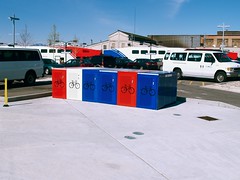
Bike lockers at SLC Central StationImage by Steven Vance via Flickr


Couple of points.

The announcement about Provo mentions that it will be a multi-model depot but I see nothing about integrating the facility with the Amtrak station which is actually located on the far side of Freedom Blvd from the new Front Runner station.

Hopefully the new TOD at the 3900 South will be true TOD and not just TAD. Hopefully it will also integrate with the growing new community in the area.


FOR IMMEDIATE RELEASE
Contact: Gerry Carpenter, 801-859-6095

Date: July 9, 2010 Press Release


UTA Awarded $5.4 Million In Federal Grants


U.S. Transportation Secretary Ray LaHood and Federal Transit Administrator Peter Rogoff announced Thursday that Utah will receive two grants for $5.4 million under the U.S. Department of Transportation’s Livability Initiative.


The Utah Transit Authority was awarded the two grants through the Federal Transit Administration’s competitive Bus and Bus Facilities grant program, which makes federal funds available to public transit providers to construct bus-related facilities. The grants include $5 million for the Provo Intermodal Center and $400,000 for the 3900 South Meadowbrook TRAX station.


“These competitive grants support our communities’ vision for increased access to public transit,” UTA General Manager Mike Allegra said. “By awarding these grants, Secretary LaHood and Administrator Rogoff recognize our efforts in building a strong transit system that will soon connect Provo to Salt Lake and beyond.”


The Provo Intermodal Center, located between Freedom Boulevard and University Avenue at approximately 700 South in Provo, will be a major new multi-modal transit hub. It will include 850 parking stalls, a 12-bay bus transfer terminal, and a connection for the future Provo-Orem bus rapid transit line. It is expected to open concurrently with the FrontRunner Salt Lake City to Provo line in 2014. In the future, the facility is planned to include bicycle facilities and other transit-oriented development.


Regarding the Provo grant, the office of Rep. Jason Chaffetz released the following statement, "FTA's announcement is great news for Provo and Utah County. An intermodal center in the heart of Provo has many advantages. Residents will appreciate one-stop, quick and easy access to commuter rail, bus, and other transportation options. This project will play an important role in addressing the needs of an ever more upwardly mobile workforce and community."


The $400,000 grant will go toward converting the 3900 South Meadowbrook TRAX station in South Salt Lake from a park-and-ride stop to a transit-oriented development. The grant money will be used to replace existing surface parking with a new parking deck and reconfiguring the bus loop.


These infrastructure changes will allow redevelopment of the remainder of the block. Proposed new structures include a 60,000 square foot office/educational building, 7,000 square feet of retail and an 88 unit apartment building.


For more information on UTA projects, visit www.rideuta.com.


Enhanced by Zemanta

Wednesday, October 07, 2009

UTA Wins APTA Innovation Award

Markers for UTA buses in Salt Lake CityImage via Wikipedia

UTA Wins APTA Innovation Award For
Electronic Fare System

UTA tap on/tap off system recognized nationally


Salt Lake City — The American Public Transportation Association has awarded the Utah Transit Authority with its Innovation Award for 2009. The award recognizes a public transportation agency for demonstrating innovative concepts in the provision of public transportation services.


UTA was awarded for the development and launch of its new electronic fare collection system, which was launched in January 2009. UTA is the first transit agency in the U.S. to rollout a transit payment system based on the open payment network to its entire fleet.


One of the innovative aspects of the new system is its acceptance of major contactless credit and debit cards such as Visa payWave, MasterCard PayPass, American Express expresspay, and Discover Network Zip. No other transit agency in the nation accepts contactless credit and debit card payments with an electronic fare system.


The system will also work with other smart cards, such as UTA Ed and Eco Passes that are issued through universities, colleges and businesses. The new system can even accept compatible school or employee ID cards that have been activated to work on UTA’s system.


“The fact that we can accept many types of smart cards is a real advantage to our customers,” said Clair Fiet, UTA’s chief technology officer. “People with contactless credit or debit cards don’t have to buy a pass or worry about exact change, they can just tap their card and the appropriate fare is charged.”


Electronic card holders are asked to tap on when boarding and tap off when exiting a bus or train platform. This “end-to-end” approach provides UTA with valuable data that can be used to adjust services to better reflect the actual travel patterns of its riders.


“We are extremely proud of the efforts of our technology office and pleased UTA was recognized by this award,” said John Inglish, UTA general manager. “This new electronic fare collection system will be enormous advantage in planning and development in the years ahead.”


UTA eventually plans to expand the new electronic fare system to become the primary method of fare collection for the agency.


For more information on UTA’s electronic fare collection system, visit www.rideuta.com/electronicfare.


###


Established in 1970, UTA has become a multi-modal transportation leader that is 100 percent accessible with 69 light rail vehicles, 35 commuter rail cars and more than 600 buses. UTA’s TRAX light rail system is currently averaging over 40,000 riders a day along its 15-mile Salt Lake-Sandy line and the 4-mile University Line. UTA is an ISO 14001:2004 9001:2000 certified agency. During the 2002 Winter Olympic Games, UTA’s transit system was declared a great success on the international scene - carrying more than four million Olympic riders.


Follow UTA on Twitter:@RideUTA 48-UTA-100709

Reblog this post [with Zemanta]

Thursday, July 02, 2009

Article from the San Diego Area

North County Transit District Breeze New Flyer...Image by LA Wad via Flickr

Transit board is expected to decide on outsourcing bus driving, repairs

There is good points and bad points about outsourcing. While it does reduce cost, a transit system also has to play watchdog on the company to ensure that their buses are maintained properly. Experience in both Los Angeles and Denver shows that outsourced transit operations can be poorly maintained.
Reblog this post [with Zemanta]

Thursday, January 08, 2009

Murray to Taylorsville Transit?

East side of South City Campus, Salt Lake Comm...Image via WikipediaTaylorsville, Murray look at mass-transit options

Here is a perfect corridor for a rapid streetcar. It would cost less than putting in full blow LRT but would also do more than BRT.

In fact it would not only be natural to run this line from the West Valley Transit Center to SLCC to the Murray Central TRAX/Front Runner station which would also serve IHC (better known as the Death Star to many) and then continue it down State to Fashion Place Mall and over to the Fort Union Area.

The Eugene BRT was impressive, and such a system for a Taylorsville-Murray line is under consideration, Chesnut said.

This comment is almost laughable. In what way was it impressive? The fact that it has higher ridership than the bus route it replaced (of course when mentioning this few say that the old bus line charged fares and the BRT is free..).

Once again we see the same BS about BRT being cheaper when it is not if you compare equal systems. Plus the fact that rail is more efficient at handling the passengers than BRT. Hopefully once the new President takes office this BS will stop being so common.


Reblog this post [with Zemanta]

Monday, December 08, 2008

Senior Citizens, Driving, and Development

:en:Category:Images of Pasadena, CaliforniaImage via Wikipedia

Every time there is an accident involving a senior citizen, there is always a question of should they have had a license? The worst accident I ever had was when a senior citizen got confused in an intersection and turned in front of on coming traffic which happened to be me. Despite getting behind the wheel of stock cars and racing, I was never injured but this accident not only put me out of work for a month, I couldn’t get back behind the wheel of a race car again.


Senior citizens have become the biggest victims of 70 years of auto centric development. The only way most senior citizens can get their basic needs is to continue driving despite impairments, depend on family members, or move into a retirement home.


When I was growing up in Pasadena, California my mother managed several apartment complexes along a street block. More than 70% of the residents were widows or widowers from 60 to 80 years old. Most of them did not have a car because they didn’t need one. There was a small grocery store on the cross street to the south and major doctors offices on the cross street to the north. The RTD (now Metro) ran regular bus service along the cross street to the south. Other major services were very close by.


Contrast that with the situation my in-laws are in. My father in-law is blind in one eye and cannot drive at night. My mother in-law has to do the driving at night but her driving skills have been compromised with age. The problem is, because they live in an area were they have to drive just to by groceries or go to the doctor, they continue to drive.


Many senior citizens feel that their lives are over without their cars because there is not alternative for them. This is largely what has fueled the market for retirement homes. Because these places are expensive, many senior citizens wait until it’s almost too late before deciding to move into one. In addition much like a mall (or Gateway), a retirement home is design to make the person dependent on the facility and not make it easy to access anything else. The residents can either drive if they are still capable or ride the facility provided vans to different stores.

In addition many of these facilities are placed in areas were it is convenient for family members to come visit grandma on Sunday, but not convenient for the residents to use public transportation or to walk to neighborhood stores.


The ones at 11400 South and 700 East are a perfect example of this. There is not public transportation available, nothing is in walking distance so the residents either have to drive or more likely is dependent on the facility provided vans.


After my father passed away my mother ended up in a situation very much like her former residents in California. She lived in a section of Spokane were she could walk to the store (or they would deliver), walk to a café, dry cleaners, doctors offices and other small stores, or had regular bus service from her front door to downtown. Despite not having a car she was able to live on her own until a stroke caused some major health issues and she had to be put in a nursing home.


Which situation would you rather be in? Forced to drive or go into a retirement home, or have the freedom to live on your own and not have to depend on others? Personally, I prefer the latter.

Reblog this post [with Zemanta]