Showing posts with label Planning. Show all posts

Sunday, May 27, 2012

Sometimes the NIMBY's are right...

English: The urban growth boundary edge at Bul...
English: The urban growth boundary edge at Bull Mountain in the Portland metropolitan area. Farmland in foreground, urban development in background. From Roy Rogers Road near Bull Mountain Road. (Photo credit: Wikipedia)

Sometimes it is just too easy to tune out NIMBY's as people who are too caught up in their own little world who have bought a house and expect nothing to change, and that anything they don't  approve of should not be allowed anywhere near their little piece of paradise.

However, there is times that NIMBY's  have a good point and one of those times is concerning higher density development. Now I am not talking about density done right, I am talking about density done wrong. A couple of years ago I mentioned a development near where I lived. It was a complex of condominiums that offered poor transit access and were designed that it was not easily accessed by pedestrians coming off the bus. Finally, it was not located near any retail stores so even for basics you have to get behind the wheel of a car to get.

Here is another example, recently in the comments on the Portland Transport blog that developers can get density incentives even if the project does not have easy transit access which is led to high density developments in areas with no or hard transit access. What is the purpose of having higher density if it will not have the benefit of transit access?

One solution to this would be modify the program so that it is a tiered system for incentives so that if locate on a high capacity transit line you get the highest incentives, basic transit service another level and the lowest to those farthest from transit access. In a perfect world you would not have any incentives for density outside transit corridors but you also have to face the political reality that you need to have the cooperation of all parties to get things done and the developers and other political elements would probably bulk a more restrict policy.

Another example of bad development is part of the problem above and that is high density developments in areas that should not have them. An example of this is here in Portland were several high density developments have been built in areas that are not designed for them such as out at the far end of the Urban Growth Boundary.

Spokane County is another example of areas that have allowed these kinds of developments. There has been several apartment complexes built in what is essentially rural areas that are on two lane roads with no access to services. Not only does this create traffic issues on these roads, it also makes it difficult for emergency services to reach them and should a disaster strikes, these rural located complexes will be in a world of hurt.

The priority of density should be where it makes the most sense and with the services to allow residents and workers at the high density developments to be able to avoid using a car whenever possible. This means near high capacity transit lines and major bus lines plus walking distance to grocery type shopping and other services.

So yes, sometimes the NIMBY's do get it right.
Enhanced by Zemanta

Monday, May 14, 2012

Its all about Selling...


Crime Train, Portland Creep, Empty Buses, 19th Century Technology, Anti-Car and so. For anyone who is an advocate of proper urban planning or effective transportation choices are well familiar with slogans like these, they are well used by opponents to paint a disparaging picture of transportation choices and planning.

The problem is these well financed campaigns are designed to one thing, to turn public point of view to their way of thinking. Some do it for the money while others do it for their ideology. The problem is that the other side is doing a heck of a good job of marketing their point of view and advocates of transportation and planning choices seem to fail.

Motivational Speaker Zig Ziglar has a saying that everything involves selling and that everyone is a salesperson whether they think that their job involves it or not. Advocates need to realize that they too need to work on their sales presentations whether it is to a city council, newspaper, blog or any other forum that they may find themselves talking to others.

Right now here in the Portland suburbs of Clackamas County their is a heated battle for county commissioners. Radio ads and billboards are being bought proclaiming that three candidates will stop "Portland Creep". They are using this term to demonize urban planning and transportation in the Portland area saying that the goal is to ruin the little perfection called Clackamas county. Now a large segment of Clackamas County is rural and the thought of additional density is to them is worse than

Smart Growth Opponants Run Against Portland's Pro-Urbanism Policies
"Portland Creep" and the Density Debate

While you can say all you want about how negative they are (yes they are) but what are they doing? They are effectively selling to certain segment of the population that sees the density of Portland as something that is very undesirable. While this group is well funded by conservative interest, they play on emotions and are good at making Portland sound bad. It will be interesting to see the elections results.

In Portland, the anti-MAX light rail forces have done an excellent job of demonizing MAX as the crime train. Now the east side MAX does have some issues but Gesham was a problem community before MAX even came along. But it has done the job, any time something happens anywhere near a MAX station the media always mention it is near a MAX station and the words "crime train" will show up in the comments within moments.

Another one you always hear no matter where you are is the argument rail is "19 century technology". The opponents have done such a good job of painting anything rail as outdated technology that "19th century technology" the first worlds out of months of many. You could go all day long on how the automobile is also 19th century and in some ways 18th century technology but it doesn't matter, rail is the outdated "19th century technology".

Another comparison is the Tea Party and Occupy. The Tea Party has done an excellent job of getting people to join their way of thinking because they are doing a better job of selling themselves. You do not have to agree with them but you have to respect the organization that has been created and instantly had a major effect on the 2010 election. Occupy meanwhile made lots of noise in October, made lots of enemies in many cities but has not become a major force. You don't have to like an organization to learn from what they do right.

Then again maybe if advocates would stop fighting among themselves, yes you are going to have disagreements after all we are all human but you must have a unified voice if you want to get your message across. Fortunately when it comes to public votes transit still wins a majority of the time, but that luck is going to run out without an organized voice that knows how to sell.

Wednesday, May 09, 2012

Frequency Vs. Coverage

If we lived in a perfect world, a transit agency would not only be able to provide both an extensive network of core bus routes running frequently and a network of lines that is able to blanket the area with coverage.

However, few transit agencies have the resources to provide both and  with as budgets continue to be squeezed and the future of federal funding in doubt, transit agencies are having to squeeze where ever they can. The question that transit agencies and the citizens it serves has to answer do we provide the best service possible to the busiest routes or do they provide the most coverage possible?

People waiting for a bus 
Here are some pro's and con's to each service. Like previous pro and con postings, I will only point out some important pros and cons to each and if you have one that you think should also be considered be sure to throw it out in the comments.

First lets do the pros and cons of coverage:

Pro's:

The one major pro with a coverage network is that most people should be able to access a bus route both at home and to work. Until the 90's many transit systems focused on coverage to ensure that they could serve the maximum number of people possible. Even if you lived in far flung suburbs so long as you lived in the transit area you would have service.

Con's:

The biggest con is that if you are providing service to far flung areas of the system, the chances are you can only provide mediocre service. Everyone may have service but the busiest routes will not have the resources to have the amount of frequency that is demanded which will lower ridership potential.

A second con is that your bus routes will perform poorly overall. While some routes will have good ridership their ridership will be hampered by the lack of enough frequency while you run routes to areas with limited to no ridership potential.

This leads to a third con and that is the empty bus syndrome. People who already have a bent against transit will see lots of buses running around empty and will guess that they all run empty so "no body rides transit". Of course these people would say it anyway but you are just giving them some added ammunition.

Transit Center in Miami. 
Now lets look at a service network:

Pro's:

The biggest pro is that routes that have the most potential will have the best service. You focus your resources on routes that are winners. By creating a network of frequent service lines you create market synergies because a customer knows that if they miss one bus the next one will not be far away.

The second positive is that performance of the overall network will be better because you will be concentrating your resources where your ridership potential is the highest. Your resources are being concentrated where they will get the most use.

Con's:

The major con is that there is some people who will lose bus service and of course they will not be happy. Even a route that has week ridership will have people screaming up a storm if you try to cut the route. For those who want to use transit service it can limit the choices you have in housing.


Beaverton Transit Center, Beaverton, Oregon Trimet Route 57 is a frequent service line along TV-Highway from Beaverton to Forest Grove. 
When Seattle first started working on a major revamp of bus service for September the numbers were telling. 4000 riders would be affected by routes being cut. Now I am not saying that these people don't count. However, it was point out that the routes that were going to see increase service with the modifications served about 50 times that number or more.

Sadly some needed decisions in Seattle were put off in order to keep everyone happy and ironically some of the people who complained will have less service (the current service) than they would have if the changes had taken effect.

It would be wonderful if we had the best of both worlds, were we could provide extremely frequent service to the busiest areas of the network and good coverage across the service area. Hopefully the day will come when both types of services can be provided.

Tuesday, August 12, 2008

Salt Lake City has a new head planner, will anything change??

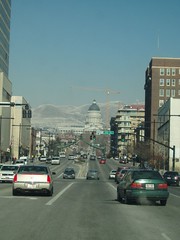
Downtown as duskImage via Wikipedia After a nationwide search Ralph Becker went to neighboring Davis County to find the new head of planning for Salt Lake City:

Familiar face to lead SLC planning

Wilf Sommerkorn was familiar to many as the blogger at Utah Planners Corner although he stopped blogging about a year and a half ago.

Will this be good for Salt Lake City?

Right now I am on the fence on this one. Like any of us he has his good points and his not so good points.

As I have said many times Salt Lake City needs some changes in direction when it comes to planning. We saw the cave in when it came to Smith's in Sugar House, we see the pedestrian unfriendly Wal-Mart at 300 West/1300 South in a area of transit dependent people, and so on.

Wilf seems to have some common sense when it comes to planning so we can hope that it will bode well.


Reblog this post

Tuesday, April 22, 2008

Transit and Development Opportunities


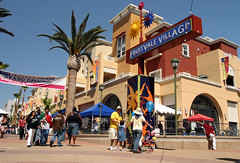
FruitvalePeople2
Originally uploaded by RACTOD
It seems that the transit union wants an easy answer to the problem of the transit dependent. Instead the problems are not going to be fixed by handing the transit system over to an organization that does not have the transit system in its best interest. Instead we need to look at why people who need to ride transit cannot find places to live that are convenient to transit instead of being in an area that doesn't currently support the system.

One of the problems we face here along the Wasatch Front is the lack of a cohesive area wide planning organization. Of course any attempt to create one would fail due to the cities fearing the lost of planning control, so we have to deal with many individual city administrations.

In that context what can be done? First residents of each of the cities need to insure that their planning departments are taking transit into consideration when designing their zoning which includes transit oriented development. However, the best plans can go wrong as we have witnessed in Salt Lake City as the planners and city council cave in to developers and big corporations over and over again.

Every city should be encouraged to create a special zoning area around major transit concentrations. One that will focus on a certain amount of low income housing, nice retail areas that focus on locally owned and operated business that are also transit oriented, plus open space.

There are many areas of the area that this type of zoning would fit into. One example would be the intersection of 4500 South and State Street. Currently an auto centric area that is pedestrian unfriendly but also a couple of blocks from a transit oriented development. This area could be developed to eventually blend into the main transit oriented development at the TRAX station.

The Redwood Road corridor north of Salt Lake Community College all the way to North Temple has areas that would be ripe for this type of development. In fact there is many major intersections throughout the region that developments would improve the neighborhood.

It doesn’t take much imagination to see many spots where this will work. The best areas are ones that could use some redevelopment, are served by two good bus lines (preferably the ones that run every 15-minutes), plus a city administration that is willing to make things happen.

This will allow more affordable housing options that will greatly improve the lives of those who are transit dependent instead of harming them like the transit riders union direction will.

Thursday, January 24, 2008

Big Surprise: Sky Bridge is approved

Main St. skybridge gets OK from Salt Lake Planning Commission

No surprise here, the skybridge was rubber stamped and will cross Main Street. It will be interesting to see how the complex develops now. Chances are it will be another Gateway that is designed to keep people inside the complex and not flow into the rest of downtown.

Sadly once again the planning commission gives in and does make the tough decision and possibly not the popular decision. Just like the Smith's store in Sugerhouse the planners let the big company get what they wanted.

Wednesday, December 26, 2007

Pedestrain Friendly Streets

How often do you try to cross some of our streets here in the Salt Lake region? If the answer is even infrequently you know the dangers that lurk in our crosswalks. First of all you face the right turn drivers that do not pay attention if there is any pedestrians in the street, and then you face making it all the way across our wide streets without getting hit by left turning drivers or right turning drivers.

To make things worse, while the signal cycles are even tight for someone like me who can walk fast, the cycles are deadly for a senior citizen or anyone else who can't walk fast. As our population ages this will become an even greater issue.

Sadly it seems that most of the street planners feel that if they slap some haphazard sidewalks along side the street and place your token crosswalks they are set. The sad truth is that most of the people designing our roads have no idea how to design things for pedestrians. Our streets are designed for cars and that is it.

Now take a look at the picture of State Street. How can it be made safer for pedestrians to cross? First of all because of the extreme width of our roads there needs to be pedestrian medians installed in the center of the road. This will allow slower people to make it half way without taking their life into their own hands by having to make it all the way. In the median you would have additional pedestrian lights and the push to walk buttons were appropriate.

More pedestrian friendly cities have these so called "pedestrian medians" or "escape zones" even on narrow streets with one or two lanes in each direction. It is an extra measure of safety to protect pedestrians.

Another element of safety will be flashing lights at the corner warning drivers to check for pedestrians. Some would argue that this would detract drivers even more, but with drivers being too busy talking on their cell phones, listening to their i-pods, doing their makeup and everything else they do in cars these days, pedestrians need every element of safety protection possible.

We need to rethink the way we design our streets.

Monday, November 19, 2007

Changes in Murray...

Murray has new heartbeat

The new hospital complex will be a magnet for development and the older affordable housing in the area is in danger. If the Murray Council and Planners care about the community they will direct development to the west past TRAX and FrontRunner.

One of the biggest mistakes Murray did was allow the Costco development. Instead of having a pedestrian friendly development that flows from TRAX to the State Street development you have a big box that keeps easy flow from happening.

Murray has also done a poor job of bridging TRAX and 300 West. Murray needs to bring these areas together especially with FrontRunner South now in the works.

This area has so much potential. Lets hope that Murray develops it with common sense and doesn't kill the golden goose.

Saturday, October 06, 2007

Sidewalks don't make it pedestrian friendly...

I had an appointment in Sandy the other day so I stopped by to take some pictures of the Sandy Pit. This new Boyer creating in a former gravel pit was very contentious but eventually Dolan and Boyer won.

Some feel that if you put sidewalks in a development it makes it pedestrian friendly. Well in this set of pictures from the pit I will show you that it takes more than sidewalks to make a place pedestrian friendly.

First of all we have a picture looking from the parking area and pharmacy drive up windows toward the housing. So far so good, as you can see you will have a sidewalk toward the development but anyone will have to cross a road with no protection to the pedestrians and we know that the drivers will not slow down.

However let's face it, how many people are going to walk over to Wal-Mart to pick up some groceries? Wal-Mart is not a pedestrian friendly store.

This next picture starts showing the real trouble. There is two parts to this development and the parts shall not meet except if your in a car.

One thing you must have make a development pedestrian friendly is the a complex that is easy to walk. Well look at the view from Wal-Mart to the smaller retailers. Do you really think people are going to walk from the small stores to Wal-Mart or visa versa? Of course not it is too far to walk in a hostile environment.


Now we look at the front of the Lowe's store. Much like Wal-Mart Lowe's is not a pedestrian friendly store. So instead of having easy access to the store even people getting out of their cars have to the face the hostile environment of the driveways and face impatient drivers.

Now this is the sidewalk leading from the small retailers to Lowe's. Once again you have to travel a great distance from the small retailers to Lowe's plus cross a major driveway that will be extremely dangerous once this complex is fully up and running. Also notice that the sidewalk doesn't even lead to the front of the Lowe's store.


If anyone plans to take their life into their own hands and try to walk from the Lowe's store to the small retailers they face this major driveway. Then they do not hit the front of the stores but instead have to continue walking because this is the back of the complex. Instead of having the whole complex face each other, it was design so that it is basically two complexes in one and not meant for a pedestrian to get from one to the other.


Now here we are in the area with the small retailers. So far so good it looks like you have sidewalks to all the retailers and they are relatively close together.


However, upon closer inspection you realize that the sidewalks are very narrow and only designed for someone to get out of their car and walk into the store. There is not much consideration given to people walking along the front of the stores.


Finally four pictures looking from the north side along the driveway to the small retailers. As you can see from the pictures the small retailers are spread apart, with a great distance from one store to another. The main focus is for someone to drive up go to that store and leave. It is not designed for people to walk the center.


In the end, the design of this center will create it's own traffic nightmares. Because the center is not designed for someone to make multiple stops in one shot, not only will you have people traveling from outside the complex in, from the complex out, but you will also create a third traffic problem with people driving from one store to another because the stores were not designed to be easily accessed by foot.

The design of this complex is hostile to the pedestrian and will only create traffic problems. One of the current problems with our transit system is that we have a area that is so hostile to the pedestrian that people are discouraged from riding transit.

Monday, October 01, 2007

Sugarhouse...

Sugar House developers, city planners surprised when expected hostile hearing is amiable

Well Gateway will soon be rising at Highland Drive and 2100 South, Oh I mean new Sugarhouse.
I have said it before, there is nothing in this development that offers anything special. You will have high priced condos, high end chain retailers, and office space. There is nothing that separates this complex from Gateway.

Here is some of the things that I see wrong with this complex:

-Parking entrance will be right on 2100 South. Parking entrances should be in the back of the building. All this creates is a situation that pedestrians will have to cross a driveway that people will barrel in and out of and make crossing it unsafe for pedestrians.

-The parking entrance will also create a barrier from Red Mountain's redoing of the former Granite Furniture Building

-While this fits in to what I already mentioned, the development will focus on Highland Drive leaving the 2100 South area left to itself.

At least this development will be more pedestrian friendly than it's neighbor across Highland Drive. I hope Mr. Mecham works with the community to build a good complex and takes into consideration the walk ability of not only Highland Drive but also 2100 South.

Sugerhouse was a unique area, but the city has slowly let the area's character be destroyed. It's time for the city to take a more active roll in building better communities.

Sunday, September 30, 2007

Challenges in Magna...

Magna: Tying old, new is a challenge

Interesting article on the struggles going on in Magna.

Sadly areas like downtown Magna and it's are have been abandoned in favor of big box centers and pedestrian unfriendly suburban tract homes.

Of course Magna has a lot of potential. After all, it has historic buildings, pedestrian friendly neighborhoods, close to the 2100 South Expressway, one good bus route and a couple of others, the area has mature trees, in other words the potential is there.

Friday, September 28, 2007

Daybreak an Island???

In just a few years Daybreak has gone from being a wild dream to a very successful development. The development has become very popular and is a shining example of what can be done when using pedestrian and bike friendly development.

However, it seems that the city of South Jordan where Daybreak is based, has not seen the light of what can be done. While Daybreak continues to develop, South Jordan is allowing the Daybreak area to be surrounded by areas that go against the philosophy at Daybreak. I know anytime you talk about a philosophy of development, you always get the ditto head that have been brainwashed to say "social engineering". Well I won't even get into all that today as I have other things to talk about.

The big problem I see is that the surrounding areas are just standard sprawl developments that are not pedestrian and bike friendly. Just take a look at the Boyer development just across Bangerter Highway from Daybreak. The development and the roads to it are not pedestrian or bike friendly.

The way things are developing, Daybreak will end up being an island in South Jordan. While it will be pedestrian and bike friendly, you will not be able to leave the area of Daybreak by foot or by bike because everything surrounding it is auto centric.

South Jordan should be working harder to encourage developments surrounding Daybreak to become more pedestrian and bike friendly. Notice here I am not saying that cars should be banned or anything like that, but the area should be made more friendly to others.

Once Daybreak starts getting bigger and starts developing it's commercial and industrial properties, Daybreak may need to look into becoming it's own city. After all, if the city it is currently part of is going to make it a segregated island, maybe they would be doing better by looking out for themselves.