Lawyer leaving UTA after 8 years
UTA explores bad-air, free-ride days
Comment: UTA says the system is too packed to have free ride days. While that is true on TRAX there is tons of extra capacity on the bus system. They should have free ride days on the local buses for sure.
Friday, December 30, 2005


Tuesday, December 27, 2005
Wasted Capital Assets
December means once again the Utah Transit Authority has started up its ski bus service that runs from Downtown, a couple of TRAX stations, Park N' Ride lots up to the ski resorts in Big and Little Cottonwood Canyons.
While the effort to get people up to the ski resorts in a safe way is great, at what cost is the current ski bus service being provided?
While the yearly reports from the UTA do mention the sales tax revenues for the ski resort areas, they do not show the route by route cost of the service or they do not mention the cost of lost opportunities.
A perfect example of the waste is the ski buses themselves. Most of the ski buses have sat since the bus service ended around April. That means for 8 months the buses sat being unused and not turning a revenue mile. The UTA does alternate the ski buses on the twice daily trips to the canyons during the summer but that is still means they sit way too much.
In many ways UTA (and other transit agencies) have way too much in common with Amtrak. Amtrak is one of the biggest waster of assets around. One of its biggest problems is that its trainsets spend way too much time sitting.
Can you imagine Southwest Airlines or any other airline for that matter having a major asset sitting three quarters of the year???
This once again shows how the management of transit systems including UTA are disconnected from reality. One of the causes of this is that UTA only pays a small fraction of the cost of the buses and gets free money for the rest. If UTA had to pay all of the cost of its buses do you think they would be sitting for eight months?
The high priced MCI Commuter Cruisers are no different. While some of them may see all day service, a majority of them make one trip from their location to Downtown Salt Lake City, sit all day and then return in the evening. Here you have the most expensive buses in the UTA fleet and they are not earning their keep.
UTA needs to put its assets to better use. The Ski service should be examined and see that it is worth the cost.
While the effort to get people up to the ski resorts in a safe way is great, at what cost is the current ski bus service being provided?
While the yearly reports from the UTA do mention the sales tax revenues for the ski resort areas, they do not show the route by route cost of the service or they do not mention the cost of lost opportunities.
A perfect example of the waste is the ski buses themselves. Most of the ski buses have sat since the bus service ended around April. That means for 8 months the buses sat being unused and not turning a revenue mile. The UTA does alternate the ski buses on the twice daily trips to the canyons during the summer but that is still means they sit way too much.
In many ways UTA (and other transit agencies) have way too much in common with Amtrak. Amtrak is one of the biggest waster of assets around. One of its biggest problems is that its trainsets spend way too much time sitting.
Can you imagine Southwest Airlines or any other airline for that matter having a major asset sitting three quarters of the year???
This once again shows how the management of transit systems including UTA are disconnected from reality. One of the causes of this is that UTA only pays a small fraction of the cost of the buses and gets free money for the rest. If UTA had to pay all of the cost of its buses do you think they would be sitting for eight months?
The high priced MCI Commuter Cruisers are no different. While some of them may see all day service, a majority of them make one trip from their location to Downtown Salt Lake City, sit all day and then return in the evening. Here you have the most expensive buses in the UTA fleet and they are not earning their keep.
UTA needs to put its assets to better use. The Ski service should be examined and see that it is worth the cost.
Monday, December 26, 2005
Day After Christmas Service
Last year the UTA got a lot of flack for its service offered on some holidays or the lack thereof. This year service improved but there still issues that need to be addressed.
One perfect example is the service that was offered today on December 26. Because the 25th fell on a Sunday many companies and of course the government considered the 26th to be a holiday and took the day off. The Utah Transit Authority ran Sunday bus service today instead of weekday.
This is a perfect example of how the UTA board of directors and the higher up employees are too disconnected from the customers that they are responsible to service. While they may have had the day off many of their customers did not but had very few options in getting to work.
UTA still has a extremely limited service on Sunday which for the most part is useless making it impossible for many of their customers to get to their destinations. However UTA still provided a normal schedule for the ski routes despite not providing adequate service for their every day riders.
Most transit systems at least provide a Saturday Schedule on days are unusual holidays. That way the people that still work normal hours are able to get to their jobs. This would have meant that most bus lines would have been operating today and a greater percentage of the customers would have had service.
UTA needs to make a better effort to see what their customers needs are.
One perfect example is the service that was offered today on December 26. Because the 25th fell on a Sunday many companies and of course the government considered the 26th to be a holiday and took the day off. The Utah Transit Authority ran Sunday bus service today instead of weekday.
This is a perfect example of how the UTA board of directors and the higher up employees are too disconnected from the customers that they are responsible to service. While they may have had the day off many of their customers did not but had very few options in getting to work.
UTA still has a extremely limited service on Sunday which for the most part is useless making it impossible for many of their customers to get to their destinations. However UTA still provided a normal schedule for the ski routes despite not providing adequate service for their every day riders.
Most transit systems at least provide a Saturday Schedule on days are unusual holidays. That way the people that still work normal hours are able to get to their jobs. This would have meant that most bus lines would have been operating today and a greater percentage of the customers would have had service.
UTA needs to make a better effort to see what their customers needs are.
Saturday, December 24, 2005
New Fare Collection
UTA to test contactless payment card system
The UTA is planning to test a new "contactless" fare system starting on the ski buses and eventually spreading to the entire system. The general idea is to make fare payment easy and more comfortable for the riding public.
While it is wonderful that the UTA is trying to do things that will make riding the system easier which should be one of the primary goals of the organization, trying an untested fare payment system, even if its limited to a certain service, is just asking for trouble.
The is the problem with organizations that have too much free money and do not have to worry about making a profit. Many times the only thing transit authorities seem to care about is having the latest and greatest, and not looking at the potential problems with unproven technology.
We have seen time and time again where a transit agency has tried something completely new that has not been test and it has been a complete failure. Early experiments with automation with such systems as BART are a perfect example. Another example is Amtrak's Acela trains that have never performed the way they should have but they line peoples pocket books.
UTA: let someone else try this out and make sure it works before spending precious dollars on a possible lemon.
The UTA is planning to test a new "contactless" fare system starting on the ski buses and eventually spreading to the entire system. The general idea is to make fare payment easy and more comfortable for the riding public.
While it is wonderful that the UTA is trying to do things that will make riding the system easier which should be one of the primary goals of the organization, trying an untested fare payment system, even if its limited to a certain service, is just asking for trouble.
The is the problem with organizations that have too much free money and do not have to worry about making a profit. Many times the only thing transit authorities seem to care about is having the latest and greatest, and not looking at the potential problems with unproven technology.
We have seen time and time again where a transit agency has tried something completely new that has not been test and it has been a complete failure. Early experiments with automation with such systems as BART are a perfect example. Another example is Amtrak's Acela trains that have never performed the way they should have but they line peoples pocket books.
UTA: let someone else try this out and make sure it works before spending precious dollars on a possible lemon.
Sunday, December 18, 2005
Development
Kennecott's vision: 'Nonmining assets' to become well-planned communities
This article from the Deseret News talks about the development at Daybreak and the other plans that Kennecott has to develop the west bench along a proposed light rail corridor.
While the development is wonderful, and I myself would love to be able to buy a house in the Daybreak complex since I do enjoy what they are creating there, how about all the other potential along the TRAX lines that already exist.
There is a proposal to build condos and townhomes at the Sandy Civic Center station which is the first of a planned development around that station.
In addition there is proposals to greatly change Murray with the redevelopment of the area around the 4500 South TRAX station.
However many of these projects are moving slowly.
The cities and UTA need to be more aggressive in developing Transit Oriented Development along the TRAX lines. Maybe if Mayor Dolan of Sandy would stop his love affair with big boxes that ultimately cost the tax payers more in services, and start looking at what is best for the community in the long run, he would start paying attention to TRAX.
There is a gold mine waiting to be developed, the cities need to take charge and start working toward developing it, and making it happen.
This article from the Deseret News talks about the development at Daybreak and the other plans that Kennecott has to develop the west bench along a proposed light rail corridor.
While the development is wonderful, and I myself would love to be able to buy a house in the Daybreak complex since I do enjoy what they are creating there, how about all the other potential along the TRAX lines that already exist.
There is a proposal to build condos and townhomes at the Sandy Civic Center station which is the first of a planned development around that station.
In addition there is proposals to greatly change Murray with the redevelopment of the area around the 4500 South TRAX station.
However many of these projects are moving slowly.
The cities and UTA need to be more aggressive in developing Transit Oriented Development along the TRAX lines. Maybe if Mayor Dolan of Sandy would stop his love affair with big boxes that ultimately cost the tax payers more in services, and start looking at what is best for the community in the long run, he would start paying attention to TRAX.
There is a gold mine waiting to be developed, the cities need to take charge and start working toward developing it, and making it happen.
Thursday, December 15, 2005
Time for Route Number Rationalization
One of the few things the Southern California Rapid Transit District ever got right was renumbering their bus lines in the early 80's. Before then many of the route numbers where either from the private companies that came before it or numbers that just happened to be available.
After the route renumbering all you had to do was look at the route number and you had the general idea of where the bus was going. While I have not seen the UTA's plan for restructuring the bus system (boy are they keeping that a secret) here is my idea on renumber the bus routes in order to make the bus system easier to understand and better for the choice riders and first time riders it needs to reach.
One of the problems of the present system is that once again many of the route numbers are from the streetcar days and have no bearing on today's world.
Route Numbers: Route Information:
1-50 Local Routes too and from Downtown Salt Lake City
100-149 Local Routes not going through downtown traveling mostly east/west
150-199 Local Routes not going through downtown traveling mostly north/south
200-299 Night Rides
300-349 Salt Lake County Express Routes traveling to downtown
350-399 Salt Lake County Express Routes not traveling to downtown
400-499 Limited Stop Routes (such as BRT)
500-549 Intercounty Express Routes (present lines 72, 73, 801, etc)
550-599 Intercounty Local Routes (present line 70, etc)
600-624 Ogden Area Local Lines
625-649 North Davis Area Local Lines
650-699 Weber/North Davis Express Routes
800-849 Utah County Local Lines
850-899 Utah County Express Routes
This renumbering system would make the UTA even easier to use. With the growth in Utah and Weber Counties you could even break up the routes further when more routes are added in the father reaches of the counties.
Also, this route renumber would leave plenty of room for the expansion of bus service in the future.
After the route renumbering all you had to do was look at the route number and you had the general idea of where the bus was going. While I have not seen the UTA's plan for restructuring the bus system (boy are they keeping that a secret) here is my idea on renumber the bus routes in order to make the bus system easier to understand and better for the choice riders and first time riders it needs to reach.
One of the problems of the present system is that once again many of the route numbers are from the streetcar days and have no bearing on today's world.
Route Numbers: Route Information:
1-50 Local Routes too and from Downtown Salt Lake City
100-149 Local Routes not going through downtown traveling mostly east/west
150-199 Local Routes not going through downtown traveling mostly north/south
200-299 Night Rides
300-349 Salt Lake County Express Routes traveling to downtown
350-399 Salt Lake County Express Routes not traveling to downtown
400-499 Limited Stop Routes (such as BRT)
500-549 Intercounty Express Routes (present lines 72, 73, 801, etc)
550-599 Intercounty Local Routes (present line 70, etc)
600-624 Ogden Area Local Lines
625-649 North Davis Area Local Lines
650-699 Weber/North Davis Express Routes
800-849 Utah County Local Lines
850-899 Utah County Express Routes
This renumbering system would make the UTA even easier to use. With the growth in Utah and Weber Counties you could even break up the routes further when more routes are added in the father reaches of the counties.
Also, this route renumber would leave plenty of room for the expansion of bus service in the future.
Wednesday, December 14, 2005
The BRT Dog and Pony Show
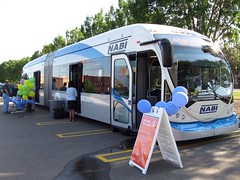 Image by Bill.Roehl via Flickr For those of you who didn't know about it or didn't see it, the BRT or 'Bus Rapid Transit' dog and pony show rolled into town a couple of weeks ago once again proclaiming that BRT is the transit answer and how it is a cheaper alternative to Light Rail.
Nothing could be further from the truth. Actually in most cases BRT is more expensive than light rail if you look at comparable systems. The only problem is that when BRT is compared it shows a system with less features that light rail. However few BRT schemes are actually comparable to light rail so its impossible for people to see the price difference.
The only BRT scheme that has come close to the true nature of Light Rail is the new Orange Line in Los Angeles however it still has to deal with traffic lights instead of grade crossings so it is also no where close to light rail. Although ridership looks impressive right now they it is still impossible to determine if the ridership is all from the neighboring bus routes.
Ridership is also less than impressive with most new BRT lines. The line in Kansas has attracted little ridership, the Las Vegas system is carrying only a fraction more people than the buses it replaced, the Harbor Freeway busway in Los Angeles attracts few riders, and ridership on the El Monte Busway in Los Angeles has been stagnant for years. In addition busways in Philadelphia, Pittsburgh, and Miami have failed to live up to expectations.
At least in Salt Lake County UTA is using BRT where it should be, in corridors that would not see TRAX in the next 30 years. 1300 East, Redwood Road and 3100 South are perfect areas to have BRT. BRT is not a low cost alternative to TRAX, it is a supplement to the TRAX system that can be an effective system of feeding riders into the much more popular TRAX system.
Now if only Utah County would see the light...
![Reblog this post [with Zemanta]](http://img.zemanta.com/reblog_e.png?x-id=9dd20938-40ac-4d71-afff-10dc8ed148a5)
Friday, December 09, 2005
700 East Loses Service
Well it looks like the December service changes will have little effect on most riders. The Ski Bus service starts up again with some realignments but otherwise there is little change.
The biggest change will the the lost of bus stops along 700 East.
For many years during rush hours, buses traveling in the rush hour direction would run as limiteds from 900 South to 4500 South making stops only at signalized intersections. However the bus stops where never properly marked as which stops would be served and which ones where not which created confusion amoung riders and created a lost opportunity to create new riders.
Now instead of fixing the problems with the existing service, the UTA has made the unilateral decision just to cut all the non signalized bus stops along this route. So instead of making a bad situation better they decided to make it worst.
What would have been a better solution to the problem was to make one of the 3 routes that service 700 East a local route and make the others limiteds. The 27 would have been the ideal candidate to make a local route while the 21, 32, and 44 should have all been made full time limited stop routes.
Once again UTA is looking at numbers and not considering their riders. They need to make the transit system friendly in order to capture the choice customers. The people making the decisions do not ride the bus enough to understand the needs of the riders. Too often they look at charts made by computers and do not understand why things are they way they are. There needs to be a change of thinking to improve the UTA.![Reblog this post [with Zemanta]](http://img.zemanta.com/reblog_e.png?x-id=d586def1-a99b-4365-9f78-082e0046e1f7)
The biggest change will the the lost of bus stops along 700 East.
For many years during rush hours, buses traveling in the rush hour direction would run as limiteds from 900 South to 4500 South making stops only at signalized intersections. However the bus stops where never properly marked as which stops would be served and which ones where not which created confusion amoung riders and created a lost opportunity to create new riders.
Now instead of fixing the problems with the existing service, the UTA has made the unilateral decision just to cut all the non signalized bus stops along this route. So instead of making a bad situation better they decided to make it worst.
What would have been a better solution to the problem was to make one of the 3 routes that service 700 East a local route and make the others limiteds. The 27 would have been the ideal candidate to make a local route while the 21, 32, and 44 should have all been made full time limited stop routes.
Once again UTA is looking at numbers and not considering their riders. They need to make the transit system friendly in order to capture the choice customers. The people making the decisions do not ride the bus enough to understand the needs of the riders. Too often they look at charts made by computers and do not understand why things are they way they are. There needs to be a change of thinking to improve the UTA.
Thursday, December 08, 2005
Service to Park City
With the Park City area experiencing rapid growth including the areas around Heber, the time has come to offer commuter and transit service from the Summit County areas down to Salt Lake including the university of Utah and Downtown Salt Lake.
At the present time Park City has its own transit service which provides free bus rides around the Park City area. Currently Park City is not part of the Utah Transit Authority and should not become a part of it.
In my previous entry: Time to Split Up the UTA?
I proposed a new transit authority that would oversee both the commuter bus and commuter rail operations of the UTA. This new outfit would be perfectly suited to offer commuter bus service to the Park City and Summit County regions. As the region grows and traffic becomes a bigger issue, the need for effective transit service will become even more evident.
Not only could Summit County be linked to the Salt Lake City but also routes to the Provo area and up to Ogden via Echo and Morgan would be natural extensions of the service. Service to Salt Lake City could service the U of U, Downtown, and the airport although private bus companies will scream bloody murder because it will effect them. One way to take care of this situation is to have the service contracted out to private operates, so long as there is monitoring of service quality to ensure customers are being treated fairly.
As Utah continues to grow, it needs new ways to deal with growth. An effective transit system is at the heart of that.
![Reblog this post [with Zemanta]](http://img.zemanta.com/reblog_e.png?x-id=a421d04e-b05c-44df-a75c-396519a1f29b)
At the present time Park City has its own transit service which provides free bus rides around the Park City area. Currently Park City is not part of the Utah Transit Authority and should not become a part of it.
In my previous entry: Time to Split Up the UTA?
I proposed a new transit authority that would oversee both the commuter bus and commuter rail operations of the UTA. This new outfit would be perfectly suited to offer commuter bus service to the Park City and Summit County regions. As the region grows and traffic becomes a bigger issue, the need for effective transit service will become even more evident.
Not only could Summit County be linked to the Salt Lake City but also routes to the Provo area and up to Ogden via Echo and Morgan would be natural extensions of the service. Service to Salt Lake City could service the U of U, Downtown, and the airport although private bus companies will scream bloody murder because it will effect them. One way to take care of this situation is to have the service contracted out to private operates, so long as there is monitoring of service quality to ensure customers are being treated fairly.
As Utah continues to grow, it needs new ways to deal with growth. An effective transit system is at the heart of that.
Monday, November 07, 2005
Bus Wraps: Great for UTA not for its Customers
Over the last few years Wraps have become the rage in the transit industry. Wraps are when buses are wrapped completely including the windows.
The transit agencies have fought tooth and nail in various communities that have tried to put a limit on wraps. What the transit agencies is the money that comes in from the wraps.
What wraps truly show is just how much transit agencies only look to riders as numbers and not as customers that are there to be treated with respect. For anyone who has ridden on a bus with a wrap know that you can barely see out the windows and if you try to look out the windows for more than a minute it will give you a headache and blurry vision.
It also shows that bus riders are second class citizens in the eyes of many transit agencies. While you see buses all the time with wraps, when is the last time you saw a TRAX car with a full wrap that covers the windows? That's different because they consider TRAX riders more important than bus riders.
I have no problem with wraps so long as they do not cover the windows. A couple of years ago GTE I think it was had a wrap but it did not cover the windows. You could still clearly see who paid for the wrap so GTE did not loose any exposure even though the wrap did not cover the windows.
Message to Transit Agencies: Wraps are fine, but treat your bus customers the same way you treat your rail riders, DON'T WRAP THE WINDOWS!!!!
The transit agencies have fought tooth and nail in various communities that have tried to put a limit on wraps. What the transit agencies is the money that comes in from the wraps.
What wraps truly show is just how much transit agencies only look to riders as numbers and not as customers that are there to be treated with respect. For anyone who has ridden on a bus with a wrap know that you can barely see out the windows and if you try to look out the windows for more than a minute it will give you a headache and blurry vision.
It also shows that bus riders are second class citizens in the eyes of many transit agencies. While you see buses all the time with wraps, when is the last time you saw a TRAX car with a full wrap that covers the windows? That's different because they consider TRAX riders more important than bus riders.
I have no problem with wraps so long as they do not cover the windows. A couple of years ago GTE I think it was had a wrap but it did not cover the windows. You could still clearly see who paid for the wrap so GTE did not loose any exposure even though the wrap did not cover the windows.
Message to Transit Agencies: Wraps are fine, but treat your bus customers the same way you treat your rail riders, DON'T WRAP THE WINDOWS!!!!
Friday, November 04, 2005
UTA Poorly Serves Destinations
If you are traveling to the University of Utah, Gateway Center, the Delta Center or any other destination served by directly by TRAX, you will have an easy time getting there. But if your destination is served by a bus, good luck, you might be able to get there or you many not because UTA poorly serves destinations.
A perfect example of this is the Southtown Mall. You can get close by TRAX but from there you have to take a bus. On Saturdays you may be able to get a bus in an hour or so but that is it. On weekdays you have a little more luck as couple of routes do serve the mall but UTA does a poor job of directing people from TRAX to the mall. There is no signs telling people when a where a bus heads to the mall. Considering it is a major destination, UTA should improve getting people to the mall especially since its one of the few malls that actually allows buses to service the mall.
Jordan Commons and the Southtown Expo center are another pair of destinations that has pathetic bus service. The route only runs Monday through Friday (although night service does run on Saturdays). Jordan Commons went to the point of renting a Double Decker bus to run from the Sandy Civic Center TRAX station to Jordan Commons. However, these places will get a TRAX station that should be opening next spring.
Another major destination is Jordan Landing. This relatively new shopping center was designed to be transit center. However route 82 that directly serves the center has been cut back to Weekdays only and if you want to travel there on Saturdays you have to ride the 42 which is a north/south route. In addition if you ride the 42 you a have to walk almost a full block then cross a very dangerous intersection and take your life into your hands.
This is just a few examples of major destinations that are poorly served by the UTA. When UTA reorganizes its bus service in the next year it needs to look at the places that people want to travel and ensure that bus service is provided to those destinations.![Reblog this post [with Zemanta]](http://img.zemanta.com/reblog_e.png?x-id=cd413edb-2162-4648-a92f-14d67d9362f2)
A perfect example of this is the Southtown Mall. You can get close by TRAX but from there you have to take a bus. On Saturdays you may be able to get a bus in an hour or so but that is it. On weekdays you have a little more luck as couple of routes do serve the mall but UTA does a poor job of directing people from TRAX to the mall. There is no signs telling people when a where a bus heads to the mall. Considering it is a major destination, UTA should improve getting people to the mall especially since its one of the few malls that actually allows buses to service the mall.
Jordan Commons and the Southtown Expo center are another pair of destinations that has pathetic bus service. The route only runs Monday through Friday (although night service does run on Saturdays). Jordan Commons went to the point of renting a Double Decker bus to run from the Sandy Civic Center TRAX station to Jordan Commons. However, these places will get a TRAX station that should be opening next spring.
Another major destination is Jordan Landing. This relatively new shopping center was designed to be transit center. However route 82 that directly serves the center has been cut back to Weekdays only and if you want to travel there on Saturdays you have to ride the 42 which is a north/south route. In addition if you ride the 42 you a have to walk almost a full block then cross a very dangerous intersection and take your life into your hands.
This is just a few examples of major destinations that are poorly served by the UTA. When UTA reorganizes its bus service in the next year it needs to look at the places that people want to travel and ensure that bus service is provided to those destinations.
Thursday, November 03, 2005
Changes to Eastside Bus Service
 Image via WikipediaWhile the UTA has made some changes to the eastside bus service since the opening of the University TRAX overall there was been very little change over many years. In fact looking at some timetables from going back to the early days of UTA shows very little change in bus routes.
If you look at bus service from Downtown to the University you have multiple routes serving all the way from South Temple down to the TRAX line on 400 South. In fact the only street without bus service is 300 South. This is just overkill but it goes back to the fact that there has been very little major changes in bus service over the years and that is one of the problems with the UTA.
While little has been revealed on the proposed bus reorganization that will most likely reduce bus in the wrong spots, I will give my opinion on how eastside bus service should be reorganized looking at it from someone who rides the system and sees the needs of the riders.
Route 5: Discontinued.
Route 7: Discontinued. Southern portion replaced by new route.
Routes 5 and 7 run along 100 South eliminating all service from 100 South, however it still leaves frequent bus service on South Temple and 200 South just one block north and one block south.
Route 8: Service Increased to every 15-minutes.
Route 11: Service increased to every 15-minutes. Service extended from Fort Union Blvd and 1300 East via 1300 East and 7800 South to Midvale Central TRAX station
New Route: Would run from University Hospital, Medical Center Drive, Wasatch Drive, Foothill Drive, 3300 South, 3300 East, 2920 South (Louise Ave), 2700 East, 2900 South, 2880 South (Lakeview Drive), 2300 East, 2810 South (Atkin), 2140 East (Connor), 2700 South, 300 West, to Millcreek TRAX station (this route should eventually extended to west along 3100 South to Magna). Route should run every 30 minutes using 30-foot buses and would provide alternating 15-minute service with route 14 along Foothill Blvd.
New Route: Would run from University Hospital via Medical Center Drive, Wasatch Drive, 2100 East, Parley Canyon Blvd, 2000 East, 2700 South, Imperial, 3300 South, 1300 East, Brickyard Road/1100 East, 4500 South, 900 East, 5300 South, and Vine Street to Murray Central TRAX station. This route would run every 30-minutes with 30-foot buses. This route would provide a good north/south route providing service to the University of Utah Hospital, University of Utah, Brickyard Plaza, St. Marks Hospital and the Murray Central TRAX station including the new hospital complex being built there.
This revamp of bus service would reduce duplicate bus service, increase bus service on important streets, plus create a couple of new routes that would service portion of routes being discontinued but also provide service to areas not currently receiving service and provide bus service in directions not currently served.
![Reblog this post [with Zemanta]](http://img.zemanta.com/reblog_e.png?x-id=72e84ad9-4d0c-4ba5-bb93-3a8880ccafd5)
Monday, October 31, 2005
Time To Split Up the UTA?
Is the UTA trying to juggle to many eggs?
It seems like recent actions by the organization clearly shows that there needs to be organizational change at the UTA. One of the problems with the organization is that it is just too big and is having a hard time answering to the needs of three counties.
Its is time to look at breaking up the UTA into three or four different organizations. The first couple would run bus service is the North Davis/Weber County areas. The second would be in charge of bus service in Utah County. The third organization would be in charge of bus service and TRAX in Salt Lake and South Davis Counties. This would allow boards to oversee their counties and the organization would be more responsible to the customers it serves.
The big question mark would be what to do with the commuter rail and bus service. One possibility would be to create a fourth organization that would run these services since many of the customers who ride these buses and will ride the commuter rail system will not ride the local bus system except for a short ride in say Downtown Salt Lake which should be in the free fare zone once commuter rail starts.
One of the biggest arguments that comes out of these proposals is that its balkanizing the system and making it harder for people to commute. These issues can be easily solved by creating a uniform fare structure and creating agreements before the split that requires joint fares.
The benefits of splitting up the system is that people in thier respective counties would have better representation and have a bigger voice on how the transit system is run.
It is clear that there needs to be changes with the UTA. This is one change that gives local customers better service and better representation.![Reblog this post [with Zemanta]](http://img.zemanta.com/reblog_e.png?x-id=3cd1563b-54c5-4c2f-9c29-53be95feec30)
It seems like recent actions by the organization clearly shows that there needs to be organizational change at the UTA. One of the problems with the organization is that it is just too big and is having a hard time answering to the needs of three counties.
Its is time to look at breaking up the UTA into three or four different organizations. The first couple would run bus service is the North Davis/Weber County areas. The second would be in charge of bus service in Utah County. The third organization would be in charge of bus service and TRAX in Salt Lake and South Davis Counties. This would allow boards to oversee their counties and the organization would be more responsible to the customers it serves.
The big question mark would be what to do with the commuter rail and bus service. One possibility would be to create a fourth organization that would run these services since many of the customers who ride these buses and will ride the commuter rail system will not ride the local bus system except for a short ride in say Downtown Salt Lake which should be in the free fare zone once commuter rail starts.
One of the biggest arguments that comes out of these proposals is that its balkanizing the system and making it harder for people to commute. These issues can be easily solved by creating a uniform fare structure and creating agreements before the split that requires joint fares.
The benefits of splitting up the system is that people in thier respective counties would have better representation and have a bigger voice on how the transit system is run.
It is clear that there needs to be changes with the UTA. This is one change that gives local customers better service and better representation.
Saturday, October 29, 2005
No Surcharge Until June
 Image via WikipediaWell it looks like the riders of the UTA are getting a reprieve from the fuel surcharge that the UTA proposed putting into effect on December 1. It turns out that the agreements for some of the special passes that UTA has would not allow them to put on a fuel charge.
But rest assured the UTA does plane to put the fuel charge in effect in June when the existing agreements end and new agreements can be worked out.
At the UTA board meeting on Wednesday 10 advocates for the poor protested the surcharge but that had little bearing on the decision by the UTA.
It was interesting that one of the board members pointed out that the surcharge will not be charged on paratransit service. This is despite the fact that paratransit service is the mostly costly of all bus services and truly is not a transit service but instead a taxi service.
Also some have complained that the surcharge will also be on TRAX despite the fact that TRAX does not use electricity.
It looks like 2006 still will not be a good year for the riders of the UTA. January 1st brings in the already approved fare increase (wasn't the fare increase to offset higher fuel prices?), then in April they will cut bus routes which they haven't announced what will be cut, then in June the fuel surcharge takes effect.
Its just enough to make choice customers make a choice back to their cars.
![Reblog this post [with Zemanta]](http://img.zemanta.com/reblog_e.png?x-id=33004db8-6af5-493a-b45b-f6247a297e1c)
Tuesday, October 25, 2005
UTA Changes in April
 Image via WikipediaIt sure would be nice to know what the UTA has in mind for riders when they cut bus service in April. While I cannot say exactly what is going to happen here is some of the things I believe will be on the table:
-Route 7: Discontinued-it runs along the same route as the 11 for much of the way. Of course one of the problems with this pair is that as I have mentioned before, the buses run a few minutes away from each other instead of providing coordinated service. So if the 7 goes, it can be laid directly on the incompetence of the UTA planners.
-Routes 5 and 13: One of these routes might end up on the chopping block due to duplication on parts of their routes. The truth is the whole eastside bus service needs to be reorganized by it most likely will be reorganized in a customer unfriendly way since the consultants usually just look at numbers and don't look at reasons behind the numbers.
-Routes 35 and 36: Truth be told these routes need some reorganization. They meander throughout the West Valley are but only run ever hour which is not enough service to build a customer base. The only problem is that there needs to be some new service out there primarily more north-south routes travel on streets such as 4000 West, 4800 West, 5600 West and so on.
-Routes 24, 33, and 222: These routes may see some cuts too although the 33 is already hourly and none of them run on Saturdays anymore so there is not a lot left to cut.
One of the big problems with the system is that there should have been major revamping when TRAX was started and when the University Line opened. However what was done instead was to cut the routes at the nearest TRAX station instead of a comprehensive revamp of the system. A perfect example of the poor cuts was the 33. The bus is so far away from TRAX at 1300 East and 6600 South when he starts heading there, people on the bus at that time would be in downtown if they bus headed directly there by the time they catch a TRAX train.
It is too bad that what cuts are proposed will go back to the fact that the planners have failed in their job. Why should UTA's customers be hurt because of poor planning?
![Reblog this post [with Zemanta]](http://img.zemanta.com/reblog_e.png?x-id=a1f138fb-9c6f-49c8-aa6f-22f0f561159f)
Monday, October 24, 2005
UTA Bus Service Changes
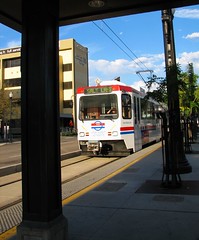 Image by pbo31 via FlickrNot only is UTA going to give you two fare increases in the next couple of months, it also plans to give you another present in April: Bus Cuts.
While not planning to implement its mysterious bus changes yet because of issues downtown, it does plan to cut some routes in the spring shake up.
So far UTA has not said what routes it plans to cut, only that notices will be posted on the buses system and TRAX. Most of the time they never publish any of the proposed changes on the website or where the meetings to talk about the cuts will be. Last year when they discontinued the 12 line, there never was any notice published in the news section of their website.
To top off it all off, not only are they raising fares and cutting service, the fuel surcharge that every one will pay will not go in effect on Paratransit Service despite the fact that it is the most costly UTA service that is more taxi service than transit service.
Once again this clearly shows that UTA doesn't have a clue and doesn't truly care about attracting choice customers to the transit system.
![Reblog this post [with Zemanta]](http://img.zemanta.com/reblog_e.png?x-id=5a4436c7-3d1d-47e1-a573-360870a2edef)
Sunday, October 23, 2005
Fuel Surcharge A Bad Idea
 Image via Wikipedia Well it looks like UTA is going to implement a fuel surcharge to cover the cost of fuel that is escalating and despite prices for gasoline going down recently, the price of diesel is actually going up.
However, while the UTA is incurring additional the cost, the fuel surcharge is the wrong way to about collecting revenue. What UTA plans to do is charge an additional quarter to all riders. That means that even pass holders will have to fork out a quarter every time they ride even after they go to the trouble of buying a pass.
The UTA needs to be making the system easy to ride in order to encourage the choice customers to switch from driving to taking the bus or TRAX. If the choice customers find it too hard to use the system they will go back to driving their cars. The fuel charge will drive many of this choice customers back to their cars.
To make it a double whammy, not only are they going to start charging this fuel surcharge in December, then the following month they are going to increase regular fares by 10 cents. How what a Christmas and New Years presents the riders of the UTA are going to get this year.
Once again, the people in charge of the UTA are not thinking out of the box. They are doing nothing to encourage increase bus ridership to offset the increase fuel prices. UTA needs to start thinking out of the box and stop this dumb programs that only hurt ridership not increase it.
![Reblog this post [with Zemanta]](http://img.zemanta.com/reblog_e.png?x-id=734099a9-9acb-4e44-bb0e-fc85b568912e)
Thursday, October 20, 2005
All That Glitters....
 Image via Wikipedia On my recent trip to Las Vegas, in addition to riding the Monorail I also had the opportunity to try out the other great transit experiment, MAX which runs from Downtown to North Las Vegas. This is a Bus Rapid Transit service that has been highly touted and used as an example of a light rail "like" system but of course for less money.
The line uses dedicated traffic lanes for part of its journey along with million dollar buses that use Hybrid technology. The system also has Proof of Payment fare collection, and makes limited stops.
I will not discuss ridership numbers on my trip since it occurred on a Saturday, but in Las Vegas that should not play a role in the numbers. The first thing you notice is that the buses are slightly quieter than a normal bus but in no way is comparable to electrified operation of light rail. In addition you still get the road noise and other problems associated with rubber tire technology.
The buses are equipped with an optical sensor system so that when the bus approaches a stop the system takes over the steering and steers the bus to a perfect stop. Great concept that just doesn't work in reality. Because of the drifting sands of the area the optical sensor system has never worked and would not work in area that gets snow (ie: Utah) either.
Unlike the monorail this system is run the CAT the local bus system and does use normal cat fares, transfers, and bus buses. They have been touting the great ridership increase but in reality less than a thousand new riders are on board on a regular basis.
When it comes down to it, MAX is nothing but a glorified bus and many local residents I talked to see it as nothing but a glorified bus. It is not attracting the choice riders that Light Rail does but does serve a purpose of getting people along the corridor faster. However, the Limited bus that used to serve the area did the same thing at less cost.
Much like the monorail, the MAX system is all glitter and no gold.
![Reblog this post [with Zemanta]](http://img.zemanta.com/reblog_e.png?x-id=8ab40ed6-eb02-43ff-83c2-df35f7f75e20)
Wednesday, October 19, 2005
A Good Idea from Vegas....
 Image via Wikipedia While I do not see a good transit ideas coming out of Vegas, there is one project they are doing that UTA should look at and implement.
The service is called Silver Star service. The concept behind Silver Star is that it runs from Senior Citizen housing and other senior citizen buildings to major shopping destinations in the area. The routes only run a couple of times per week, they run primarily from 9:00am or so to about 4:00pm so they are not out at rush hour, and they use small cutaway vans since they go into the parking lots of major stores and small apartment complexes.
While these services primarily target senior citizens, anyone can ride the buses and they are equipped with wheelchair lifts.
The service has been successful and has grown from one route to 11 in only a few years.
This service is an excellent idea and should be tried here in Utah. There are many seniors in housing that are fearful of riding regular transit especially with walking to it. Both Las Vegas and Utah have many bad drivers and being a pedestrian in either area is dangerous. This will allow seniors to ride the bus and not have to worry about crossing dangerous streets.
Like in Vegas, the buses could run a couple of days per week on each route, and serve and many locations as possible within an hour time frame before being back at the origination point. Most of Salt Lake city could be covered in a couple of routes then find the best places to put a couple of routes in the suburbs.
UTA needs to be looking at innovative transit ideas like Silver Star. It serves the population that needs transit the most and is very useful for others. It serves a market that is waiting for good transit service.
![Reblog this post [with Zemanta]](http://img.zemanta.com/reblog_e.png?x-id=a99e57a2-c89d-4f1d-b262-fc7c061fb137)
Tuesday, October 18, 2005
Impressions of the Las Vegas Monorail
 Image via Wikipedia If you lived in Salt Lake City before the first TRAX line opened in '99 you may remember that there was a big campaign by the monorail folks to saying that a monorail should be built instead of light rail. What was interesting about the campaign is that it was run by some group that had offices in Seattle, Salt Lake City, and one other city and called the Wilmore Group. What was interesting about the whole thing was there was no website for the company and if you wanted to contact their Salt Lake office you could only get a recording or send a fax. Well Salt Lake went for Light Rail and it has been successful.
However the monorail folks did have two successes although one of them is in financial trouble now before turning a lick of dirt. Las Vegas now has a monorail operating and Seattle approved funding for theirs but there is many issues now.
The Las Vegas Monorail opened last year only to be closed for some time because of a drive train falling from one of the trains (that can hurt!) and reopened right before the first of the year.
The Seattle folks used the Las Vegas monorail as a example of a transit system that could be built and run without support from the taxpayers and used this example in getting voter approval for the Seattle proposal. Of course this does not take into account that Las Vegas is unique and that the casinos payed for portions of the line and that the financing package just wouldn't work in most cases, but has been used to bash light rail lines.
This past Thursday I had my first ride on the Las Vegas Monorail. I drove down to the Sahara Resort and board the train at the end of the line. The fare is $3.00 or you can buy and all day pass for just $10.00 (twice the cost of a all day pass for CAT that allows you to ride their entire system!)
There was a train sitting in the station but it was not taking passengers. In a few minutes a train showed up. I boarded the train and a few minutes later we where on our way. Here are a few observations of the trip:
1. Most of the ridership rides from the MGM stop to the Harrah's stop which is the last one on the strip. Few people rode beyond to the Hilton and the Sahara but that changes when there is a convention in town.
2. The monorail does not have smooth ride. While there has been some criticism of Light Rail because it bounces some, it is much smother than the ride on the monorail. It sways back and forth severely and will give some people motion sickness.
3. Wynn has a shuttle from the Convention Center station to The Wynn Resort and it is actually buses. So people who can afford the Wynn will ride buses!! However the bus station is across the street from the escalator to the monorail.
4. There is very little coordination from CAT to the monorail but since this is a separate system and has nothing to do with CAT there is obvious reasons why. However if it does get extended to Downtown there will need to be better coordination between CAT and the monorail.
5. One of the reasons monorailist use to justify a monorail line is speed, but don't look for it in the Vegas monorail. It automated message brags when it hits 50mph! (TRAX can go up to 55mph and some other systems can go 65mph).
6. It doesn't take much of a load before it is SRO. There is not much seating available on the monorail, plus it has fixed consists which means it can add cars easily like light rail, so even small loads overwhelm the cars.
While monorail may have a purpose, it is designed mainly to be a feeder in dense urban areas. If you look at many Pacific Rim countries they have monorails that feed into other transit systems that handle the main commuting.
What monorail is not the greatest thing since sliced bread that many make it out to be.
![Reblog this post [with Zemanta]](http://img.zemanta.com/reblog_e.png?x-id=5acb5a30-2657-4fd0-b613-0d4cae37d45d)
Subscribe to:
Posts (Atom)