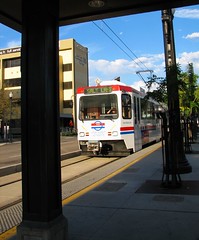
 Image by pbo31 via FlickrUTA delays planned fare increases
This from the ABC affiliate out of Idaho Falls. It is interesting that this station seems to cover UTA more than the local stations do despite the fact that UTA does not service their area.
![Reblog this post [with Zemanta]](http://img.zemanta.com/reblog_e.png?x-id=6ab77f9e-b7fe-45dc-9dad-258782c50a01) Image by pbo31 via FlickrUTA delays planned fare increases
Image by pbo31 via FlickrUTA delays planned fare increases Image via Wikipedia
This Week at Amtrak; November 24, 2008
A weekly digest of events, opinions, and forecasts from
United Rail Passenger Alliance, Inc.
America’s foremost passenger rail policy institute
1526 University Boulevard, West, PMB 203 • Jacksonville, Florida 32217-2006 USA
Telephone 904-636-7739, Electronic Mail info@unitedrail.org • http://www.unitedrail.org
Volume 5, Number 30
Founded over three decades ago in 1976, URPA is a nationally known policy institute that focuses on solutions and plans for passenger rail systems in North America. Headquartered in Jacksonville, Florida, URPA has professional associates in Minnesota, California, Arizona, New Mexico, the District of Columbia, Texas, and New York. For more detailed information, along with a variety of position papers and other documents, visit the URPA web site at http://www.unitedrail.org.
URPA is not a membership organization, and does not accept funding from any outside sources.
1) Let us be radical. No, let us be practical. Which, in this case, is being radical, because we’re talking about a future direction for Amtrak.
If we dwell too much on Amtrak’s recent past, it just becomes depressing. But, you say, this last year Amtrak has enjoyed record revenues and passenger counts. Yes, we say, but Amtrak is also in a deep and continuing financial free fall, and has the worst economic performance it’s had in its history, even during the dark years of the George Warrington stewardship when he hocked everything in and out of sight to raise cash instead of asking for free federal monies to bolster his failed Acela program. But! you gasp, aren’t you against free federal monies? Yes, of course, but it was a worse decision to not ask for the money than to go to the sources Amtrak went to and made various deals with the devil.
The simple bottom line is Amtrak is in its worst financial condition of its existence because it chooses to be, not because of any perceived slights by various White House administrations, or low funding from Congress.
Travel back in time with us to what today is considered by some to be Amtrak’s Golden Age (Yes, just close your eyes and believe; it’s no worse than believing in the Easter Bunny.).
Amtrak’s Golden Age can be described as the latter half of the Graham Claytor stewardship era at Amtrak. For those new to the class, Graham Claytor was a courtly Southern gentleman, late of the Southern Railway, who became Amtrak’s combined Chairman and President in 1982, and stayed until 1993, the longest term for any Amtrak president.
During the Claytor years the head end program for upgrading passenger cars from antiquated steam heat and air to complete hotel power from the locomotive was completed, the Viewliner sleeping cars were ordered, and the second round of Superliners were ordered. New trains and new routes came into being, and it wasn’t unusual for single level trains to stretch to 18 cars in length, and run nearly full. When he left Amtrak, the company was in fair financial condition, was routinely stable, and required only a modest subsidy in the low hundred of millions of dollars, not billions of dollars.
Graham Claytor was a quintessential railroader who understood both politics and railroading, particularly passenger railroading. While at the end elderliness caught up with him, for the most part he ran an Amtrak that by the standard of today’s Amtrak was a huge success.
One thing he often remarked about was route accounting; he was against public route accounting. He knew (and turned out to be right) as soon as individual figures were released for specific routes, various heretics would take those figures and twist them away from recognition and use them as a weapon against overall funding for Amtrak. He knew the idiotic figures of over $400 per passenger loss for everyone riding the Sunset Limited would become a farce turned into fact, and it would be nearly impossible to kill this junk information.
Think of this: when Mr. Claytor finally retired, the annual Amtrak free federal money faucet drained somewhat less than $400 million from the federal treasury, compared to today’s $1.3 billion plus splurge. And, more equipment was being operated over more routes providing better service throughout the nation. Amtrak may be hauling more warm bodies today, but the revenue passenger mile count and load factors (the only two measurements which count in the real world) are not better than they were in 1993 when Mr. Claytor came home to Florida’s west coast.
Was Graham Claytor’s Amtrak perfect? Not be a long shot; many of the problems of that era spawned the problems of today. However, as far as the overall health of the company, and what the officers of the company at that time had to work with compared to today and the results that were produced with the assets of the day, run circles around Amtrak as we know it today and the French-style thinking of surrender at every instance a problem occurs.
2) Where does the Amtrak Board of Directors find another Graham Claytor? There may not be another one exactly in his mold, but there are certainly people with vision and understanding of the American transportation scene who could lead Amtrak to prosperity instead of financial doom.
In the last issue of TWA, we spoke of stars like former Amtrak Vice President Bob Vanderclute, who makes anyone’s short list of good presidents. Current Amtrak Vice President Richard Phelps would be a viable choice. Reaching back a few years, former Amtrak Gulf Coast Business Group General Manager Deborah Wetter, now a transit system chief executive in Wisconsin could bring a calm, deliberate freshness to Amtrak’s executive suite, along with her love and complete understanding of trains and every facet of passenger railroading, and superb executive skills.
Then, too, perhaps an outside visionary.
3) How would a visionary mold Amtrak into a viable company? What would the goals be for Amtrak? How can Amtrak stop being a step-child of government, and work towards being self-sustaining?
First and foremost, the pursuit of financially prudent objectives. Amtrak’s current failed business plan calls for a reliance on states and regions to pay Amtrak to operate short distance and regional routes at breakeven or at a very modest profit. Every year these routes are at risk due to fluctuations in state budgets or changes in state executive and legislative leadership. While these routes do produce high ridership counts, they also produce low revenue passenger miles rates in relationship to expenses and short length of trips. Both of these combine to be detrimental to passenger rail financial viability instead of helpful to the bottom line. These routes also generally require frequent stops and lots of parking and station facilities (Which can be good under the right circumstances.).
Amtrak also devotes over 75% of scarce capital resources to the upgrading and upkeep of the Northeast Corridor which runs between Washington and Boston. This Amtrak owned and operated piece of infrastructure has often been referred to as a black financial hole for Amtrak, not in the least because of the huge amount of upkeep required to keep the NEC as a host facility for various local and regional commuter operations which do not pay full value for use of the infrastructure, but also because Amtrak virtually bans freight movement on the corridor, which would help pay for the cost of maintenance
As has been said in this space before numerous times, Amtrak skeletal long distance network is the financial savior of Amtrak. The long distance system has the best financial performance of all categories of routes in the Amtrak system, has the greatest potential for passenger growth, has the greatest potential for political growth, and, most importantly, actually fulfills Amtrak’s mandated mission to provide a national passenger railroad (Many people forget Amtrak is just a trade name for the National Railroad Passenger Corporation; which includes serving all of America west of Harrisburg, Pennsylvania, and south of Washington, D.C.).
Once a mature national system is back in place, then a robust long distance system can cross-subsidize a short haul/regional feeder system, and stations and infrastructure and headquarters costs can be shared. The way the current system works, the few long distance trains being operated have little to do with the short distance and regional trains, and neither benefits greatly from the other.
Also, a fully mature and robust long distance system is the only rational prelude to a future high speed passenger rail system in North America. Those who point to Europe as a good example of passenger rail systems (When, really, Europe is a good example for so few things outside of selected gourmet cooking and certain types of cheeses and automobiles.), what they fail to realize is the only reason high speed rail in Europe is successful is solely because Europe has a highly developed and mature steel wheel on steel rail traditional passenger rail system which serves as a feeder to high speed systems. Without these feeder system, European high speed rail would just be another expensive, failed experiment.
Many will remember the infamous "do-nothing" Congress Harry Truman constantly and bitterly complained about in the 1940s. Much the same could be said about Amtrak’s various presidents since the retirement of Graham Claytor in 1993. Every president since then has claimed the majority of his time has been spent holding the company together, begging for money, and/or betting the farm on Acela service on the NEC, a business strategy doomed from the start (See every reason outlined above.).
Not a single Amtrak president has presented a realistic vision for the company, nor how to sustain future viability. Vision conception has been left to company outsiders. Isn’t it time Amtrak had a real planning department – dreamers, all – who have the hard data to back up a dream and make it a reality? Where are the modern day Budds to create the next generation of Zephyrs? Where are the dynamic planners of Pullman-Standard who plotted and planned for passenger rolling stock that would end up serving America for decades beyond the originally intended service life, and do so with dignity? Where are the visionaries who created the Broadway Limited and the 20th Century Limited, and inspired a race measured by elegance, refinement, and good taste, while racking up profits?
Everyone seems to forget Amtrak has, by law, access to every two streaks of rust masquerading as railroad tracks in this country. Now, practically speaking, every two streaks of rust in this country don’t need or deserve passenger rail service. But, along viable routes there is a need – and desire – for practical and rational passenger rail beyond the needs of basic transportation (That translates to sleepers, diners, lounges, and first class coaches.).
But, you whine, there isn’t enough capacity for the host freight railroads to allow more passenger trains on their tracks! Yes, in many instances that may be true. However, since when do true entrepreneurs let problems like that stand in their way? What’s wrong with some high-spirited negotiations, planning, and horse-trading between Amtrak and the host freight railroads to find a solution to that problem? Confiscate the tracks? Nah, that’s socialist and unrealistic. Build entire new right of ways? Nah, that’s just horribly expense and dumb. Figure out how to expand the current infrastructure through clever combinations of public and private investment? Yes, now we’re talking. You say it can’t be done? Why? Has anyone ever tried to do that? Has there ever been a well run railroad which didn’t want to improve its infrastructure and use someone else’s money to do it?
As much as Amtrak’s has been America’s greatest kept secret lo these many years since May 1, 1971, and as much as there are now former passengers numbering into the millions who have sampled Amtrak and vowed "never again," Amtrak does have the power of the federal government behind it, and the ability to properly present itself as America’s passenger railroad, much as VIA Rail Canada has done in our neighbor to the north. A visionary president will stop allocating nickels and dimes to Amtrak’s sales and marketing budget (At the moment, less than 4% of Amtrak’s revenues, which is at a minimum 6% below where it should be of at least at 10% of revenues.) and make a full court press to fill the trains. For FY 2007, Amtrak had a systemwide load factor of 49%, somewhere more than 15% south of where it should be to break even by normal common carrier standards. This leaves plenty of room for a couple of choices, such as reallocating equipment to where it will serve more passengers, or beefing up advertising to put more faces in windows without having to add a lot of new rolling stock in order to start boosting revenues and lower Amtrak’s dismal operating ratio of 1.48 (The lower the number the better, anything above "1" indicates expenses outstrip revenues, or, in other words, it’s bankrupt.).
A visionary will ask why Amtrak has such few equipment choices, and why nothing new is on the drawing boards. Taking the past into the future, what about modern day rail diesel cars (now called DMUs) for short, expensive runs with few passengers? Why run a full train when one or two DMUs with lower crew costs will get the job done more than adequately?
What about a proper array of sleeping cars where every type of traveler can be accommodated according to need and the willingness to pay? Sleeping car prices are currently sky-high, and, if Amtrak is selling out many of its sleepers (which it is) at those prices, why isn’t there a backorder of hundreds of new sleepers to meet demand?
How about a new range of dining options based on passenger service, not commissary convenience or the fewest possible number of food service employees working too hard to provide good passenger service?
How about drastic changes in the way Amtrak operates stations, such as switching to the airline model where local government or local private investors pay for all station facilities and Amtrak is just a tenant, paying only its share of operating costs?
Here is the short summary: Will Amtrak’s board of directors select another Alex Kummant who is only stopping by for a short time while the ink drys on his resume, or will the board make a truly bold selection who understands and demands growth in real transportation output, investment driven by return on investment, not politics or a priori assumptions, and consider more or less the whole country, not just the small area north of Washington, D.C. and east of Harrisburg, Pennsylvania? If these three goals are met, the politics will fall in line and disappear, Amtrak will become financially strong and not at the mercy of every budget cycle in Washington and assorted state houses, and passenger rail will rejoin the full domestic transportation matrix where it belongs, instead of being "novelty transportation" the is considered both bizarre and unable to show a profit.
4) Just as the rising price of a barrel of oil has made pumping oil in North America profitable again, so has that same rising price made passenger rail attractive again to many Americans (It was always viable, but no one paid any attention to it.). One last thought; allegedly wise and sage people – generally folks who wish to maintain some sort of fantasy instead of facing real facts – will try and convince you passenger rail is not profitable anywhere in the world, it can’t be profitable in America, and it should be considered a cost of running government, just like the building and maintenance of roads.
When you come across one of these misinformed and misguided lost souls, confidently look them in the eye, and, using current conditions, demand, prices of oil, and a host of other factors, dare them to use real, generally accepted accounting practices, and come up with those loss numbers without fudging the facts.
There was a time in this great country, before the Boeing 707 jet, and before the Eisenhower Interstate Highway System, when passenger trains were profitable, with long distance trains cross subsidizing short distance and regional feeder trains.
That profitability disappeared because of the loss of glamour of the train to the jet and automobile, the inability of the railroads to compete for passengers because of oppressive government regulation, and the looming cost of re-equipping America’s passenger train fleet with a second generation of post-war equipment in the late 1960s. Add murderous real estate taxes on station and yard facilities, taxes on infrastructure and rolling stock and locomotives, and taxes on every paper clip used by railroads, and passenger trains were doomed.
Much of that has changed. A new generation of Americans who never rode a sweaty, foul-smelling and crowded troop train to World War II or Korea is ready to embrace passenger rail as something new – and, oddly and ironically enough – glamorous. There is no joy or luster to flying on a jet airplane, only annoyance and discomfort. Interstate highways have lost their allure and are often as crowded as surface streets.
Since the debut in 1976 of the first Love Boat movie on television, followed the next year by the long running television series, the cruise industry, once decimated by the maritime unions, has flourished for more than three decades with larger and more ostentatious new ships launched every year. By today’s average cruise ship standards, the ill-fated Titanic was an oversized rowboat. Once the original Queen Elizabeth and Queen Mary and the SS United States were all retired by the 1970s, also victims of the Boeing 707, who would have believed the cruise industry would have come roaring back, with the strength of a hurricane, to recapture one of the crown jewels of the travel industry, and be wildly financially successful, too?
Do you really want to have a debate, taking the position passenger rail in the future will never be break even or profitable?
The Amtrak Board of Directors has two simple choices for the next president and chief executive officer. The board can choose and seat-warmer who will smile at the camera when testifying before Congress and beg for more money, or it can choose a visionary who will look at Amtrak and say, "I can make something of this; I can take this unholy mess and turn it into something America will boast to the world about how good it is, how sustainable it is, how much it contributes to America’s position of strength in the world."
The choice is up to the Amtrak Board of Directors. We can only hope the board will make a wise choice.
5) You may notice the date on this missive; it’s November 24th. Exactly one month from today is Christmas Eve. And, this Thursday is Thanksgiving Day, a day all Americans enjoy for being close to home and hearth. Except those who will be working to keep Amtrak running, maintaining its status as a 365 day a year operation. To all of those Amtrak employees who will be working so hard this week taking so many Americans to their holiday destinations, we say thank you for a job well done, and thank you missing a holiday with your family so we may be with our families.
There is something special about railroaders, and often that something special is wonderful.
If you are reading someone else’s copy of This Week at Amtrak, you can receive your own free copy each week by sending your e-mail address to
You MUST include your name, preferred e-mail address, and city and state where you live. If you have filters or firewalls placed on your Internet connection, set your e-mail to receive incoming mail from twa@unitedrail.org; we are unable to go through any individual approvals processes for individuals. This mailing list is kept strictly confidential and is not shared or used for any purposes other than the distribution of This Week at Amtrak or related URPA materials.
All other correspondence, including requests to unsubscribe, should be addressed to brucerichardson@unitedrail.org
URPA leadership members are available for speaking engagements.
J. Bruce Richardson
President
United Rail Passenger Alliance, Inc.
1526 University Boulevard, West, PMB 203
Jacksonville, Florida 32217-2006 USA
Telephone 904-636-7739
brucerichardson@unitedrail.org
![Reblog this post [with Zemanta]](http://img.zemanta.com/reblog_e.png?x-id=27ce3884-2d72-4857-bea9-8255e15f8762)
 Image via WikipediaFrom the Mobilizing the Region Blog:
![Reblog this post [with Zemanta]](http://img.zemanta.com/reblog_e.png?x-id=2a981516-e549-4358-95f7-a070f3cb2e19)
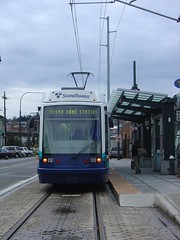 Image by Oran Viriyincy via FlickrOgden's mayor to take European streetcar junket
![Reblog this post [with Zemanta]](http://img.zemanta.com/reblog_e.png?x-id=eecf6ca1-262d-4461-a6f3-a18f1fb6f2bd)
 Image via Wikipedia
Construction progress continues on the West Valley TRAX Line. To keep business and traffic impacts to a minimum, this five-mile project has been separated into seven construction “reaches,” or segments, for management and planning purposes. The map below shows each construction reach in a different color, starting with Reach 1 in light green on the south end of the project and ending with Reach 7 in dark green on the north end.
Currently, construction is taking place in all reaches.
A description of what is happening in each area is listed below. If you need further construction information, please call our toll-free 24-hour hotline at (888) 800-8854.
Reach 1 |
| Reach Description: Reach 1 is the area along Current Construction: In conjunction with construction on the bus rapid transit project on Upcoming Construction: Construction is scheduled to begin on 2700 West from 3500 South to 3100 South the first week of December. This work will mainly include utility relocations and will proceed along the side of the roadway. Impacts to motorists should be minimal when this work begins. As we get closer to construction, we will meet with all residents to discuss how to minimize impacts. Traffic Impacts: Current impacts to motorists should be minimal at this time; however, there will be minor lane restrictions as utility companies work along |
| Reach 2 |
| Reach Description: Reach 2 is the area along 3100 South from Current Construction: Third party utility work is currently taking place. Work is also taking place on the south side of 3100 South near I-215 as crews prepare to construct a bridge over the interstate. Upcoming Construction: Construction is anticipated to intensify on the south side of 3100 South just east of Traffic Impacts: There will be some lane restrictions on I-215 as crews progress with bridge construction. We will work with the partnering agencies to notify travelling motorists about possible lane restrictions. |
| Reach 3 |
| Reach Description: Reach 3 is the area along Current Construction: Crews are currently working on a storm drain on the east side of Upcoming Construction: Construction is anticipated to take place along Traffic Impacts: Traffic is anticipated to switch again from the west side of Please be mindful of workers in this area and obey posted speed limits. |
| Reach 4 |
| Reach Description: Reach 4 runs through the Current Construction: The majority of construction on the West Valley Line has taken place in this reach on the east side of Upcoming Construction: Sound wall installation in the Traffic Impacts: · The Crosstowne Trail along 2770 South just east of |
| Reach 5 |
| Reach Description: Reach 5 will include construction along 1070 West in the Current Construction: The majority of construction in this area is taking place on 1070 West just north of Parkway Avenue. Third party utility work is currently taking place. There will be some lane restrictions implemented at this time. Work on a joint trench for utilities and sewer line is also taking place along 1070 West. Traffic Impacts: As construction proceeds, there will be some lane restrictions. However, we will maintain access in this area at all times. |
| Reach 6 |
| Reach Description: Reach 6 runs through the Union Pacific Railroad’s Roper Yard area. Although there are no businesses and residents in this reach, extensive coordination will take place with the Union Pacific Railroad to ensure that freight deliveries and other train travel will be maintained. Reach 6 will include an extensive bridging system that will enable TRAX to operate above ground, over other train traffic in this area. Current Construction: Crews have installed steel piles 120’ into the ground to form the main foundations for the aerial bridge that will carry TRAX over the Union Pacific Railroad tracks. These steel piles are welded together and then pounded into the earth until they reach bedrock and form the basis of the bridge structure. Crews have started to prepare a base course for TRAX. Upcoming Construction: Coordination will continue with the Union Pacific Railroad to install utilities and bridge structures in this reach. Traffic Impacts: Not applicable. This is a Union Pacific Railroad work area. |
| Reach 7 |
| Reach Description: Reach 7 is the area where the West Valley Line will connect with the current North/South TRAX Line. Construction in this reach will take place along Current Construction: Crews have removed the old track along Upcoming Construction: The storm drain installation at Traffic Impacts: Access will be maintained along |
Access during Construction
UTA is committed to maintaining 24-hour access to all of the businesses and residences along the construction corridor. We will coordinate with businesses in cases where temporary access might be required.
Construction Hours
Construction on the project is permitted to take place between 7 a.m. to 7 p.m. Monday through Saturday. Additionally, specific activities may require different working hours depending upon the conditions and will be coordinated with city officials.
Construction
If you are interested in learning more about the construction project, please call our toll-free 24-hour hotline at (888) 800-8854.
For More Information
Timely and helpful information is available to assist business and residential communities as well as commuters and stakeholders.
If you have further questions not answered by this report or any comments regarding the project, please contact our toll-free 24-hour hotline at (888) 800-8854 or e-mail thope@rideuta.com. You can also visit UTA’s Web site at www.rideuta.com.
Please note that construction information provided is subject to change.
![Reblog this post [with Zemanta]](http://img.zemanta.com/reblog_e.png?x-id=c0fefd4f-692c-4d59-9397-13086064717a)
 Image via WikipediaUDOT puts $3.9B in projects on hold
 ![Reblog this post [with Zemanta]](http://img.zemanta.com/reblog_e.png?x-id=97aa07d2-b4a1-4499-85c7-7293fb1cdb7a)
 Image via Wikipedia
BOARD OF TRUSTEES OF THE
AGENDA OF THE SPECIAL MEETING
OF THE BOARD OF TRUSTEES OF THE
FOR THE PURPOSE OF CONDUCTING A PUBLIC HEARING
ON THE
PROPOSED 2009 BUDGET
AND
THE REGULAR MEETING
OF THE BOARD OF TRUSTEES
| PUBLIC NOTICE is hereby given of the special and regular meeting of the |
1.
-- Larry Ellertson
2.
3.
-- Larry Ellertson
4.
- Larry Ellertson
(The
5.
a.
-- Michelle Baguley
b.
--Michelle Baguley
c.
--Terry C. Diehl
6.
-- Larry Ellertson
7.
-- John M. Inglish
8.
– Bruce T. Jones
9.
a.
b.
c.
10.
– Larry Ellertson
11.
12.
a.
b.
![Reblog this post [with Zemanta]](http://img.zemanta.com/reblog_e.png?x-id=77622603-578e-478a-90f0-873baaa67d3d)

