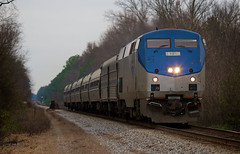
 Image by Rob Shenk via Flickr
A weekly digest of events, opinions, and forecasts from
United Rail Passenger Alliance, Inc.
America’s foremost passenger rail policy institute
1526 University Boulevard, West, PMB 203 • Jacksonville, Florida 32217-2006 USA
Telephone 904-636-7739, Electronic Mail info@unitedrail.org • http://www.unitedrail.org
Volume 6, Number 43
Founded over three decades ago in 1976, URPA is a nationally known policy institute which focuses on solutions and plans for passenger rail systems in North America. Headquartered in Jacksonville, Florida, URPA has professional associates in Minnesota, California, Arizona, New Mexico, the District of Columbia, Texas, New York, and other cities. For more detailed information, along with a variety of position papers and other documents, visit the URPA web site at http://www.unitedrail.org.
URPA is not a membership organization, and does not accept funding from any outside sources.
1) If you are an airline, which pays landing and takeoff fees, plus user fees at every airport, plus user fees for the federal and international air traffic control systems, you make the most money operating long haul flights, preferably international long haul flights. As an airline, you stuff as many passengers as will fit in a tiny, tiny space known as “coach” class, and you make sure everyone knows you’re giving them peanuts, allegedly because so many people are allergic to peanuts and they don’t know it. You sell these people their “meals” and drinks, and hope many passengers purchase alcoholic beverages because you make a fortune from them, but – at the same time – don’t want any particular passenger to purchase too much and become drunk and disorderly.
Up front in the aircraft, you have first class and business class passengers, who willingly pay huge extra dollars for larger seats, better food (which is included in the price of the ticket), and a higher level of service. On the long, profitable, overnight international flights, if you are a foreign flag carrier, you now provide something of a cocoon for seating, which has all sorts of technological gadgets and a slightly heightened sense of privacy as the space converts to what allegedly passes for sleeping space.
You operate some short haul flights to feed your profitable long distance flights, but, in as many cases as possible, you take advantage of smaller, more efficient commuter airlines to feed your long haul flights. Sometimes these feeder airlines operate under your name using your reservations system, and sometimes they operate under their own names. Either way, the more expensive, short flights feed your true money-making long haul flights.
If you are a cruise line, which pays docking fees every time your ships are connected to land in any way, plus government inspection fees, plus all sorts of other interesting, yet, arcane taxes no one knows about, you have several classes of passengers on your huge ships, most of which host over 2,000 passengers per sailing.
Way down below the water line, next to the engine room, you have “economy” class interior “staterooms” (really, large closets with bath facilities and no windows) which provide cruise passengers with a place to sleep, bathe, and change clothes. You do provide these passengers with at least four major meals a day (including the always popular midnight buffet), and several small meals a day, all included in the price of your ticket. These same passengers are highly encouraged throughout the days at sea to purchase expensive alcoholic beverages, gamble in the onboard casino, shop in the gift shops, and pay lots of money for shore excursions.
The higher you go on the ship, the more expensive the accommodations, the more money the cruise line makes, and the more affluent passengers through very high fares for cabins with balconies, subsidize the passengers traveling in interior cabins next to the engine room way down in the bowels of the ship.
And, then, there is Amtrak, which is determined to never understand any of the economics of passenger travel, and do things as expensively as possible, with the lowest possible return on investment, and the least ability to create an enterprise which can support itself. Just like the airlines and the cruise lines, Amtrak pays a user fee to its host railroads for use of tracks and dispatching; in fact, this fee is so small and so below market, it’s almost a crime the host railroads don’t make a better return on their investment for their privately owned infrastructure, which Amtrak uses for next to nothing.
Amtrak runs 15 long distance routes throughout the country, and feeds those routes with 26 short distance routes. The 15 long distance route generate 2,609,387,000 revenue passenger miles, and the 25 short distance routes in comparison generate only 1,754,039,000 revenue passenger miles.
Here is what Amtrak brags about, but really doesn’t matter. The long distance routes carried 4,170,300 separate passengers, and the short distance routes carried 13,605,800 passengers. Wow! Amtrak will tell you; look at how wonderful we are because we carried all of those people.
Who cares? The average length of trip of a long distance passenger was 625.7 miles, and for short distance passengers it was only 128.9 miles. Which passenger would you rather have? The long distance passengers coughed up total revenues of $416,284,100, while the many more short distance passengers spent $362,294,100. Whoopee.
Amtrak’s short distance trains would be fine if there was enough capacity and enough long distance routes to carry more passengers. But, as we have seen in the recent reports issued by Amtrak for restoration of long distance service east of New Orleans and for the Pioneer route, Amtrak has little – if any at all – enthusiasm for long distance trains.
To back this up, one only has to look at Amtrak’s business plan. Whoops! We can’t do that, because Amtrak doesn’t have a business plan; it only has an indication it is more interested in taking money from states for short distance trains than for expanding the long distance network.
Amtrak’s short distance trains – little more than a series of Greyhound busses on steel wheels hooked together – are expensive to operate, and, as we see above, don’t generate nearly the transportation output of the long distance trains. But, Amtrak loves body counts, so it likes to brag how many individuals step onto an Amtrak train. This, of course, doesn’t matter, because 1,000 passengers only traveling 10 miles doesn’t mean nearly as much as 100 passengers traveling 150 miles each. Any rational manager will always take the 100 passengers traveling 150 miles because you get a much better return on investment and actually accomplish more good. Moving 1,000 passengers 10 miles is a job for transit or commuter services, not intercity rail passenger trains. It was all of the freight railroads’ big city and regional commuter services – such as those of the Pennsylvania Railroad, New Haven Railroad, Chicago Northwestern, and many others – which ultimately led to the downfall of private passenger service, because by federal regulation the railroads had to run those trains (at huge losses) and the dwindling long distance trains trying to compete with the new glamour of jet aircraft and new, four lane Interstate highways with Holiday Inns could not cross-subsidize the commuter services.
If Amtrak had not been created, and at the same time the Staggers Act had deregulated the railroads as it did a decade after the creation of Amtrak, and the railroads could have found a way to shed their expensive branch line passenger milk runs and various commuter services, there is more than half a chance private passenger rail would not only have survived, but eventually flourished as it has the opportunity to do so today.
Had Amtrak not been created and the railroads deregulated, there probably would still be a healthy rail passenger car building business in this country, a much stronger national network of long distance trunk line trains, and CSX would be running stainless steel silver trains in and out of Florida and Union Pacific would be running armor yellow trains with red striping in and out of California. Had deregulation happened in the Nixon Administration instead of the Carter Administration, it’s quite possible the railroad corporate map would be very different today, because many of the mergers which took place merely for corporate survival may have been put off, or never have occurred if deregulation had happened and the free market place had acted a decade or more earlier.
But, well, today we do have Amtrak, a company which doesn’t seem to want to bestir itself for much more other than its annual begfest for funding on Capitol Hill for more and more free federal monies.
Everybody but Amtrak seems to realize the Obama Administration has handed Amtrak the biggest challenge of its corporate life by saying, “okay, you whined about money for decades, so, here it is. What are you going to do with it?” Amtrak’s answer so far is, “not much.”
Perhaps Amtrak’s apathy is because it seems to be a company at war with itself. It has an interim president and chief executive officer who refuses to speak with the news media. It has a general counsel who seems to think Amtrak – and, herself – are pretty much above the law. It has an interim inspector general who is totally unqualified to hold the position. It has a chief operating officer who is obviously loyal to the guy who hired him – two Amtrak presidents ago (three if you count one other short term interim who was forced out, too).
We know there are a number of good people at Amtrak; we’ve named many of them in this space before. These are senior managers who show up for work everyday, and try to throw off the various shackles which are hung around them on a routine basis and create something worth bragging about. But, these same good people run into incredible roadblocks and bureaucracies which close ranks together and block any type of meaningful change. If you want to fire any of these particular bureaucrats putting up the roadblocks, you’re blocked from that, too, because of what can only be mildly referred to as the “good old boy network.”
What to do?
A new board of directors is forming. The White House announced two appointments to the board this week, and there are still two vacancies to fill. We have a new FRA administrator who serves on the board, too, and whenever a permanent Amtrak president is named, he/she will also be a board member.
It’s time to clean house. Give some of these good people at the top of Amtrak who want to do better the ability to do that. Get rid of the deadwood, and all of the folks with the old allegiances, and replace them with a new, dedicated team that wants to succeed, not merely survive until retirement. Give somebody – and Amtrak – a fighting chance.
If Amtrak keeps going much long the way it is going today, the bankruptcy of New York City back in the Ford Administration is going to look like a romp in the park. Amtrak is also headed down the nearly identical path of the inglorious Penn Central Railroad, which, at the time, created the Enron financial disaster of its day in the last half of the 20th Century. The only way Penn Central eventually was saved and turned into a profitable Conrail was to get rid of so many of its internal antagonists and start with a fresh group of people. Amtrak needs to do that right now, before it becomes as helpless as Penn Central did so many years ago.
2) As promised, and promised, here’s William Lindley of Scottsdale, Arizona.
[Begin quote]
By William Lindley
Let's look at one scenario for creating the full matrix of passenger trains in the United States.
Please understand, the continuation of much of the existing "long distance" train network is helpful, but not required, for this scenario. A single daily train handing a handful of passengers at each station is very close to an irrelevancy compared to the volumes the eventual network will create.
We begin with perhaps a half-dozen local turnkey train operators. Each of these would be, at the beginning, in a fairly sizable region of the country and attached to a single Class I railroad, acting as a single point of contact between the railroad and the governmental agencies for all services.
The local trains act as the catalyst to bring cities and towns, large and small, on board with modern passenger rail. Providing local service gives direct benefit to monies spent rebuilding local stations, upgrading rights of way, eliminating grade crossings, and generally providing the "terminal services" that the later express and limited trains will require. The goal with the first phase is to begin laying groundwork so that, as in Europe, when a train leaves the station it can accelerate directly to full speed without creaking through miles of ancient switchwork.
Once these local trains have built political support through an expanding ridership base, express services will be added on longer routes, between the major cities... gradually connecting the matrix of local trains. Then the limited trains, on much longer routes, will be upgraded and dramatically expanded from whatever "long distance" trains still exist.
Looking at the beginning phase – Each turnkey local train operator would follow steps like these:
First, line up an equipment manufacturer – Bombardier, Talgo, or US Railcar which is planning to start building on the former Colorado Railcar's DMU production plans.
Second, bring aboard an insurance company which is willing to work with the railroads. Then, select one of the Class I railroads – and only one – to start with. It is this single railroad with whom you will be a single point of contact. Indeed, it might be beneficial to have a five-year exclusive agreement that "all commuter and short-distance passenger services" on their lines be provided through such a single point of contact.
Finally, and only after these are all at least tentatively aligned, go to the states, counties, and municipalities all along the one carrier's lines. Each region will have different needs – from sidings and double-track, to restoration of missing segments, to grade crossing and station issues; but every city will be getting a uniform and well-understood arrangement. In short, this sort of turnkey operation benefits both the railroads and the cities.
The basic plan for the turnkey local operator in each region is to start with two trainsets, offering three or four daily round-trips. Service will provided not just into destination downtowns, but, to the suburbs on either side, and to most every town of any size along the route. These are true basic transportation, local trains. And they will act as feeders – the base matrix – to the express and limited train networks which will follow.
Generally these first trains will run on routes of between 150 and 200 miles, either centered on one large city or between two cities, with one-way times of about three to four hours, and about a dozen stations. Each trainset will operate about sixteen to eighteen hours a day, maximizing return on investment while permitting sufficient time for servicing.
Let's look at two examples.
In the Tampa, Florida, metro area, two trainsets could provide four daily round-trips. The first train from St. Petersburg could leave at 6:30 A.M., arriving Tampa at 8:05 and Sarasota at 9:45; the first train from Sarasota leaving at 6:30, arriving Tampa at 7:55 and St. Pete at 9:45. The first three trains would leave each terminus every four hours on a "memory schedule" with the exception that the 2:30 P.M. trains, which both would arrive Tampa at about 4 P.M., would wait there an hour until a little after 5 P.M. for the evening rush; then the last trains would depart each terminus at 7:30 P.M. Each train would stop at Pinellas Park, Largo, Clearwater, Oldsmar, Carrollwood, and Sulphur Springs west of Tampa, and Gibsonton, Apollo Beach, Ruskin, Palmetto, and Bradenton on the way to Sarasota. Total population of these is over 950,000. Today's Silver Star calls at Tampa at 12:34 P.M. southbound and 2:17 P.M. northbound, and these local trains would provide excellent connections in all directions.
In Georgia, Atlanta and Macon are less than a hundred miles apart, so four or five daily round-trips should easily be made with two trainsets. Indeed the initial local route should at least connect Warner-Robins, south of Macon, with some of the suburbs beyond Atlanta. Atlanta is an excellent connection point, if a train station at the Five Points MARTA subway stop can be constructed – MARTA acting as the local feeder. These local trains would then serve commuters as well as all-day regional travel. Later, express service to Chattanooga to Savannah would overlay these local trains, followed by a further overlay of limited-stop service from Chicago via Indianapolis and Louisville to Florida.
Similar opportunities exist all across the country. Duluth to Minneapolis. Green Bay to Milwaukee. Anywhere there are cities under 150 miles apart is a prime candidate for comprehensive local train service.
Again, first we bring the states, counties, and cities on board with three or five daily trains that serve not just commuters, but, tourists and residents all day long. Much needs doing to upgrade the existing tracks, signals, and bridges to accommodate relatively fast passenger trains along with today's freight trains; much needs doing to restore stations, station tracks, and re-integrate the passenger train facilities with today's bus, streetcar and subway networks.
The improvements made possible by the local trains is what makes the later express and limited trains work smoothly. By building ridership and political support, all is possible.
[End quote]
3) Found on the internal United Rail Passenger Alliance Intranet:
[Begin quote]
When your doctor works for the folks who created Amtrak:
– Office hours are from 2:10 A.M. to 2:25 A.M., Sundays, Wednesdays, and Fridays.
– He knows the more patients he sees, the more money he loses.
– You'll have to ride an hour on a bus to the middle of nowhere, because the downtown location was closed "to save money."
– Everything takes longer than it did in 1951, and the furniture looks it.
[End quote]
4) And, this missive from a TWA reader.
[Begin quote]
Hello, once again, URPA,
I'm glad that others share my view on letting other companies operate long-distance routes in this country. Even though a lot of people in the rail community are (deservedly) excited about the aspect of high speed rail coming to their states, they should also remember competition also applies to the long-distance trains as well, and pressure needs to be kept on Amtrak. After reading some of the more recent TWA articles, it's obvious to me certain people in Amtrak's management need a wake-up call (Whether it's by losing out on the majority of the HSR corridors, or by watching some of its long-distance routes return to the freight railroads, something big needs to happen to shake them up.). After all, the poorly handled Sunset Limited report, a failure to drastically upgrade the overnight fleet, and demanding states to pay for long-distance routes have all happened on their watch.
Division B, Title II, Section 214 of the Passenger Rail Investment and Improvement Act of 2008 says:
(a) In General – Within 1 year after the date of enactment of the Passenger Rail Investment and Improvement Act of 2008, the Federal Railroad Administration shall complete a rulemaking proceeding to develop a pilot program that –
`(1) permits a rail carrier or rail carriers that own infrastructure over which Amtrak operates a passenger rail service route described in subparagraph (B), (C), or (D) of section 24102(5) or in section 24702 to petition the Administration to be considered as a passenger rail service provider over that route in lieu of Amtrak for a period not to exceed 5 years after the date of enactment of the Passenger Rail Investment and Improvement Act of 2008
Now, with all the talk about whether Amtrak is really disinterested in operating long-distance trains in the long-term, why don't some of the friendlier host railroads contemplate bidding for some of the overnight routes? Pullman may be gone, but the hosts could talk to a manufacturer like the revived Colorado Rail Car company about acquiring some real dining cars and sleepers.
At last year's Railway Age conference, railroad author Frank Wilner advocated returning intercity passenger trains to the freight companies because he thought “a sound business model” would win over anti-Amtrak politicians in Congress (Source: January 2009 Railfan & Railroads). While it sounds tempting, I’m not sure all passenger routes can be returned to the host railroads. Instead, I propose the hosts talk to the likes of Herzog, First Group America, and some of the foreign bidders for HSR and get them to run the trains. I would definitely like to see routes like the Crescent and Silver Star be supplemented with daytime counterparts so I don't have to go from the Carolinas to Atlanta or Florida in the middle of the night.
The hosts would work out a three or four-way partnership with each other and the new entity operating the route (for example, a daily Sunset Limited could have an agreement with BNSF, CSX, Union Pacific, and First Group America) as a way of avoiding the problem of changing trains. Meanwhile, BNSF could run the Southwest Chief by itself and add routes and branches like a spur to Phoenix (a similar situation would apply to Norfolk Southern with the Crescent).
One more thing, the Auto Train concept could be added to other markets by the host railroads (after all, those empty auto racks currently seen on freight trains could be very useful). It may not have been feasible to have a Midwest-Florida Auto Train route 26 years ago, but if gas ever returns to September 2008 levels, it would be more than practical for the Auto Train concept to be extended to other parts of the country.
– Anonymous
P.S. Based on the discussion in the URPA Intranet group during the Labor Day weekend, states like Florida should contact Veolia or any of the companies which fail to get HSR bids to operate conventional speed routes as a precursor to high speed service.
[End quote]
5) More reader mail.
[Begin quote]
Mr. Richardson,
This latest Pioneer (a splendid route serving "rich pickings" territory, lots of greens, etc) issue reminds us that Amtrak sees itself not in the passenger service business at all, but, as a candid porter once told me, as a "jobs program." Sad to say, that's the kind of people you have "managing" it, though "managing" is probably the wrong word. "Showing up at the office to get the benefits and the pension" is more like it.
Pity a private operator can't pick this one off.
Always value reading your (depressing) reports.
[End quote]
If you are reading someone else’s copy of This Week at Amtrak, you can receive your own free copy each edition by sending your e-mail address to
freetwa@unitedrail.org
You MUST include your name, preferred e-mail address, and city and state where you live. If you have filters or firewalls placed on your Internet connection, set your e-mail to receive incoming mail from twa@unitedrail.org; we are unable to go through any approvals processes for individuals. This mailing list is kept strictly confidential and is not shared or used for any purposes other than distribution of This Week at Amtrak or related URPA materials.
All other correspondence, including requests to unsubscribe should be addressed to
brucerichardson@unitedrail.org
Copies of This Week at Amtrak are archived on URPA’s web site, www.unitedrail.org and also on www.todaywithjb.blogspot.com where other rail-related writings of Bruce Richardson may also be found.
URPA leadership members are available for speaking engagements.
J. Bruce Richardson
President
United Rail Passenger Alliance, Inc.
1526 University Boulevard, West, PMB 203
Jacksonville, Florida 32217-2006 USA
Telephone 904-636-7739
brucerichardson@unitedrail.org
http://www.unitedrail.org
![Reblog this post [with Zemanta]](http://img.zemanta.com/reblog_e.png?x-id=b0d7ca6f-53ff-433a-a197-add5fff93935)


![Reblog this post [with Zemanta]](http://img.zemanta.com/reblog_e.png?x-id=116d228f-3772-4a70-95e4-eedac1c456f5)