Tuesday, July 31, 2012

Transit Customer Service from F to A grades

English: by me UTA bus
English: by me UTA bus (Photo credit: Wikipedia)
English: Bus 2909 of TriMet, the public transi...
English: Bus 2909 of TriMet, the public transit agency in Portland, Oregon, is a 2009-built New Flyer D40LFR. It is pictured on Harrison Street at 4th Avenue in downtown Portland, outbound on route 54 to Beaverton Transit Center. (Photo credit: Wikipedia)
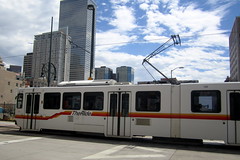
Denver - CBD: RTD Light Rail
Denver - CBD: RTD Light Rail (Photo credit: wallyg)
     The following are three customer service examples from three different transit agencies in the western US. After reading the three incidents and the response from the transit agency, which one of these agencies would you like to be a customer of? The three offer the best examples of a total failure, adequate action, and giving outstanding customer service.


Denver RTD
Grade: F 

      Denver RTD gets the worst grade for customer service. My experience started when I flew into DIA for a meeting and took a RTD bus and light rail to my motel. I boarded one of their MCI commuter cruisers with an all day, all zone pass which I purchased on-line. The driver has to punch the day pass for it to be valid, well the driver did and punched the wrong day. Unfortunately the drivers do not carry day passes so when we got to the light rail station I had to purchase another day pass. 
      First of all I was not mad at the driver and when I talked to Denver RTD customer service I did not mention which bus or time that it happened. A couple of weeks, that's right weeks after I talk to them about the day pass they send me a nasty email saying basically too bad, not our problem. The email was extremely unprofessional and showed a lack of customer care by RTD. 

Portland TriMet
Grade: C

     I have been riding TriMet for about a year now since moving here to Portland. For the most part most of my trips are pretty uneventful except for the random person that has to talk on their cell phone way too loud telling the other person about their sex life and so on.  However, I have had two experiences with TriMet operators in which I took up an issue with their customer service department. I should point out that I have also sent in three commendations for drivers also so I am not only complaining, but also commend those that are excellent in their jobs. 
     In both incidents I got a email from a customer service rep that said sorry you had an issue and said the driver would be talked to. I will say that both letters were written individually and not form letters which I gives points to TriMet. TriMet does the basics in good customer service, nothing more so it gets a passing grade. 


Salt Lake City Utah Transit Authority
Grade: A 

     In my time riding UTA, I only one time sent in a complaint. That day I went to take one bus to a Park N Ride lot to catch a second bus. It was daylight out so that cannot be used as an excuse. The driver of the first bus passed me right on by didn't even bother to slow down. Immediately behind him was another bus deadheading to the Park N Ride lot. This driver hit is breaks but then kept on going. I then waited for the next bus to come along. Because the next was supposed to do a loop before heading to the Park N Ride lot I would miss my next bus. However, the driver of the next bus went ahead and dropped me at the Park N Ride Lot so I wouldn't miss my next bus. 
     The customer service person at UTA offered me two free day passes (since at the time I was not riding on a daily basis so I didn't need the discount on a monthly pass). Of course I didn't complain to get the free day passes and never sent in another complaint. However, UTA did the best job of taking care of the customer and ensuring they will be happy with UTA service. 


     You can clearly see why UTA gets the best grade here. Some would argue that they should not waste the money trying to please a dissatisfied customer however, that response would be narrow minded. Transit systems need to work on their customer service skills just like any other company that provides a service and deals with passengers every day of the week. 


Enhanced by Zemanta

Thursday, July 12, 2012

Streetcar Basics

The interior of a Portland Streetcar.
The interior of a Portland Streetcar. (Photo credit: Wikipedia)
English: A car of the Portland Streetcar syste...
English: A car of the Portland Streetcar system at the eastbound Portland State University stop, on Market Street at the South Park Blocks. (Photo credit: Wikipedia)
A few years ago the thought of streetcars returning to our streets was a fantasy. Today several cites have either installed new streetcar lines, constructing lines, or in the advance planning stages. I support streetcars as I feel that they are a great step between basic bus service and full light rail service (notice I did not include BRT - Badly Repackaged Transit). 

The question is, what should be the priorities of new streetcar lines. The most famous new streetcar line is off course the Portland Streetcar. To be honest, I rode it on Monday but overall I rarely do. Now that I spend more time downtown at Portland State I most likely will be riding more especially to head to Powell's Books

People opposed to the streetcar line say is nothing but a subsidy to developers. It is easy to call it that, after all it goes through a part of town that was about to rapidly development. On the other hand the same people who make those kind of comments turn a blind eye to all the subsidies suburban sprawl developments get every day of the week. We could quarrel all day about the that, but instead lets see what the streetcar does do. 

1. The streetcar provides service along a corridor that has never had service. While the two ends of the network (in the northwest side of town and south of PSU), the bus service was not in direct competition with 
Tri-Met buses. In fact the one line that follows the streetcar in the northwest will be rerouted in September in a budget cut move that actually eliminates duplicate service. 

2. The streetcar provides an alternative form of transportation that makes that part of the Portland much more livable. While I don't go to Powell Book's everyday, maybe once a month at the most, it is much more convenient to take the streetcar than trying to drive and find a parking spot. 

The question is, what should the priorities be for a streetcar line? The problem with making a blanket statement is that every city has different priorities so what is important for Portland, is different for Salt Lake City, Cincinnati, Atlanta or any of the other cities that have projects in progress. 

While Portland is a great example here is some things that could improve the current Portland system and any future extensions: 

1. One problem was that the system was designed only to have single cars. From my understanding this was a compromise to ensure support along the line. However, one of the benefits of rail transit is when you add additional cars to a train to make it more efficient and carry more people. Any future lines should have the capability to run multiple car trains. 

2. There is no private right of way. The streetcar gets stuck in traffic. While in an ideal world the streetcar would have its entire right of way reserved, we know in the real world this is just not possible. However, I see no reason why on 10th/11th Streets the streetcar cannot have its own reserved right of way in stretches and other areas to. 

3. The streetcar should have signal priority plus priority at the four way stops like Couch and 11th were the streetcar gets stuck for extended periods of time. 

In September Portland will open its new East side streetcar line. Until the loop is completed with the opening of the Milwaukee MAX line in 20515 I am not overly enthusiastic about how well this line will do but we shall see. 

That brings up a good question, for a city looking to extend a streetcar line or put a new one in, what should the priorities be? As I said early every city has its own most important priorities but this is some general guidelines. 

1. The first priority of a streetcar line should be to provide an essential transportation function. If the city already has a light rail or rapid transit system, the streetcar should function as a feeder between the major rail line and important business and residential sectors. Salt Lake City is a perfect example of this. The streetcar will provide service from all three light rail lines to the Sugar House district which is currently a major retail center and will have high density housing going in. 

In a way the east side streetcar in Portland will provide this function also as it will connect from the Lloyd District light rail stations to the Pearl District offering customers an alternative to the current ways to get to the Pearl. 

Once the Milwaukee MAX line is completed, the Portland streetcar will provide an excellent feeder from that line to the northwest part of town that is not currently available because of the alignment of bus service (31.32,33 and 99) and the streetcar line. 

Another good route in  Utah would be from the Ogden Transit Center to Weber State University which is being studied at this time. This would create a feeder from the Front Runner Commuter trains to busy 612 bus line on Washington Blvd and onto the University replacing route 603. 

2. Another important priority would be to supplement a overburdened bus route along a busy corridor. In its transit plan Portland is looking to supplement bus service with streetcars in such corridors as Sandy Blvd. I mentioned this at one time where it will allow the 12 route to become limited stop along this section of route speeding up Trimets longest route (which is being split up in September and won't be so long anymore). 

Another good example would be the Barbur Blvd/Capitol Highway corridor. Currently there are in the study phase on this project for Badly Repackaged Transit or Light Rail, but as I see it know there is a slim chance of a good system being built. Chances are some half baked BRT plan will get built that will end up not having a major impact. 

You could run the streetcar down Barbur and Capitol Highway to the Hilsdale area. This would allow TriMet to cut routes such as the 45 at Capital/Sunset and make routes such as the 44 and 12 faster through the area speeding up bus rides for those through travelers. 

When it comes down to it, streetcars can function both as a feeder from major rail routes to major employment and dense residential areas. It can also be a relief valve for busy bus routes along major dense corridors. What it comes down to is that streetcar routes need to be done right the first time. No matter how successful the route would be there will be naysayers, however if a route is well designed and does the job it is easier to counterbalance the CAVE (citizens against virtually everything) types. 
Enhanced by Zemanta

Sunday, May 27, 2012

Sometimes the NIMBY's are right...

English: The urban growth boundary edge at Bul...
English: The urban growth boundary edge at Bull Mountain in the Portland metropolitan area. Farmland in foreground, urban development in background. From Roy Rogers Road near Bull Mountain Road. (Photo credit: Wikipedia)

Sometimes it is just too easy to tune out NIMBY's as people who are too caught up in their own little world who have bought a house and expect nothing to change, and that anything they don't  approve of should not be allowed anywhere near their little piece of paradise.

However, there is times that NIMBY's  have a good point and one of those times is concerning higher density development. Now I am not talking about density done right, I am talking about density done wrong. A couple of years ago I mentioned a development near where I lived. It was a complex of condominiums that offered poor transit access and were designed that it was not easily accessed by pedestrians coming off the bus. Finally, it was not located near any retail stores so even for basics you have to get behind the wheel of a car to get.

Here is another example, recently in the comments on the Portland Transport blog that developers can get density incentives even if the project does not have easy transit access which is led to high density developments in areas with no or hard transit access. What is the purpose of having higher density if it will not have the benefit of transit access?

One solution to this would be modify the program so that it is a tiered system for incentives so that if locate on a high capacity transit line you get the highest incentives, basic transit service another level and the lowest to those farthest from transit access. In a perfect world you would not have any incentives for density outside transit corridors but you also have to face the political reality that you need to have the cooperation of all parties to get things done and the developers and other political elements would probably bulk a more restrict policy.

Another example of bad development is part of the problem above and that is high density developments in areas that should not have them. An example of this is here in Portland were several high density developments have been built in areas that are not designed for them such as out at the far end of the Urban Growth Boundary.

Spokane County is another example of areas that have allowed these kinds of developments. There has been several apartment complexes built in what is essentially rural areas that are on two lane roads with no access to services. Not only does this create traffic issues on these roads, it also makes it difficult for emergency services to reach them and should a disaster strikes, these rural located complexes will be in a world of hurt.

The priority of density should be where it makes the most sense and with the services to allow residents and workers at the high density developments to be able to avoid using a car whenever possible. This means near high capacity transit lines and major bus lines plus walking distance to grocery type shopping and other services.

So yes, sometimes the NIMBY's do get it right.
Enhanced by Zemanta

Monday, May 14, 2012

Its all about Selling...


Crime Train, Portland Creep, Empty Buses, 19th Century Technology, Anti-Car and so. For anyone who is an advocate of proper urban planning or effective transportation choices are well familiar with slogans like these, they are well used by opponents to paint a disparaging picture of transportation choices and planning.

The problem is these well financed campaigns are designed to one thing, to turn public point of view to their way of thinking. Some do it for the money while others do it for their ideology. The problem is that the other side is doing a heck of a good job of marketing their point of view and advocates of transportation and planning choices seem to fail.

Motivational Speaker Zig Ziglar has a saying that everything involves selling and that everyone is a salesperson whether they think that their job involves it or not. Advocates need to realize that they too need to work on their sales presentations whether it is to a city council, newspaper, blog or any other forum that they may find themselves talking to others.

Right now here in the Portland suburbs of Clackamas County their is a heated battle for county commissioners. Radio ads and billboards are being bought proclaiming that three candidates will stop "Portland Creep". They are using this term to demonize urban planning and transportation in the Portland area saying that the goal is to ruin the little perfection called Clackamas county. Now a large segment of Clackamas County is rural and the thought of additional density is to them is worse than

Smart Growth Opponants Run Against Portland's Pro-Urbanism Policies
"Portland Creep" and the Density Debate

While you can say all you want about how negative they are (yes they are) but what are they doing? They are effectively selling to certain segment of the population that sees the density of Portland as something that is very undesirable. While this group is well funded by conservative interest, they play on emotions and are good at making Portland sound bad. It will be interesting to see the elections results.

In Portland, the anti-MAX light rail forces have done an excellent job of demonizing MAX as the crime train. Now the east side MAX does have some issues but Gesham was a problem community before MAX even came along. But it has done the job, any time something happens anywhere near a MAX station the media always mention it is near a MAX station and the words "crime train" will show up in the comments within moments.

Another one you always hear no matter where you are is the argument rail is "19 century technology". The opponents have done such a good job of painting anything rail as outdated technology that "19th century technology" the first worlds out of months of many. You could go all day long on how the automobile is also 19th century and in some ways 18th century technology but it doesn't matter, rail is the outdated "19th century technology".

Another comparison is the Tea Party and Occupy. The Tea Party has done an excellent job of getting people to join their way of thinking because they are doing a better job of selling themselves. You do not have to agree with them but you have to respect the organization that has been created and instantly had a major effect on the 2010 election. Occupy meanwhile made lots of noise in October, made lots of enemies in many cities but has not become a major force. You don't have to like an organization to learn from what they do right.

Then again maybe if advocates would stop fighting among themselves, yes you are going to have disagreements after all we are all human but you must have a unified voice if you want to get your message across. Fortunately when it comes to public votes transit still wins a majority of the time, but that luck is going to run out without an organized voice that knows how to sell.

Friday, May 11, 2012

This Week at Amtrak

CP Rail Loco in Thunder Bay ON
CP Rail Loco in Thunder Bay ON (Photo credit: Wikipedia)


From the Untied Rail Passenger Alliance 
This Week at Amtrak; Vol. 9 No. 5

A very heartfelt thanks to all who contributed to this issue.

From the Editors…


So you think you know a thing or two about the railroad business. Oh really?


The “invisible hand” versus “the art of the possible”


It is no secret that railroads, as investment opportunities, have regained a stature not seen since what has been labeled as “the gilded age.” With such attention, however, comes great responsibility. Since about the most recent turn of the century, there remain seven major railroads in North America: Union Pacific, BNSF Railway, Norfolk Southern, CSX, Kansas City Southern, Canadian National and Canadian Pacific. It is also no secret that the Canadian Pacific is perceived as the weakest of the seven. Although one of the smaller roads, it still boasts a market cap of $13.2 billion and an enterprise value of $17.7 billion.


For those of us with our boots on the ground, there have long been signs of increasing trouble at CP. Now the trouble is in the top office. In late October, 2011, Pershing Square Capital Management, an activist hedge fund based in New York City, announced it had acquired a 12.2 percent stake in CP. Between then and now, the stakes have only risen to a current 14.2 percent, and the relationship between Pershing Square and the CP board has become bloody.


Contrary to your statement in the letter that we “acknowledge” that we have no plan to improve Canadian Pacific’s operating performance, we do have a plan, and we have made that plan clear both in our initial meeting and in subsequent communications with you. Our plan is to transform Canadian Pacific from the worst performing railroad in North America into one of the best by effectuating a cultural and operational transformation of Canadian Pacific which begins with a new leader. – Excerpt from January 3, 2012 letter from Pershing Square’s William Ackman to CP chairman John Cleghorn


Pershing Square is now promoting to shareholders a slate of seven alternative directors as part of its CP turnaround strategy. Two of these are significant: Stephen Tobias and E. Hunter Harrison.


For most, these names may not ring a bell; but for railroaders, these men are superstars. Both of them are past recipients of the Railway Age Railroader of the Year award: Tobias, as Norfolk Southern Chief Operating Officer and later Vice Chairman; Harrison, as President and Chief Executive Officer of CP-rival Canadian National. Tobias was a lifelong employee of NS and its predecessors, starting in 1969 as a junior engineer. He worked his way through the ranks over the next four decades until being named Vice Chairman and Chief Operating Officer in 1998. He retired from NS in 2009. Harrison’s work history is not as straightforward. He started in1964 with the St. Louis-San Francisco Railway, which later became part of the Burlington Northern. Later, he would be President of the Illinois Central which was acquired by Canadian National in 1998. He retired at the end of 2009 as CEO. It is anticipated that Harrison would reprise that role at CP if Pershing Square’s seven alternative directors are elected by the stockholders. One slight problem: That job is currently held by Fred Green.


The past six months have seen quite the flurry of activity at CP’s headquarters in Calgary, Alberta. Press releases, video streams of meetings and letters to stockholders have literally flowed unabated in preparation for the annual stockholders meeting set for May 17. A letter to the shareholders dated March 7, 2012 sets the company’s tone:


CP’s management team is aggressively and successfully executing on the Company’s Multi-Year Plan and has the full support of the Board of Directors. Your Board and management team firmly believe the CP’s string, established relationships with customers will continue to create significant value for shareholders. Strong and profitable customer relationships are essential to maintaining and expanding the volume growth that underpins CP’s Multi-Year Plan to increase earnings per share, drive down the railroad’s operating ratio and deliver greater shareholder value. The Board believes that Pershing Square’s demand that the Company replace its CEO, Fred Green, with Hunter Harrison would put at severe risk the significant forward momentum the Company is making on the Multi-Year plan.


Interestingly, CP developed and released its “Multi-Year Plan” in January; two months after Pershing Square had announced its investment.


It should be noted that none of what has transpired was at the behest of Washington or Ottawa. What we see at work has been described as “the invisible hand,” that is, when enough people believe the bottom line could be improved, something will be done.


Meanwhile, back in Washington…


Something that has been mentioned repeatedly by transportation advocates is the undying loyalty of the current presidential administration to “rail.” As evidence, they point to the administration’s mention of “High-Speed Rail” in a State of the Union speech. As we have covered here in the pages of This Week, the latest iteration of domestic “Fast Train Fever” is going the way of the previous cycles, with the last gasp — California’s HSR dreams — on life support, and the pulse slowly ebbing into silence. Rail was not mentioned in the latest State of the Union address of this past January. Perhaps the administration has given up hope on rail. If so that may explain its latest nomination:


President Obama has nominated former U.S. Rep. Yvonne Brathwaite Burke, a trailblazing fixture in Los Angeles area politics, to the AMTRAK board of directors, the White House announced Thursday.

As a young attorney in 1966, Burke made history when she became the first African American woman elected to the state Assembly. She was elected to Congress in 1972 and served until 1978. In 1979 she was appointed to a vacancy on the Board of Supervisors but lost her election bid the following year in a racially charged contest. In 1992, she won election to the board from a different district.
 – Los Angeles Times, March 29, 2012 


Before proceeding any further, let us be clear that we are not, in any way, minimizing Representative Burke’s long and distinguished record of accomplishments. She most definitely blazed trails, and when the doors would not open, she broke through them. That said, what does she know about railroads and their governance?


Currently, the seven members of the Amtrak board are: Thomas C. Carper (Chairman of the Board), Nancy A. Naples (Vice Chairman of the Board), Joseph H. Boardman (Amtrak President and CEO), Anthony R. Coscia, Bert DiClemente, Jeffrey R. Moreland, and Ray LaHood (U.S. Secretary of Transportation). Of these, only Mr. Moreland has a working history with a railroad. Starting in 1978, Mr. Moreland joined the Santa Fe Railway as Assistant General Attorney, in 1994 became Vice President for Law and General Counsel for Santa Fe’s parent company, and later retired with the same title from BNSF Railway.


It has been intimated that Amtrak has lacked a true operating foundation since 1993, when the legendary Graham Claytor retired. What did he bring to the table?


Graham Claytor had, first of all, had the stature on the Hill that we needed, but more importantly, he came out of a business environment. Even though he was a rail buff, which he was, he was a businessman, first and foremost, and that’s what we need at Amtrak. – Kathleen Gordon, Amtrak Senior Director, e-Commerce, retired, Amtrak: The First 40 Years 1971-2011, RK Publishing


Mr. Claytor never singled out one aspect of the corporation to blame for all of its faults. He knew the Northeast Corridor was a drain on finances, but accepted that fact as federal welfare to state-run operations. Under Claytor, Amtrak was a fairly well run “traditional” railroad focused on a national system. After his demise, however, the company morphed into a government agency with ferocious survival instincts. It became very NEC-centric, and continued that path by expanding its corridor service with state partners, particularly California.


Politics, “the art of the possible,” is not concerned with the bottom line, but rather short-term survivability. Politicians count on the short-term memories of their constituents to traverse the delicate tightrope walk that is their elected term in office. Railroading, on the other hand, is anything but a short term-enterprise. All railroads need long-term planning to succeed, and a core philosophy to be the thread that weaves those plans together. Since politics are by their very nature mercurial, anything beholden unto politics will be inefficient and unreliable. That pretty much explains Amtrak after 40 years.


There have been many attempts to recruit people with railroading (or at the very least, transportation) experience to the Amtrak board. Mr. Claytor was appointed Amtrak president in 1982, coming out of retirement. This was one year after Congress had altered Amtrak’s original board structure and governance, in which the four railroad common stockholders were represented on the Amtrak board and the common stock had voting rights. (The eviction of the railroad shareholders from the board and their disenfranchisement was of dubious constitutionality, but was never challenged.)


The pendulum was to swing in the other direction in 1997, when the Amtrak Reform and Accountability Act ended the monopoly voting rights of the preferred stock, held only by the Department of Transportation, restoring the original voting status of the railroads’ (now including the corporate successor of Penn Central) common stock. Nevertheless, Amtrak has continued to ignore the common shareholders, in violation of District of Columbia corporate legal requirements.


The 1997 legislation also mandated a nonpartisan expert board of directors, using language parallel to the National Transportation Safety Board statute . All directors were to possess “technical qualification, professional standing, and demonstrated expertise in the fields of transportation or corporate or financial management,” and could not be “representatives of rail labor or rail management.” Sadly, these requirements were flouted by the initial board appointments by the Clinton Administration. The following regime would attempt to follow the rule of law only to feel the blowback from the usual sources:


Bush appointees to Amtrak board foreshadow breakup and privatization

President George Bush’s proposed nomination of three new members to Amtrak’s board of directors foreshadows the administration’s support for breaking up the national passenger rail system and selling off its most profitable parts to private industry.

Among the nominees is Louis S. Thompson, who retired earlier this year from the World Bank. Thompson began his career at the Transportation Department and played a role in creating Amtrak. At the World Bank, Thompson spearheaded successful efforts to privatize railroads in Argentina, Chile, Mexico and Romania; he also played a role in similar efforts to privatize railroads in China, India and Russia.

The second nominee is Robert Crandall, who retired from the chairmanship of American Airlines parent company AMR in 1998. Since then, Crandall has served on several boards, including Halliburton, the company formerly headed by Vice President Dick Cheney. The last nominee is Floyd Hall, a long-time Republican fundraiser and former executive of companies such as Singer Sewing Machine Co., the Grand Union Co. grocery chain and KMart.
 – Brotherhood of Locomotive Engineers and Trainmen quoting the World Socialist Web Site, Published by the International Committee of the Fourth International (ICFI), 30 September 2003


Subsequently, all the actual appointees were virtually devoid of any of the listed qualifications, and consisted mainly of elected officials, lobbyists, and others of similar background.


The pendulum was to swing yet again in 2008, with the enactment of the Passenger Rail Investment and Improvement Act (PRIIA). The 1997 board statute was completely repealed, and replaced with a new, larger (nine- versus seven-member) board structure, with language openly inviting the appointment of politicians and the politically connected. The following are listed in PRIIA as alternative and independent qualifications for board membership: “general business and financial experience, experience or qualifications in transportation, freight and passenger rail transportation, travel, hospitality, cruise line, or passenger air transportation businesses, or representatives of employees or users of passenger rail transportation or a State government.” PRIIA also made the Amtrak board avowedly partisan, with a formula usually applied to multi-member federal agencies: “Not more than 5 individuals appointed…may be members of the same political party.” (“Balanced representation” of “major geographic regions served by Amtrak” is a recommended, but not required, consideration.) The ensuing appointments have been predictable.


One by one, each potential expert appointee has not passed political muster for one reason or another. Ultimately the jobs go to those who will not make anyone uncomfortable within the company, including, above all, the NEC orientation of Amtrak. Thus, it again appears that the status quo is not endangered. How will this all end? The words of Mr. Claytor from two decades ago now seem prophetic:


“Not everybody knows, and it does not always come through in the press, that the basic statute provides that Amtrak is not to be a government agency and is to be operated as a for-profit, privately owned railroad corporation. If it weren’t for that, a lot of us wouldn‘t be here, because I don’t‘ think that it is possible to run a railroad as a government agency and not have it be a disaster.” – Interview with Graham Claytor, Trains magazine, June 1991


Enhanced by Zemanta

Wednesday, May 09, 2012

Frequency Vs. Coverage

If we lived in a perfect world, a transit agency would not only be able to provide both an extensive network of core bus routes running frequently and a network of lines that is able to blanket the area with coverage.

However, few transit agencies have the resources to provide both and  with as budgets continue to be squeezed and the future of federal funding in doubt, transit agencies are having to squeeze where ever they can. The question that transit agencies and the citizens it serves has to answer do we provide the best service possible to the busiest routes or do they provide the most coverage possible?

People waiting for a bus 
Here are some pro's and con's to each service. Like previous pro and con postings, I will only point out some important pros and cons to each and if you have one that you think should also be considered be sure to throw it out in the comments.

First lets do the pros and cons of coverage:

Pro's:

The one major pro with a coverage network is that most people should be able to access a bus route both at home and to work. Until the 90's many transit systems focused on coverage to ensure that they could serve the maximum number of people possible. Even if you lived in far flung suburbs so long as you lived in the transit area you would have service.

Con's:

The biggest con is that if you are providing service to far flung areas of the system, the chances are you can only provide mediocre service. Everyone may have service but the busiest routes will not have the resources to have the amount of frequency that is demanded which will lower ridership potential.

A second con is that your bus routes will perform poorly overall. While some routes will have good ridership their ridership will be hampered by the lack of enough frequency while you run routes to areas with limited to no ridership potential.

This leads to a third con and that is the empty bus syndrome. People who already have a bent against transit will see lots of buses running around empty and will guess that they all run empty so "no body rides transit". Of course these people would say it anyway but you are just giving them some added ammunition.

Transit Center in Miami. 
Now lets look at a service network:

Pro's:

The biggest pro is that routes that have the most potential will have the best service. You focus your resources on routes that are winners. By creating a network of frequent service lines you create market synergies because a customer knows that if they miss one bus the next one will not be far away.

The second positive is that performance of the overall network will be better because you will be concentrating your resources where your ridership potential is the highest. Your resources are being concentrated where they will get the most use.

Con's:

The major con is that there is some people who will lose bus service and of course they will not be happy. Even a route that has week ridership will have people screaming up a storm if you try to cut the route. For those who want to use transit service it can limit the choices you have in housing.


Beaverton Transit Center, Beaverton, Oregon Trimet Route 57 is a frequent service line along TV-Highway from Beaverton to Forest Grove. 
When Seattle first started working on a major revamp of bus service for September the numbers were telling. 4000 riders would be affected by routes being cut. Now I am not saying that these people don't count. However, it was point out that the routes that were going to see increase service with the modifications served about 50 times that number or more.

Sadly some needed decisions in Seattle were put off in order to keep everyone happy and ironically some of the people who complained will have less service (the current service) than they would have if the changes had taken effect.

It would be wonderful if we had the best of both worlds, were we could provide extremely frequent service to the busiest areas of the network and good coverage across the service area. Hopefully the day will come when both types of services can be provided.

Saturday, April 07, 2012

This Week at Amtrak

FEC Depot Boca NEFEC Depot Boca NE (Photo credit: Wikipedia)
From the United Rail Passenger Alliance:

This Week at Amtrak; Vol. 9 No. 2
Volume 9, Number 2

From the Editors…

When the parent company of a legendary railroad states its intention to operate passenger trains, it is bound to garner some attention. This week we try to find out what all the hubbub is about.

What’s all the fuss?

Last week the parent of the Florida East Coast Railway announced its intention to establish passenger train service between Orlando and South Florida. Suffice it to say, this set the world of rail travel advocacy aflutter, leading to numerous online articles, blog posts, and more than a palpitation or two. This is all the more remarkable since the FEC exited the passenger train business on July 31, 1968, thus never having become an Amtrak subscriber. Many find this hard to fathom. As historians like to point out, however, history does not repeat itself; but it does rhyme.

MORE, PERHAPS, than any other part of the United States, excepting the Great Northwest empire of James Jerome Hill, it is possible and, indeed, almost mandatory to think of Florida in terms of the personality of a truly imperial railroad builder whose equally imperial whim was the organization of a vast geography as his pleasure dome and lasting monument. Henry Morrison Flagler, a partner in Standard Oil with John D. Rockefeller who retired with an immense personal fortune in vigorous middle age and full possession not only of millions but the will to spend them grandly, was able before his death to claim Florida almost in its geographical, economic and social entirety as his own creation. Call it enterprise or call it megalomania, no Roman proconsul or magnifico of medieval Italy ever brought into being so grandiose a concept as railroading and its incidental and collateral expansion in Flagler’s Florida. - Lucius Beebe, The Trains We Rode, Volume One, Howell-North Books, 1965

The seeds of the modern era of the Florida East Coast Railway were sown toward the close of the Twentieth Century. With the loosening of Depression Era banking regulations, numerous private equity investment firms were established such as Goldman Sachs, The Carlyle Group, and The Blackstone Group. Their mission was simple: Invest their clients’ hard-earned dollars with an expectation of a return on that investment.

Fortress Investment Group was founded as a private equity firm in 1998, and is headquartered in New York City. Among their stated goals is to obtain “distressed and undervalued assets (some with limited current cash flows and long investment horizons) and tangible & intangible assets (real estate, capital assets, natural resources and intellectual property).” The expected life of these transactions is 3 to 25 years.

The Florida East Coast is much more than a railroad. There is the Florida East Coast Railway that operates 351 miles of mainline track between Jacksonville and Miami. The parent company, Florida East Coast Industries, also owned and operated Flagler Development Group, one of the premier developers in the state. Its portfolio of properties includes about 8.8 million square feet, primarily located in Jacksonville, Ft. Lauderdale, Orlando, and Miami. Flagler also provides construction, consulting, brokerage and property management services. The company also owns about 853 acres of entitled land in Florida and more than 3000 acres of Florida real estate in its land bank that are not yet entitled. It should be noted that of the listed Flagler prime property locations, Orlando is the only one NOT located on the railroad.

The FEC was acquired out of bankruptcy in 1961 by The St. Joe Paper Co., a legacy of the du Pont era. St. Joe controlled the FEC until 2000, when St. Joe distributed its Florida East Coast shares to St. Joe stockholders. The FEC became an independent public company, but this freedom would be short-lived.

The Staggers Act of 1980 removed much of the regulation overreach from earlier in the century, allowing the railroads to act as they were intended; as businesses. Since 1980, $480 billion has been invested by the nation’s railroads into their physical plant. With railroads now allowed to maximize the leverage of their franchise opportunities for growth became evident over the following two decades, especially to investment firms. All aspects of railroading, from manufacturers to railroads, themselves, have found favor once again with the money changers.

Fortress Investment Group’s initial foray into railroading was the acquisition of RailAmerica, a short line holding company, in February 2007. It would take RailAmerica public with an initial public stock offering in October 2009.

By 2007 the FEC was ripe and ready for a change. As a result of the protracted financial malaise gripping the entire state in the first quarter of that year, earnings suffered a drop of about 50%. Net income fell to $9.04 million compared to $18.7 million for the first three months of 2006. Revenue during the quarter dropped to $108 million from $136 million. This was attributed to a decline in revenue of $43.9 million in land sales, and a $7.3 million drop in railway revenue. To most, this would appear to be a distressed and undervalued asset; for Fortress, this was an opportunity.

On May 8, 2007, the Florida East Coast Industries Board of Directors unanimously agreed to a takeover by Fortress in a transaction valued at $3.5 billion. The Surface Transportation Board granted its blessing in September, 2007. Under the Fortress banner, the railroad and Flagler Development have been split apart; but remain as staples of their “Alternative Asset Management” portfolio.

So what’s next?

Flagler’s first hotel venture was The Ponce de Leon at St. Augustine, costing a then astronomical $1,250,000 and advertised as the finest resort hotel in the world. More investments followed in dizzying succession as Flagler, indifferent to considerations of profit or loss, began the realization of a vision which embraced all Florida as the playground of the nation with amenities of relaxation for every taste and purse. In 1893 he added a new dimension of splendor and costliness with the opening at Palm Beach of the incredible Royal Poinciana Hotel while the iron of the Florida East Coast was still sixty miles away at Fort Pierce. From then on resorts palatial and modest leapfrogged the railroad down the seacoast: Hobe Sound, Jupiter, Fort Lauderdale, Biscayne and Miami. - Lucius Beebe, The Trains We Rode, Volume One, Howell-North Books, 1965

The “playground of the nation” as left by Henry Flagler has grown up into an economic force within its own right, and is now the fourth most populous state in the union. The state’s Gross Domestic Product was $748 billion in 2010, also fourth in the nation. For Flagler, the goal was simple: the importation of vacationers (and their money) to enjoy the mild weather; but even Flagler realized that beautiful vistas and sandy beaches were worthless unless a means existed to transport people to them.

For Flagler’s successors at Fortress, the objective becomes a little more complicated. Certainly “considerations of profit or loss” weigh heavily on their minds. The true ultimate goal of Fortress (as with any similar investor) is to build the capital value of the investment to multiples of its original value; before selling out, either to a "buy-and-hold" investor (e.g., Berkshire Hathaway) or to the public in an IPO. Profits are merely the lever, not the goal.

Locked in the legacy of the FEC, Fortress has tangible and intangible assets, the value of which have always been dependant upon the ability or inability of access by the public. The future of publicly funded and maintained transportation is anemic, at best. As a property owner, Fortress has a unique advantage: It already owns a transportation company not dependant upon publicly-funded rights of way or traffic control systems.

How does one maximize leverage of the franchise to advance and tap into the state’s GDP? Port Everglades (Fort Lauderdale) and the Port of Miami are undertaking expansions which renew rail access. Even so, the fact remains that people really do live here. Flagler Development currently lists a nine-acre property consisting of five lots which “is currently entitled for 2.5 million square feet of mixed-use development.” Also from the listing:

Downtown Miami has become a vibrant urban center where a population of 71,000 swells to 194,000 during business hours. Within walking distance of Miami-Dade College, the New World School of Arts, American Airlines Arena, and the Adrienne Arsht Center for the Performing Arts, the property is also at the epicenter of Miami’s cultural district.

Ironically, this is the land which once was home to the FEC’s Miami passenger train station and tracks, which were razed in the autumn of 1963. With rail access being restored to the Port of Miami just north of this site, restoration of rail service to downtown becomes a real possibility. Could this factor into whatever Fortress has in mind for its modern-day version of the FEC?

Obviously, none of us here claim to know what the service proffered by the FEC will look like, or even if it will, indeed, transpire. That is not the point. What is relevant is that investors find railroads attractive again; and this adoration is growing. Generally, one needs to spend money to make money. Is a $1 billion investment of private capital justified to unlock the untapped/unrealized value of existing assets? The formula that made Flagler a success is still quite relevant. Fortress Investment Group may be just 14 years old, but perhaps it has figured this out.
Enhanced by Zemanta

Tuesday, April 03, 2012

Pros and Cons of moving transportation to the state level

The western front of the United States Capitol...The western front of the United States Capitol. The Capitol serves as the seat of government for the United States Congress, the legislative branch of the U.S. federal government. It is located in Washington, D.C., on top of Capitol Hill at the east end of the National Mall. The building is marked by its central dome above a rotunda and two wings. It is an exemplar of the Neoclassical architecture style. (Photo credit: Wikipedia)When the Republican controlled House of Representatives came out with their budget proposal a few months ago many called it a doomsday budget. Among the items in the budget that had transit advocates scared was the elimination of dedicated transit spending.

So far no permanent transportation budget has been passed and considering it has been years since a plan has been passed through into law and the current state of affairs in Washington I see little happening between now and when our next president whether it is President Obama reelected or the Republican candidate is elected. 

Once the election happens we might be able to see what the future of transportation policy might be in the United States or on the other hand if we continue to have two widely different political influences in Congress, we may continue on this not so lovely state of political impasse. 

For second let me play devil's advocate with my libertarian side and say what if we not only ended dedicated transit funding on the state level, but instead completely eliminated transportation oversight by the Federal government. What would happen? 

Most people looking at this either see doomsday or happy days depending on your political perspective, however like anything there is good points and bad and let me point some of them out. This is by no means a comprehensive paper on the opportunities and unintended consequences but instead a few brief talking points designed to facilitate a discussion of the future of Transportation in America. 

Pros: 

Yes boys and girls, there would be some positive that would come out of this. The most important is that there would potentially be more money available to be used on projects (although see cons also for the funding issue part). Because an entire layer of bureaucracy that costs millions of dollars to operate would be eliminated more money could be used to fund transit projects that the states want. 

In addition unnecessary regulations could be eliminated that would also lower costs on projects. One example that has become punching bag in certain circles is the Buy American Act that raises cost of procuring equipment. While I am a supporter of American made products and want to see our local industries do well, that is an economic issue that should be dealt with separately from transportation. I am sure almost everyone could point out some  needless regulation that has been implemented on the Federal level that increase the cost to build vitally important projects. 

Third, ideally the state government would look to what are the priorities for the state and fund them by that priority list. Instead of having to worry that the Federal level would not consider their project important over something else, they could dedicated their funding to that project. 

Cons: 

If there is pros, then there has to be cons and once again let me point out I am just picking out a couple of important talking points here. You could write a book on the subject which is not the intention here. 

The biggest con is the counterpoint to number three of the pro's and that's the priorities of the state government. The question, how many state legislatures are in tuned with the needs of the people in the biggest cities in that state? I think you would be hard pressed to find a state where their priorities seemed in tuned with the needs of the cities. 

Then you add the totally wacked out state legislatures like Utah. For years anti-transit forces have been lobbying to get the Utah Transit Authority put under the control of UDOT which is strictly a highway organization. The primary goal here is to take away the voter approved funding from UTA and give it to strictly high spending. So far they have not been successful. However, if the state legislature of Utah had control of transit funding considering most members are either hostile or oblivious to transit such as my former legislator Carol Spackman who is one of the latter members. 

To see what could happen lets take a look at one law that went through the Utah Legislature this year. The city of Salt Lake City passed a no-idling ordinance to reduce pollution especially during times of inversion. The legislature decided it didn't like that so their might hand decided to change the law. 

Another con would be funding itself. With the elimination of the Federal Gasoline Tax and funding mechanisms  the responsibility for funding ALL transportation in the state would fall on the state. How hard would it be for state legislatures especially in states like Washington that has a anti-tax political machine to ramp up initiatives to shoot down any tax the state tries to levy? While the Federal government has been inept at raising the gas tax most states have not been doing anything either for fear of voter reprisals. What money was allocated would quickly be absorbed into the highways with nothing left for the alternatives. 

Finally it would also mean that the states would have to take a more active role when it comes to safety measures when it comes to transportation. This could actually make costs worse as every state enacts different regulations requiring bidders to change the specifications for every state. When it comes to transit, most orders are small enough that it could have a major detrimental effect on industry. 

Conclusion: 

There is no easy answers of this is probably only the tip of the iceberg of the pros and cons to this issue. Sadly, I see little being accomplished in Washington DC over the next few months and maybe longer depending on the outcome of this years elections. 

What is clear is we need to have an effective dialogue on the future of transportation in our country. Whether it will happen is anyone's guess. 
Enhanced by Zemanta

Sunday, April 01, 2012

This Week at Amtrak

System mapSystem map (Photo credit: Wikipedia)I have not seen this published in a while but here is the latest copy of This Week at Amtrak from the United Rail Passenger Alliance.

This Week at Amtrak; Vol. 9 No. 1
From the Editors…

Recently, a local regional railway announced a private initiative to begin passenger train service connecting Central and South Florida. Just to be clear, we said private.

A FOX rises in the East (Coast)

A wise fellow once observed that there is nothing new under the sun. It has also been said that if one wants a new idea then one should read an old book. On March 22, 2012, Florida East Coast Industries, the parent of the Florida East Coast Railway, made a significant announcement concerning its future:

Florida East Coast Industries, Inc. (FECI), the owner of Florida’s premier passenger rail corridor, is developing a privately owned, operated and maintained passenger rail service to connect South Florida and Orlando, which will be operational in 2014. By connecting the most visited city in the United States with South Florida’s business and vacation destinations, the passenger rail project, called All Aboard Florida, is designed to serve Florida’s growing number of business travelers, as well as families and tourists traveling for pleasure. - Florida East Coast Industries, Inc.

Obviously, this is a bold move for any private corporation, let alone a railroad. At the same time, all the signs were present. How did we get here?

Henry M. Flagler, Florida’s Empire Builder

One cannot know the story of Florida without knowing the story of one Henry Morrison Flagler who, in “retirement,” changed the face of the state’s tourist identity. Flagler had been visiting Florida in the winter since 1876, but it was during the winter of 1883-84 that he ventured into St. Augustine:

Arriving in the ‘Ancient City,’ Flagler found a sleepy, almost dilapidated town of about 2,500 inhabitants. While he was charmed with the climate and beauty of the old place, he found the hotel facilities quite inferior to the accommodations he and his circle of friends were accustomed to in northern cities. - Speedway to the Sunshine, Seth H. Bramson, The Boston Mills Press 1984

Flagler recognized the potential for creating an “American Riviera” along the east coast of the Sunshine State, but this would mean building hotels and resorts. These, of course, would be useless without a means of getting there. In 1885 Flagler bought the assets of the Jacksonville, St. Augustine & Halifax River Railway. In 1895 the name was changed to the Florida East Coast Railway; and in April, 1896, the railroad was extended into what was incorporated three months later as the city of Miami. All the while, he built and/or acquired hotels and resorts, many of which are still famous: The Ponce de León Hotel, the Royal Poinciana Hotel, and the Palm Beach Inn (later renamed the “Breakers”).

Like many magnates of his day, Flagler had his own share of overreach embodied by the Key West Extension, also known as the railroad that went to sea, which was completed one hundred years ago this year, in 1912; Flagler would die the following year.

Florida’s never ending boom and bust cycles

The decade after Flagler’s demise was one of (mostly) prosperity. The nation as a whole reveled in the post war euphoria, and the Florida land boom certainly did not hurt the fortunes of the railroad. By 1926 the entire railroad had been double tracked, and numerous other physical improvements had been engineered and installed. Traffic to South Florida was so intense the Seaboard Air Line established its own route to Miami, completed in 1927. Even so, what goes up eventually does come back down.

A massive hurricane in September, 1926 destroyed 60 miles of coastline, leaving 220 dead, over 6000 injured, and basically ending the land boom. The malaise of the Great Depression gripped the FEC, and the hurricane of Labor Day, 1935 wiped out the Key West Extension. The FEC had already been in receivership since 1931. In 1941 the FEC went from “receivership” to “reorganization,” slipping control from the Flagler heirs to the du Pont family.

The traffic increase of World War II did help the FEC’s fortunes. Since its chief rival had its own line to Miami, the Atlantic Coast Line’s bonds with the FEC became stronger. As the FEC became the ACL’s gateway to “America’s Playground,” the ACL moved to acquire the FEC in 1944. The ACL and the du Pont family never could see eye-to-eye, and the FEC became a holding of the St. Joe Paper Company, a Florida company which was a subsidiary of the du Pont estate.

A strike in 1963 by the clerk’s union spiraled into the loss of all union positions at the FEC. As a result, the FEC became the first railroad in the nation to have two-man operating crews and extended crew districts, something the rest of the industry would not have for two more decades.

In more recent years, the FEC was acquired by Fortress Investment Group in 2007, which also owns RailAmerica, a short line holding company. RailAmerica’s headquarters was moved to the same building in Jacksonville as the FEC; but the companies are independent. The recent slowdown in the construction industry has had a negative impact on the quarries of South Florida, once a large source of revenue for the railroad.

As anyone here in Florida can attest to, when times are good they are VERY good. But when times are bad, well, hang around here long enough and the practice of tightening one’s belt becomes second nature. The FEC knows this practice only too well.

Florida FOX

In our essay of September of last year, This Week at Amtrak documented the history of Florida’s forays into fast trains. Perhaps the most eye-catching of these iterations was the Florida Overland eXpress proposed in 1996. What was suggested then, and continues to be suggested, was a highway-railway such that the fast train would closely parallel the extant rights-of-way of major highways. For example, the latest surge was the Tampa-to-Orlando section which would have been built on the existing property of Interstate 4.

The Orlando-to-Miami section had two possible routings: Following the Florida Turnpike, or cutting East and aligning with Interstate 95. All of these latest iterations, known as Florida High-Speed Rail, went back on the shelf in early 2011.

Gene is the Man

To say that Eugene Skoropowski is no stranger to passenger trains would be a gross understatement. For this reason alone, the following news flash gained our undivided attention:

The Florida East Coast Railway has announced that it has appointed Eugene Skoropowski to senior vice president of passenger rail development. Skoropowski will report to Jim Hertwig, FEC president and CEO, and will be based out of Orlando, Florida. He will assist in the anticipated development of passenger service over the FEC between Jacksonville and Miami, which has been under consideration for several years.

Skoropowski is well known in the railroad industry for his successful management of California’s Capitol Corridor passenger rail service in partnership with Amtrak, the state of California, and Union Pacific. The 170-mile route has become the fastest growing intercity passenger route in the country. He spent the last two years as a rail consultant with international engineering firm HNTB. He has also served as director of rail projects at Fluor Corp., where he worked on passenger rail developments in Florida, Montreal, Paris, London and Amsterdam.
 - Trains.com, the online news page for Trains Magazine, March 5, 2012

There is one other salient qualification not mentioned in the Trains résumé: Mr. Skoropowski was the project director for the Florida Overland eXpress in 1996. Suffice it to say he has a very firm grasp of the landscape here.

What exactly the FEC has in mind should become clear in the following weeks and months, but we do get an idea from its press release:

The All Aboard Florida passenger rail project will connect South Florida to Orlando through a 240-mile route combining 200 miles of existing tracks between Miami and Cocoa and the creation of 40 miles of new track to complete the route to Orlando. - Florida East Coast Industries, Inc.

Between Cocoa and Orlando is State Road 528, which is also known as the “Bee Line” and is mostly a toll-road. This is the right-of-way which would have been utilized for the I-95 variant of the FOX. It is not much of an exercise of the imagination to see I-95 replaced with the FEC. It is also likely that the intended terminus would be Orlando International Airport, the same as FOX and later plans. There may be a current Environmental Impact Statement still in place for this option. If SR 528 is not part of the plan, then there is at least one other uninterrupted right-of-way between the Orlando and the East Coast.

Improved intrastate rail service has been on the wish list since at least 1982. With plans and revisions of plans came the nagging question: Who will pay for this? The use of public monies has been tried repeatedly, and has failed just as many times. The FEC is betting that private capital can be raised and used in conjunction with existing infrastructure to accomplish what three decades of public policy could not. The potential payoff is very real; currently over 50 million people traverse between Central and South Florida every year.

Missing, along with the public dollar, is another phantasm of political railroading: There is no reference to High-Speed Rail. The projected travel time for Orlando to South Florida is approximately three hours. This is exactly the type of high-performance rail transportation which could find its niche in the transportation market. Most important is the following railroad rule number one:

PROTECT EXISTING FREIGHT CAPACITY--the new passenger service will not affect freight capacity in the rail corridor, thereby supporting Florida’s role in international commerce and allowing more intermodal freight movements. - Florida East Coast Industries, Inc.

With the current dredging and rail access restoration at the Port of Miami, the freight channels must be kept clear. By the FEC taking the initiative and overseeing the entire operation, passenger and freight, they can make such guarantees.

For its entire life, the Florida East Coast Railway has had to fight for its life. Even when things seemed at their bleakest, it has found a way to make it through as an independent entity. It was Henry Flagler’s vision to open up the East Coast to tourism and industry. His successors are closely following in his footsteps. Hopefully the FEC will once again show the way for the rest of the industry.
Enhanced by Zemanta