Showing posts with label Silver Meteor. Show all posts

Monday, July 13, 2009

This Week in Amtrak

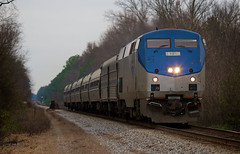
The Northbound AmtrakImage by Rob Shenk via Flickr

This Week at Amtrak; July 13, 2009


A weekly digest of events, opinions, and forecasts from


United Rail Passenger Alliance, Inc.

America’s foremost passenger rail policy institute


1526 University Boulevard, West, PMB 203 • Jacksonville, Florida 32217-2006 USA

Telephone 904-636-7739, Electronic Mail info@unitedrail.org • http://www.unitedrail.org


Volume 6, Number 22


Founded over three decades ago in 1976, URPA is a nationally known policy institute which focuses on solutions and plans for passenger rail systems in North America. Headquartered in Jacksonville, Florida, URPA has professional associates in Minnesota, California, Arizona, New Mexico, the District of Columbia, Texas, New York, and other cities. For more detailed information, along with a variety of position papers and other documents, visit the URPA web site at http://www.unitedrail.org.


URPA is not a membership organization, and does not accept funding from any outside sources.


1) It’s 10:30 A.M. on any morning of the year, and Amtrak train number 97, the southbound Silver Meteor, is racing southward through Northeast Florida on its way to the barn in Miami, due in the Hialeah/Miami suburb station more than eight hours later. Once the flagship train – complete with the trademark Pullman Sun Lounge – of Seaboard Air Line Railroad’s Silver Fleet, the Meteor is traveling over SAL’s once arch rival’s Atlantic Coast Line main line south of Jacksonville. Today, the Meteor is hosted by SAL/ACL successor CSX.


The Silver Meteor has a baggage car, sleeping cars, full diner, lounge, and coaches. It’s the coach passengers who have that look of quiet desperation, just waiting for their station stop to come so they can get off the train. Orlando, home of Walt Disney World and other Central Florida world-famous attractions is still two and a half hours away. Many of the train’s passengers will detrain at the Orlando station, with visions of Mickey Mouse dancing in their heads. A surprising number of passengers will also board in Orlando, headed south into Florida’s cattle and orange grove country, on the way to South Florida’s Gold Coast and the solid metropolitan area from north of West Palm Beach all the way to Miami and beyond.


The diner has been closed after breakfast for more than an hour, and the lounge car has its typical denizens, some working on their first – or second or third – morning eye-opener. Everywhere you look, passengers and crew look weary. The train and engine crew are fresh, having boarded in Jacksonville for the trip to Miami after a good night’s sleep. The onboard services crew is on the last eight hours of their shift which began several days before at the Miami crew base for their northbound trip to New York City, and the turn to come home on the southbound Silver Meteor. By union contract in these modern times, each of these employees which are designated as safety employees, are entitled to four hours of sleep the previous night. Some get more, some of the sleeping car attendants get less if they have entraining or detraining passengers along the route during their designated sleep periods.


You can look at the coach passengers and easily say to yourself, this group of people needs a bath. The passengers who boarded in New York City at Penn Station have been on the train for more than 19 consecutive hours, the Washington, D.C. passengers 15 hours, and the Richmond, Virginia passengers 13 hours. If the coach was full, these people were trying to sleep with 53 of their new best friends, some sitting next to total strangers, crying or restless children, or fidgeting smokers on a non-smoking train. No one got a good night’s sleep, and this morning, the coach itself looks like it’s been hosting people for the 1,000 miles its traveled. The floors are messy, the trash bins are getting full, and the restrooms could use some attention.


For coach passengers, there are no showers, and the tiny restroom offers some opportunity to clean up a bit, but only if you’re not a large person.


Are we there yet? is written on everyone’s face.


The Silver Meteor’s sleeping car passengers are faring somewhat better. They each had a bed with real linens and blankets and soft pillows for the night, and most passengers took advantage of the gentle rocking motion of the car, pretending they were back in an infant’s cradle. Each sleeping car has a community shower for the roomette passengers, those traveling in full bedrooms have their own individual shower. There is plenty of hot water for bathing and cleaning up, and fresh clothes come out of the suitcases. Upon awakening, coffee or orange juice along with a newspaper was available from the sleeping car attendant to help brace for the day before the full breakfast in the dining car which was included in the price of the sleeping accommodation.


Sleeping car passengers, too, look a bit road-weary, but they can comfortably nap in their private accommodation without worry of someone waking them up, other than for the call to luncheon.


Detraining coach passengers gather their belongings and step off the train relieved to be at their destination. Sleeping car passengers tip the car attendant and gather their bags on the platform and go in search of their local transportation, ready to face the day at their destination.


Does this sound like class warfare? Nah, it’s just the very real difference between traveling on Amtrak in coach or in a sleeping car.


Coach travel is fine for daylight travel if you really like being in a long, silver tub with dozens of other strangers and travelers, just like on an airplane or in a bus.


But, for overnight travel, it’s tough to beat the comforts and conveniences of sleeping cars.

The difference in fares is dramatic. New York City to Orlando on the Silver Meteor for two people in coach, one-way costs a total of $308.00. In a full bedroom, the same two travelers taking the same trip would pay $973.00. Both of these fares are based on summer season travel in August.


There is a huge difference of $665 for the same 21+ hour trip. For the extra cost dinner and breakfast is included, and lunch, too, if you eat quickly enough to finish before the train arrives in Orlando at the scheduled time of 12:55 P.M. You get two beds, a shower, toilet, sink, towels, and all of the other usual comforts of a rolling hotel room, including most importantly the ability to close the door, turn off the light, and go to sleep in a bed with pillows, fresh sheets, and blankets.


Too rich for your blood? Yes, it’s pricey, but Amtrak regularly fills the sleeping cars on the Silver Meteor and its sister train, the Silver Star. In fact, sleeping car business does well on all Amtrak long distance trains, with the full, more expensive bedrooms usually selling out before the smaller roomettes designed for one regular size person or two very small people.


Amtrak, always feeling like it must be proletariat, seldom has placed much emphasis on its sleeping car business, and has always focused on the much less desirable, and lower revenue generating coaches. When calling an Amtrak reservations center, often only coach seats are offered; passengers have to ask about sleeping cars.


VIA Rail Canada, Amtrak’s cold country cousin to the north, however, has always placed a high emphasis on its sleeping car business and offers a variety of sleeping car accommodations choices, ranging from the very old Pullman Company-style open berths to elegant drawing rooms, designed with two lower berths and one upper berth. On VIA, it’s the drawing rooms which sell out first.


Amtrak, as it’s ordering new single-level Viewliner sleeping cars and hopefully planning to order new Superliner sleeping cars, needs to revisit the wonders and many advantages of drawing rooms.


Looking at the demographics of Amtrak’s sleeping car passengers, much of the business comes from middle-aged and older traveling couples, people who want two lower berths in their sleeping accommodation, not one upper and one lower. To make this happen, wealthier passengers often pay for two full bedrooms which open en suite to offer a single space with two lower berths.


Amtrak doesn’t care if two people buy space designed for four people, because the cost to feed four people has been factored into the fare (Money Amtrak keeps without complaining when it only has to feed two people.), and the high revenue from selling two bedrooms instead of one looks pretty good.


Well, actually, it’s not so good, because if that same space had been sold to four passengers instead of two passengers, an additional $234 in rail fare (Amtrak charges sleeping car passengers the lowest bucket rail fares in addition to the accommodations charges for each passenger.) would have been collected. If a new design was hatched for sleeping cars which reshuffled priorities to maximize revenue and passenger satisfaction, each sleeping car would have at least four bedrooms, one drawing room, and perhaps seven or eight roomettes.


When the Viewliners were designed, three basic mistakes were made in this experimental car. First, no public restroom was included in the design. When the toilet facilities in any given room are non-functioning, and all accommodations are sold, passengers either have to impose on the facilities of the car attendant (not a good idea) or go to a restroom in another car. All in all, very inconvenient and unprofessional in the design. Second, instead of the former six full bedrooms which were found in the predecessor Heritage 10 roomette, six bedroom cars, only three full bedroom were included, one being a handicapped room. Third, no drawing rooms with three berths were included.


When the original 10/6 sleeping cars were designed during the World War II era, roomettes for one passenger were primarily designed for traveling businessmen. If a passenger was a midnight sailor and had to make use of the toilet, he had to get out of bed, open the door to the room, and back into the hallway inside of a closed curtain to raise the bed which folded down over the toilet, and then repeat the process to go back to bed. In the Viewliners, smaller beds are used and allegedly passengers can access the micro-size toilet which is not covered by the bed when the beds are in use. This, however, does require a certain knowledge of gymnastics to accomplish that feat.


In the process of all of this, Viewliners have fewer full bedrooms, and more roomettes, which contain two beds instead of one bed as found in the 10/6 roomettes. However, since the overall floor space remains about the same as the old roomettes, trying to squeeze two normal sized adults into this space leaves much to the imagination and to be desired, not to mention you have two people using non-private toilet facilities, which harkens back to some Pullman accommodations on western trains prior to World War II. In the Heritage fleet, as in the fleets of all of the pre-Amtrak passenger railroads, a number of all-bedroom cars were found, offering a choice of bedrooms, drawing rooms, and compartments, but no roomettes.


When Amtrak ordered the Viewliners, only 50 were purchased, replacing nearly double that number of Heritage sleepers, allegedly, again, because Viewliners held more passengers so fewer cars were needed. In reality, Amtrak made a conscious decision to restrict the number of sleepers in its fleet, and have less accommodations for sale overall, thereby restricting sleeping car revenues.


Prior to the arrival of the Viewliners in the mid-90s, it was common for the Florida long distance trains and the Crescent between New York and New Orleans to have five or more sleeping cars per train. Today, five cars have been replaced by two or three sleeping cars per train, with dramatically fewer bedrooms for sale, and fewer roomettes, too.


Let’s stop for a moment and do a quick comparison. Amtrak and its many True Believers, egalitarian to the core and non-believers that those who wish to pay for better accommodations should suffer along with the rest, for years made the claim the company makes more money from coach passengers than from sleeping car passengers. Oh, really? Well, no, it doesn’t.


Let us stick to our same trip model, from New York City’s Penn Station or Orlando, Florida. Just for comparison purposes, using fares quoted today for travel in about a month’s time in August, weigh the income from a full coach with 54 passengers to a full Viewliner sleeping car with all accommodations sold. The fully sold out coach brings in ticket revenue of $8,316. The fully sold out sleeping car brings in ticket and accommodations revenue of $10,433, more than $2,000 more in revenue.


And, yes, each of those sleeping car passengers will consume food in the dining car that’s included in the cost of the accommodation. However, it’s doubtful even the most ravenous group of sleeping car passengers, eating full dinners and breakfasts, will consume $2,000 worth of food.


And, yes, many of those coach passengers will also find their way into the dining car, adding extra revenues. Even if every coach passenger spent a total of $25 on dinner and breakfast in the dining car, they would only spend an additional $1,350, still not adding up to the additional revenue from the sleeping car.


Remember, those sleeping car passengers will have other opportunities (Although limited by Amtrak.) to spend money on the train in for form of alcohol sales in the dining car and alcohol and snacks sales in the lounge car. Plus, travelers in sleeping cars are also more likely to have a higher amount of disposable income to spend on the train in the diner and lounge than coach passengers.


Overall, if Amtrak took a page from the VIA Rail Canada book and understood the high value of sleeping and dining car business, it would be eager to operate more sleeping cars, instead of scoffing at sleepers as something that are somehow unpatriotic to operate because of egalitarian concerns.


2) The ideal train – whether long distance or short distance – has a variety of accommodations. Back in the days prior to Amtrak of the Pennsylvania Railroad’s Congressional Service (The Pennsy was the builder and original owner of what is today Amtrak’s Northeast Corridor.) between New York City’s Pennsylvania Railroad Station and Washington, D.C., passengers had a choice of coach seats, parlour car seating, or private accommodations in sleeping cars set up for day use. The Pennsylvania recognized not one size fits all for travel accommodations, and a good number of passengers were willing and able to pay additional fares for larger seats in less crowded cars, or completely private accommodations with private plumbing in each accommodation. This wasn’t class warfare, this was a recognition of the marketplace and the proper exploitation of the marketplace for (Gasp!) profit.


Congressional Service trains also had a combination of full dining cars, parlour bar lounges, coffee shop taverns, and grill cars. Depending on the size of the train, time of day operated, or level of service advertised, there were drinking and dining choices appropriate for the service.


Amtrak’s Metroliners had first class seating which was three across: one seat, an aisle, and then two larger than normal coach seats. The Metroliners, which were also originally designed by the Pennsylvania Railroad, intentionally recognized the different tastes of travelers, and how accommodations charges could be both profitable and fun.


There is little reason why today’s Amtrak long distance trains cannot have some innovation in coach seating with a few modifications to existing equipment to create a first class/parlour car service with accompanying accommodations charge.


The installation of showers in first class coaches would be a great improvement, and a shower service could either be included in the accommodation price or sold separately onboard by the car attendant when providing towels and bathing articles.


Changing seating from four across to three across is another simple innovation for part of the cars; adding special areas for family travel where five or six seats are clustered together for large groups or families is also an inviting concept.


Adding a self-service food service area, offering 24-hour coffee, cold drinks, and light snacks and perhaps newspapers enhances the experience without dramatically taking away from lounge car sales. Including dining car meals in the price of a first class coach seat adds instant, guaranteed revenue for the dining car and an excellent perk for passengers.


Working on the same principle as for sleeping cars which produce higher revenue for every car carried, first class coach, with fewer coach seats per car, but higher fares for additional parlour car/first class coach seating would serve two excellent purposes: First, those not wishing to spend the costs of full sleeping car accommodations would have a good second choice for travel comfort, and second, fewer passengers in an upscale environment make for a much more pleasant trip overall then being jammed in a long distance coach with 53 of your closest, new best friends.


Coach class could remain for those taking shorter trips or those seeking truly budget accommodations.


3) The idea is to create a broader market for passenger train travel, higher revenues for Amtrak, and a better travel environment.


No one will dispute the annoyance and discomfort of air travel. What was once glamorous has become more than annoying and almost punitive. Today’s air travel is today’s agony. It’s not uncommon for someone to wonder if flying is really “worth it” for all of the hassles one has to go through, from the removal of shoes before you can be allowed to board the aircraft to a total restriction of what you can carry with you on the airplane. Speed does not always trump every other consideration.


Amtrak has a golden opportunity to become the carrier of comfort and convenience, and the carrier of value.


As said before in this space, Europeans are often shocked at the low cost of Amtrak coach travel; if Amtrak chooses to upgrade its service and accommodations offerings, based on how well sleeping car accommodations are sold today, Amtrak has a grand opportunity to become a carrier of first choice instead of a carrier of last choice – or even worse, the forgotten carrier. Amtrak remains America’s best kept secret. Imagine the demand if even a third of Americans knew passenger rail service was available to them.


4) >From Amtrak This Week, that OTHER publication, not to be confused with This Week at Amtrak. Amtrak This Week is the company’s employee news and information publication.


[Begin quote]


July 13, 2009


First Stimulus-Funded Car Returning to Service


Today, President and CEO Joe Boardman, U.S. Senator Tom Carper (D-Del.) and other elected officials were in Wilmington, Del., as the first car refurbished with funds from the American Recovery and Reinvestment Act departs Bear Car Shops on its way back to the active fleet.


“The real story today is about people – the Amtrak passengers who will ride in these rehabilitated cars and the workers who are doing a great job bringing them back to life,” said Boardman, noting that the additional seating capacity on its trains will help connect families, further business relationships, and position Amtrak for expected future growth in ridership.


The car, Amfleet II Coach 25103, was built in 1982 but has been out of service since April 2005, when it was damaged in a rail yard accident in Florida. It is the first of 60 Amfleet cars that will be returned to service by early 2011. The Amfleet I and II cars in the project are either being converted, rehabilitated from wreck status or undergoing a Level 3 overhaul. The cost per unit ranges from $615,000 to $1.4 million depending on the level of work being done.


Two additional ARRA-funded projects will put 15 diesel locomotives and 21 long-distance cars back in the fleet over the same time period. The combined cost of the three projects is $91 million.


“An expanded fleet is a critical part of our ability to grow,” said Vice President of Policy and Development Stephen Gardner. “We need these cars as we pursue new service in partnership with states and also to increase capacity along existing routes where demand exceeds what we can currently offer.”


To meet the labor needs of refurbishing and overhauling nearly 100 cars in under two years, the Mechanical department has expanded its force by adding 160 new positions between facilities in Wilmington and Beech Grove, Ind. Competition was extremely high, as the company received 3,200 applications and conducted more than 400interviews to fill the 160 positions.


[End quote]


If you are reading someone else’s copy of This Week at Amtrak, you can receive your own free copy each edition by sending your e-mail address to


freetwa@unitedrail.org


You MUST include your name, preferred e-mail address, and city and state where you live. If you have filters or firewalls placed on your Internet connection, set your e-mail to receive incoming mail from twa@unitedrail.org; we are unable to go through any approvals processes for individuals. This mailing list is kept strictly confidential and is not shared or used for any purposes other than distribution of This Week at Amtrak or related URPA materials.


All other correspondence, including requests to unsubscribe should be addressed to


brucerichardson@unitedrail.org


Copies of This Week at Amtrak are archived on URPA’s web site, www.unitedrail.org and also on www.todaywithjb.blogspot.com where other rail-related writings of Bruce Richardson may also be found.


URPA leadership members are available for speaking engagements.


J. Bruce Richardson

President

United Rail Passenger Alliance, Inc.

1526 University Boulevard, West, PMB 203

Jacksonville, Florida 32217-2006 USA

Telephone 904-636-7739

brucerichardson@unitedrail.org

http://www.unitedrail.org

Reblog this post [with Zemanta]

Friday, June 26, 2009

This Week in Amtrak

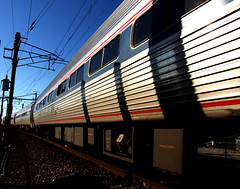
Amtrak StreamlinedImage by Professor Bop via Flickr

This Week at Amtrak; June 25, 2009


A weekly digest of events, opinions, and forecasts from


United Rail Passenger Alliance, Inc.

America’s foremost passenger rail policy institute


1526 University Boulevard, West, PMB 203 • Jacksonville, Florida 32217-2006 USA

Telephone 904-636-7739, Electronic Mail info@unitedrail.org • http://www.unitedrail.org


Volume 6, Number 18


Founded over three decades ago in 1976, URPA is a nationally known policy institute which focuses on solutions and plans for passenger rail systems in North America. Headquartered in Jacksonville, Florida, URPA has professional associates in Minnesota, California, Arizona, New Mexico, the District of Columbia, Texas, New York, and other cities. For more detailed information, along with a variety of position papers and other documents, visit the URPA web site at http://www.unitedrail.org.


URPA is not a membership organization, and does not accept funding from any outside sources.


1) Here at home in an adjoining county to the south is St. Augustine, which bills itself as the Ancient City. St. Augustine, Florida has been around as a point of civilization since 1565, and was pretty much a sleepy, colonial town, even after Florida statehood in 1845. It wasn’t until the notorious Henry Flagler, business partner of John D. Rockefeller (Some historians say Flagler was the smarter of the two ruthless business partners.) came vacationing in Northeast Florida in the 1878 that he noticed sleepy St. Augustine.


Mr. Flagler came to Jacksonville for the temperate climate. (A century ago, oranges were still a cash crop in Northeast Florida.) He crossed the might St. Johns River (The only major river in North America which flows north.) and traveled by passenger train to St. Augustine in 1883. There, he found a slumbering city of Spanish descent which afforded cooling ocean breezes, a pleasant bayfront view, and a rural county seat.


Mr. Flagler took a liking to St. Augustine, and starting building hotels and the Florida East Coast Railway. His first hotel, the Ponce de Leon – begun in 1885 and which today is the home of Flagler College – became an overnight success as a playground for the Gilded Age rich and famous. More hotels followed, with Mr. Flagler becoming St. Augustine’s most prominent part-time denizen.


Not content to stop at St. Augustine, Mr. Flagler pushed his new railroad and string of hotels and resorts southward, creating such famous Florida hot spots as Ormond Beach/Daytona Beach, Cocoa Beach, Melbourne, Stuart, Palm Beach (Where Mr. Flagler eventually built his permanent home and today’s world famous The Breakers hotel and resort, the only remaining asset of the original Flagler System.), Ft. Lauderdale, and, in partnership with Julia Tuttle and her family, Miami and Miami Beach. Mr. Flagler’s railroad entrepreneurship didn’t end in Miami; he gazed further southward and saw Key West, the southernmost point of the United States, and promptly in 1905 began building the Florida Overseas Railroad, one island at a time from South Florida to Key West, completing the huge project in 1912.


Depending on your favorite Florida historian, there is debate as to whether or not Henry Flagler or Henry B. Plant, who owned a freight shipping company and small railroads, and in 1879 combined his holdings into the Plant System (Later, the Atlantic Coast Line Railroad.), building to the west coast of Florida via Orlando, invented modern Florida by the strength of their iron horses.


Of course, it was the common use of residential air conditioning in the late 1950s which created the most modern version of Florida, and allowed inland cities and towns away from cooling ocean and Gulf of Mexico breezes to grow and prosper. The coming of the Space Age at Cape Canaveral on the Florida East Coast Railway really put Florida on the international map.


But, no matter who your preferred railroad robber baron was prior to the Florida Land Boom of the 1920s, it was the railroad which created Florida, and especially St. Augustine.


St. Augustine was the home of a violent and deadly railroad strike in 1963; FEC non-operating employees went out on strike over several issues. The FEC continued to run trains with management personnel, but the strike turned violent with numerous bombings of bridges and trains, resulting in deaths, permanent injuries, and general mayhem.


By the time of the strike, Florida was served by the Seaboard Air Line Railroad, the Atlantic Coast Line, the FEC, and, into the northeast corner of Florida, the Southern Railway.


While the Seaboard’s Silver Meteor, Silver Star, Palmland, Sunland, and a host of local trains traveled down the middle of the state on SAL’s mainline through Ocala, the Coast Line trains, the East Coast Champion, the Everglades, and the trains it operated in conjunction with the FEC, such as the famed Winter-only Florida Special, the Havana Special, and the trains from the Midwest, including the Royal Palm, Dixieland, South Wind, Seminole, and City of Miami all stormed through St. Augustine on their way to and from Miami.


The 1963 strike ended all of that. The FEC’s named trains simply disappeared, annulled because of the strike and the continuing violence and threats of violence. The trains handled by the Coast Line moved inland westward, from the FEC to soon-to-be merger partner’s SAL lines down the middle of the state.


By court order, train service briefly returned to the FEC from 1965 to 1968, with a lone locomotive and two trailing cars – offering coach seating and parlor car seating, but no food service – running up and down from North Miami to Jacksonville’s union terminal. (The main FEC station in downtown Miami had been torn down by 1965 as part of urban renewal in downtown Miami.)


Even FEC retirees who chose to come to Jacksonville from Miami when traveling by train, went via the Seaboard or Coast Line because it was safer, had more frequency offerings, and full train service.


In the late 1990s, in the George Warrington era of Amtrak, there was a brief flurry of activity in St. Augustine because discussions and negotiations were underway to return passenger train service to the FEC, courtesy of Amtrak and a ton of money (Now allocated elsewhere.) from the State of Florida.


Plans were laid, station sites were identified (The FEC, like so many other railroads which exited the passenger business had executives at the time who wanted to make sure those pesky passengers stayed away, so all but one or two FEC passengers stations were either demolished, sold, or had their tracks ripped up.), and cities and towns along the east coast competed to see whether or not they could snag one of the limited number of station stops planned for the new service.


St. Augustine, once the railroad king of Florida and still the corporate home of the FEC until 2008, decided to build a new station on the FEC main line directly across the street from St. Augustine’s general aviation airport, claiming it was creating an “intermodal” center of transportation. No one ever quite explained what the attraction would be for private pilots to fly into the St. Augustine airport, tie their planes down, and then board a passenger train, but that was the plan.


All of those plans came to a screeching halt when Mr. Warrington’s Acela bubble burst, and the Northeast Corridor Service which was supposed to save the entire company ended up having the company coming close to being liquidated.


Now, in the third century of trains through St. Augustine, once again there is talk of passenger trains calling at St. Augustine. Several local government groups along the FEC are petitioning popular Florida Governor Charlie Crist to apply for free federal monies to pay for restoring service between Jacksonville and Miami via St. Augustine, Daytona Beach, Cocoa Beach, Melbourne, Fort Pierce, Jupiter, and into West Palm Beach where a new connection would be built for the trains to join the former SAL main line (Now Tri-Rail commuter line and present Amtrak line.) to take the train into Amtrak’s Miami/Hialeah southern terminal.


The scary part of this is the news media is reporting these funds are being asked for to use for high speed rail, not conventional rail. While the FEC is a very good piece of railroad with excellent infrastructure, no one would ever confuse it with high speed rail. Some of the logic goes the incremental approach should be taken, first restoring service, and then eventually upgrading the service to high speed over a specified period of time.


What is interesting about this is the current ownership of the FEC, RailAmerica, Inc., which in turn is owned by Fortress Investment Group. RailAmerica, in addition to owning the FEC, owns nearly four dozen other short line and regional railroads in the U.S. and Canada.


RailAmerica is a solid company, with good financial performance. Fortress Investment Group is a giant fund which controls many companies, all on a private basis. This means there are no individual stockholders or Wall Street money managers demanding RailAmerica do this or that to shore up stock prices, and no public reporting of financial results. In other words, the managers are free to carry out any prudent business decisions they see fit (Within the framework of the law and overall regulations.), including striking a deal with Amtrak to run trains on their property.


If it makes money and doesn’t interfere with RailAmerica’s other mission of supplying outstanding freight service, then there is an interest.


If the State of Florida does strike a deal for stimulus money for this route, there isn’t much standing in the way of restored passenger service between Jacksonville and Miami via the FEC, with the exception of creating a new equipment pool.


Initial plans were to move the Silver Meteor from Orlando to the FEC, which is a very, very bad idea. Why would anyone want to take service away from one of the world’s busiest vacation destinations in Central Florida to serve the towns of Florida’s east coast?


A better solution is to find additional equipment, or, perhaps split a train in Jacksonville (Which Amtrak did from its very beginning until the horror of the common consist in the 1990s, and the closing of the Tampa crew and maintenance bases.), with half of the train traveling via Orlando and half of the train traveling via St. Augustine. Other options are to extend other trains from the Midwest or Northeast south to Miami via the FEC, such as the Capitol Limited or City of New Orleans via Mobile, Alabama. Extending an existing Superliner train would require less equipment than starting a complete new route.


As usual, it’s all going to come down to politics. Which state (Other than Illinois.) has the most juice in Washington? Which state has the best planning? Which state can move the quickest?


St. Augustine may or may not have train service again, 125 years after Henry Flagler became serious about hauling passengers into Florida to fill up his elegant hotels and resorts. If it does, yet another of the dozens and dozens of gaps in America’s passenger rail system will be rightly filled.


2) Inquiring minds want to know: With all of the money being thrown around Washington, and every city, town, village, hamlet, and their dog making plans to snap up as much money as possible to expand everything from local trolley systems (A good idea.) to major commuter rail systems to sprucing up stations, where are Amtrak’s plans for the future? What about fleet expansion, Rail Passenger Association of California President Paul Dyson wants to know? The single-level sleeping car order for the east coast trains doesn’t do anything to expand capacity; it just keeps enough new equipment floating into a maintenance-weary fleet to delay total breakdown.


What about new routes? We know three restart routes are being studied (The Sunset Limited east of New Orleans, the Pioneer, and the North Coast Limited/Hiawatha.), but, what about bold, new plans to fill in so many of the other gaps in the country outside of the Northeast Corridor?


And, the easiest thing of all, what about all of the other dozens and dozens of pieces of equipment sitting around in the weeds on wreck line tracks, waiting to be re-loved and repaired? When will Amtrak ask for money to fix this stuff, too?


A dose of reality for True Believers is Amtrak is lagging behind everyone else in vision, if not outright bold management. Yes, Amtrak Interim President and CEO Joseph Boardman seems to be nudging things in the right direction – only marginally and slightly so – but, when is he or the Board of Directors going to give things a major shove in the right direction?


Wise gray head Gil Carmichael has called for at least 150 new trainsets to ready Amtrak for his brilliant Interstate II strategy. While to some that may seem a big number, it’s only a starting point.


Remember, Amtrak today has considerably less than 2,000 cars on its total roster, including active cars and cars sitting in the weeds on the wreck line. In the mid 1960s, just before the invention of Amtrak, there were over 5,000 passenger cars in the combined national fleet of America’s passenger carriers, and that was a depleted number from the halcyon post-World War II days of rebuilding the worn out war time fleet of cars.


Now is not the time for timidity and reliance on the graciousness of others for survival. Now is the time for bold plans, bold action, and an understanding of how easy it is to bring America’s passenger rail system from an asterisk on the charts of transportation output to a real figure representing growth and prosperity.


3) While we’re on the subject of history, News From 1930 blog on the Internet came up with this fascinating gem, reporting what was written in The Wall Street Journal from June 16th through the 21st in 1930:


[Begin quote]


Pullman Company [Operator of the nation’s sleeping car business over the majority of passenger railroads.] purchases in the last year: 1,165,000 towels, 444,000 pillow slips, 387,000 sheets, 63,000 porter’s jackets, 5,786,000 paper bags for women’s hats. Launders 278 million items annually.


[End quote]


That’s a lot of items, especially for the first year of the Great Depression. At one point early in the 20th Century, it was said the Pullman Company made up more beds every night than the largest hotel chain in the country.


4) Now, what? Amtrak’s highly respected Inspector General, Fred E. Weiderhold, Jr. suddenly retired from Amtrak after 35 years, including being the watchdog who kept the contractors honest when the NEC was electrified north of New Haven, Connecticut.


This happened practically overnight, and was unexpected by most. The Boston Globe wondered in its news columns what brought on this sudden urge to retire, but no one is talking. It should be noted in the same several day period Mr. Weiderhold retired, at least three other government IGs were forced out of their jobs by the Obama Administration without reasonable explanation.


[Begin quote]


National Railroad Passenger Corporation

60 Massachusetts Avenue NE

Washington, DC 20002

www.amtrak.com


FOR IMMEDIATE RELEASE


ATK-09-047


Contact: Media Relations (202) 906-3860

June 18, 2009


Amtrak Inspector General to Retire


Fred E. Weiderhold, Jr. Served Amtrak for 35 Years


WASHINGTON – Amtrak Inspector General Fred E. Weiderhold, Jr. today informed the Chairman of the Amtrak Board of Directors that he is retiring after 35 years of loyal service to the railroad.


"As Amtrak's first and only Inspector General, Fred has made important contributions in helping the Board of Directors understand key issues facing the railroad and made useful recommendations to improve how we do business," Amtrak Chairman Thomas Carper stated. "We thank him for his dedicated service to Amtrak and wish him well in his retirement."


Carper added that under the federal Inspector General Act, the Amtrak Inspector General is appointed by the Chairman of the Board of Directors. Carper said he takes this responsibility seriously and will soon undertake a search for a replacement that can continue to maintain the integrity, independence and objectivity required of the position.


In addition, Carper said that he has confidence in the Inspector General staff and expects them to carry on their important work during this interim period, including providing effective oversight of how Amtrak is handling the stimulus funds it received from the American Recovery and Reinvestment Act.


Mr. Weiderhold has been the only person to serve as the Amtrak Inspector General since former Amtrak Chairman W. Graham Claytor, Jr, asked him to establish the Amtrak Office of Inspector General (OIG) in 1989. Previously, he was Amtrak's first Special Assistant to the Chairman for Employee Relations, conducting special investigations and acting as the company's first employee ombudsman. He has been one of the longer serving Inspectors General within the OIG community.


About Amtrak


Amtrak has posted six consecutive years of growth in ridership and revenue, carrying more than 28.7 million passengers in the last fiscal year. Amtrak provides intercity passenger rail service to more than 500 destinations in 46 states on a 21,000-mile route system. For schedules, fares and information, passengers may call 800-USA-RAIL or visit Amtrak.com.


[End quote]


5) The Holland, Michigan Sentinel on Monday, June 22, 2009 reported ridership on Amtrak’s Pere Marquette is down 12.7% this May compared to a year ago, and a state senate committee which funds the service is looking to slash funding for the train.


Only 8,500 people boarded the route in May of 2009, or an average of 137 passengers per departure. All of the usual reasons were given for low ridership, including low gas prices and the slowed economy.


Here’s the problem no one seems to want to understand: As long as government funding as the primary source of revenue for these short, perpetually money-losing routes is necessary, politicians are going to always be looking for ways to cut budgets, and low return on investment programs are usually the first to go.


Too much of Amtrak relies on this very type of funding. There are unceasing stories from New England about those states wanting to cut funding for local trains (This, of course, does not include Amtrak Interim President and CEO Joseph Boardman’s home State of New York where he previously served as head of the state department of transportation. New York only funds one Amtrak train, the Adirondack, even though the entire Empire Service trains, with only an average load factor of 35%, gets a free ride with an all-federal subsidy.). Oklahoma pays big bucks for the tiny Heartland Flyer with even worse transportation output performance.

What will it take to make Amtrak and its True Believers understand a healthy and robust long distance system throws off enough excess cash (profits) these short distance trains can be mostly internally subsidized? Why perpetually fight these annual political battles when the simple answer is vision and expansion, even if it’s just making the existing skeletal long distance system train consists longer?


Why is this such a difficult concept to understand? Why do so many ill-informed people think it’s perpetually okay to support failure when success is within easy grasp?


6) Here’s some heartburn for those who believe the passenger business can never be profitable: Carnival plc, which owns Carnival Cruise Lines, Princess Cruises, Holland America Line, Cunard Line, and The Yachts of Seabourn in North America; Costa Cruises in Europe; P&O Cruises, Cunard Line, and Ocean Village in the Untied Kingdom; AIDA Cruises in Germany; Ibero Cruises in Spain and Brazil; and P&O Cruises Australia in Australia and New Zealand, operates 88 cruise ships with a passenger capacity of approximately 169,040 souls. Carnival also marketed and operated 16 hotels or lodges with approximately 3,500 guest rooms; approximately 560 motor coaches used for sightseeing and charters, 24 domes rail cars, which run on the Alaska Railroad between Anchorage and Fairbanks, Whittier and Denali, and Whittier and Talkeetna; 2 luxury dayboats; and sightseeing packages.


Carnival plc, headquartered in London, when tracing its heritage back through P&O Princess Cruises, was founded in 1850. Television fans may remember the real Princess Cruises happily loaned its ship, the real Pacific Princess, to Aaron Spelling and ABC to create the wildly popular television hit, The Love Boat, which spurred the modern cruise line renaissance.


All of this, by the way, is somehow accomplished without any government subsidies and is effected through private capital and entrepreneurship.


7) William Lindley of Scottsdale, Arizona has some thoughts on state passenger rail organizations. Mr. Lindley, a longtime professional associate of URPA, is a past president and treasurer of the Arizona Rail Passenger Association, and currently serves as a writer and editor for the group’s newsletter.


[Begin quote]


What does a rail passenger association really need to do? A recent report illustrates how what looks like failure to uphold principles may have helped doom a major city's plans for modern passenger train service.


In Atlanta, Georgia, a proposed green space called the "Decatur Beltline" would remove track connections which permitted trains to connect in all directions from Atlanta's downtown yards and stations. According to the National Association of Railroad Passengers Newsletter of May 2009, this "pitted local environmentalists against passenger train advocates (Georgia ARP remained officially neutral to minimize bad blood among erstwhile allies.)"


Say, what? Since when would a responsible passenger advocacy group roll over and play dead when the future of any kind of sensible passenger train operations is threatened? When I saw that I had to do some digging.


According to a November 30, 2005 Associated Press report, Ed McMahon of the Urban Land Institute called for using Atlanta's "unused" railway tracks for a linked system of parks, paths and transit. Now, while this is certainly an admirable goal, according to AP, "A panel of transportation experts raised concerns when it found isolated parts of the loop would not have riders to support trains, trolleys or whatever transit options are proposed." In other words, here we go again with removing a vital railway link – which can't be relocated – in favor of some green space which can be placed anywhere.


This conflicts with the goals of a long-proposed and eagerly anticipated downtown intermodal terminal at approximately the site of the original Atlanta Union Station, and with an immediate connection to mass transit MARTA's hub, the Five Points subway station, from which trains radiate north, south, east, and west.


Atlanta's other former main station, Terminal Station, on the Southern Railway, had south-facing stub-end platforms and was on Southern’s mainline just west of Union Station. Although the Richard B. Russell Federal Building replaced Terminal Station in the 1970s, a single through-track connection to the Union Station area still exists ... but neither Terminal Station nor the current Peachtree station used by Amtrak can reasonably be expanded for the demands of an expanded modern passenger operation.


The Five Points site is within walking distance to Georgia State University buildings, the popular Underground Atlanta shopping and nightlife district, and the downtown sports arenas. Furthermore, there is potential at a downtown terminal for a building with visual and interpretive ties to Atlanta's historic train stations and its growth as the key city to the "New South" – building on the idea of the station as gateway to the city.


The City of Atlanta, according to an Atlanta Journal-Constitution newspaper article of March 5, 2009, said that the State Department of Transportation's "vision of high-speed rail would discourage future residential development." Amazingly, the city seems thereby to value a few new apartments over connecting the entire metro area with its downtown transit center.


With the Georgia DOT's March 2009 removal of its objection to the park project, trains will only be able to reach downtown via the west side connection. Amtrak's Crescent and commuter trains from the north and east would have a two-mile backup move to reach a new downtown station.


Now, without the eastern loop connection, Amtrak would likely have to stop at a new station with a MARTA connection – a new stop miles further northeast from downtown than even the existing Peachtree Station. This would mean requiring longer trips for most users, and a

change of subway trains for many. This site, like Peachtree, has little potential for filling the perceptual role of a Gateway.

So, now, let's return to that quote again:


"... pitted local environmentalists against passenger train advocates (Georgia ARP remained officially neutral to minimize bad blood among erstwhile allies.)" – NARP Newsletter, May 2009.


I wasn't privy to the discussions but this certainly sounds like a failure to uphold the principles which should govern a passenger rail association. Rail passenger associations are neither historic preservation groups (the National Railway Historical Society fulfills that goal) nor are they railfan groups. Our associations are not yes-men to Amtrak, the railroads, local transit operators, real estate interests, sports teams, or environmental groups.


Indeed, the whole point of such a rail passenger association, as a non-profit institution, is a fiduciary (meaning: a relationship of confidence and trust) and a moral obligation to guide the progress toward modern and expanded passenger rail service. This is a charitable goal because passenger trains improve our quality of life, offer transportation options to everyone, improve our economy, and improve our environment ... everyone wins with better public transit.


So was Georgia ARP's failure to object to the removal of a vital transportation link a breach of trust for the objective of advocacy? Again, I wasn't there so I can't say, but if NARP's account is correct, placing "not upsetting so-called environmentalists" above "fulfilling the confidence placed in your organization to preserve and enhance passenger train service" seems

highly suspect.


Because detailed coverage has proven difficult to find in newspapers or on-line, I dearly hope one of our Gentle Readers more familiar with the subject can soothe my fears.


[End quote]


8) Six months from today is Christmas Day!


If you are reading someone else’s copy of This Week at Amtrak, you can receive your own free copy each edition by sending your e-mail address to


freetwa@unitedrail.org


You MUST include your name, preferred e-mail address, and city and state where you live. If you have filters or firewalls placed on your Internet connection, set your e-mail to receive incoming mail from twa@unitedrail.org; we are unable to go through any approvals processes for individuals. This mailing list is kept strictly confidential and is not shared or used for any purposes other than distribution of This Week at Amtrak or related URPA materials.


All other correspondence, including requests to unsubscribe should be addressed to

brucerichardson@unitedrail.org


Copies of This Week at Amtrak are archived on URPA’s web site, www.unitedrail.org and also on www.todaywithjb.blogspot.com where other rail-related writings of Bruce Richardson may also be found.


URPA leadership members are available for speaking engagements.


J. Bruce Richardson

President

United Rail Passenger Alliance, Inc.

1526 University Boulevard, West, PMB 203

Jacksonville, Florida 32217-2006 USA

Telephone 904-636-7739

brucerichardson@unitedrail.org

http://www.unitedrail.org

Reblog this post [with Zemanta]

Thursday, September 25, 2008

This Week in Amtrak

Amtrak train in downtown Orlando, Florida.Image via Wikipedia

This Week at Amtrak; September 25, 2008

A weekly digest of events, opinions, and forecasts from

United Rail Passenger Alliance, Inc.

America’s foremost passenger rail policy institute

1526 University Boulevard, West, PMB 203 • Jacksonville, Florida 32217-2006 USA

Telephone 904-636-7739, Electronic Mail info@unitedrail.orghttp://www.unitedrail.org

Volume 5, Number 27

Founded over three decades ago in 1976, URPA is a nationally known policy institute that focuses on solutions and plans for passenger rail systems in North America. Headquartered in Jacksonville, Florida, URPA has professional associates in Minnesota, California, Arizona, New Mexico, the District of Columbia, Texas, and New York. For more detailed information, along with a variety of position papers and other documents, visit the URPA web site at http://www.unitedrail.org.

URPA is not a membership organization, and does not accept funding from any outside sources.

1) ONBOARD AMTRAK TRAIN NUMBER 97, THE SILVER METEOR, Southbound, between Jacksonville and Fort Lauderdale, Florida, Thursday, September 25, 2008 – The Silver Meteor is running about a half hour late south of Orlando, but that’s okay. Just before noon, we came to a sudden stop somewhere 20 minutes past the middle of nowhere in the fern growing area of Volusia County (west of Daytona Beach for those unfamiliar with Florida geography). Our locomotive engineer had spotted a stalled truck at a roadway grade crossing, and was able to bring the Meteor to a stop before slamming into the truck. After waiting 25 minutes for a tow truck to arrive and clear the tracks, we were on our way without harm or injury to anyone. It’s a good day for the train and engine crew; an often unavoidable accident scenario failed to materialize.

Load factor leaving Jacksonville in the three sleeping cars, dining car, lounge car and three of the four coaches which are occupied is hovering around 50%; not bad for an early fall trip after school is back in session.

Downline business is brisk for the Florida part of this journey. More passengers board in Jacksonville than detrain, and every station stop brings new passengers boarding, including sleeping car passengers.

This onboard services crew of three sleeping car attendants, one dining car chef, one dining car lead service attendant and one dining car waiter, plus two lounge car attendants and one coach attendant (for four coaches) is on the last nine hours of its weekly run between the Miami crew base and New York City, and return.

2) The crew, like the passenger cars, are beginning to show some weariness. Everyone is friendly and has a smile on their face, but as we race closer and closer to Miami, the anxiousness to be home shows.

The coach attendant gave up on keeping the coaches anywhere neat and tidy. Some restrooms are nearly inhabitable, others are completely non-habitable.

Tony, the young man who is one of the lounge car attendants, has his necktie flying at half-mast, and it’s tough to determine if he’s fashionably sporting a two day growth of beard, or if he just didn’t bother to shave before coming on duty this morning. He’s chugging an energy drink to keep his obviously heavy eyelids open, and, when he’s seated at a table for the moment while no passengers are at his counter, he’s busying himself with games on his cell phone. The other gentleman lounge car attendant doesn’t bother to wear a necktie or uniform vest or name tag.

The sleeping car attendant in the first sleeper is napping. Jay, the attendant in this car, however, keeps his car in good order, and is frequently checking with his passengers to see how he may serve them.

Safety doesn’t seem to be much of an issue with many on this train and engine crew; car doors have been propped open (many don’t fully work), and there is a propped open door between the forward sleeping car and the baggage car, which has both of its doors open at each end, exposing the trailing locomotive without any foothold between the baggage car and the locomotive. An over-enthusiastic, enquiring rail fan could easily bring harm to themselves on this train.

One thing is certain. When Amtrak still had onboard service chiefs, silliness like this didn’t exist if the chief was on the ball. This is a crew with no supervision, and it shows.

This also brings up the question: since the demise of the Pullman Company less than five years before the advent of Amtrak, why has the crew quality declined so much? Why do all other areas of the travel and hospitality industry, from air lines to cruise lines to hotels demand and receive so much more from their employees than Amtrak ever has since it formed in 1971? Why is it okay for railroad onboard employees to have sloppy appearances, for ticket agents to often look unkempt? Doesn’t anyone understand the appearance of employees directly impacts performance and customer/passenger acceptance?

3) Breakfast was available in the dining car after leaving Jacksonville this morning, and, while the selection was slim, the food was served hot and had a good presentation, even if it was served using disposable plates and cups.

Lunch was a nice variety, ranging from burgers (turkey or beef) to meatballs over yellow rice to a chicken salad sandwich. As always, a vegetarian lunch was available, too. Dessert was a special treat, a chocolate and cherry torte, good enough to be found in any restaurant. Today’s beef cheeseburger, a warmed up pre-cooked concoction, could best be described as, well, close to unacceptable. Whatever cow gave it’s life for that cheeseburger, gave its life in vain.

4) The state of the passenger car rolling stock on this train which used to be the flagship train of the Seaboard Air Line Railroad (the Silver Meteor was the first streamlined train from New York to Florida, dating back to the 1930s), is less than stellar. Most of the problem stems from poor maintenance. It is a sad irony this equipment is principally maintained in Miami at the Hialeah shops. Before controlled by Amtrak, the Hialeah shops were rated as one of the two best in the country, the second being King Street in Seattle.

A comparison of this equipment to the real world would be that of an aging Holiday Inn about to lose its franchise because of a lack of maintenance. Rusty metal in the Viewliner sleeping cars, chipped paint, doors that don’t work ... you name it. The large surface areas are mostly clean, but the "details" usually found in the best housekeeping are missing. Anybody’s fussy mother would look at this level of lack of cleanliness and only snort in derision at so much dirt and filth left behind by the cleaning crews. These sleeping cars are only a dozen years old, but they’ve been run hard and never put away for any type of extensive maintenance. Fifty of these cars remain in active service, with a daily use requirement of 39 cars. Twenty-two percent, with a replacement value of over $1 million per car of this Viewliner sleeping car fleet is always out of service.

The exciting video and audio systems which equipped these cars when new are long gone. Door handles and locks have been replaced with hardware store fixtures. Window shades have been replaced with curtains because the shades no long go up and down. The seats, which convert into beds remain comfortable. The annoying chair in the full bedrooms which was welded in place and prevented the lavatory door from opening fully has been replaced by a clever folding chair which allows for extra seating while permitting the door to open fully.

The dining car, of Korean War era heritage and a survivor of Henry Christie’s "A" and "B" list for equipment to convert to head end power, has been recently refurbished, and is neat and clean, but has a lunch counter feel to it. The carpets are replaced by linoleum, and spray paint has been liberally applied to every surface, whether or not it was originally intended to be painted.

The three decades old lounge car and coaches have all recently been refurbished, too, but hard wear has taken a toll. Missing molding, carpet replaced by linoleum in the lounge, and various signs of hard use are everywhere.

This lounge car is one which has been converted for either lounge or lounge/dinette use. There is the usual assortment of lounge rats hanging out, plus some families and assorted passengers using computers, taking advantage of an electrical outlet at every table.

There are no longer any crew cars on single-level long distance trains, so revenue sleeping car space must be taken out of service to house crew members.

From a distance, the outside of the train looks good; up close, there are missing decals, cracked and peeling paint, and a general lack of upkeep.

5) Stations along the route in Florida which were originally built by the Seaboard Air Line Railroad and the Atlantic Coast Line Railroad have mostly seen better days. While the relatively new (built in the 1970s by Amtrak) station in Jacksonville has seen some much needed improvements, many of the other stations have that look of benign neglect, and hope for a better budget year next year.

6) By federal statute, Amtrak has the right of way over all freight trains, and on this day, CSX has given us the railroad. We’ve had one stop other than for the stalled truck in Volusia County, and the quality of the ride has been superb. Once bumpy track has been replaced with smooth-as-glass continuous welded rail, and we know why the this railroad used to be referred to as the Seaboard Air Line.

Rail fans and Amtrak apologists will protest this account; after all, the train arrived on time, departed on time, and arrived at my destination station on time. The trip was overall uneventful, and everyone smiled.

Anyone who understands the business of travel and hospitality is appalled. Whether or not Amtrak receives mountains of free federal monies every year, it is still a business, but it operates like a poorly-run government agency, with no accountability. If Amtrak is going to succeed, it needs to shed its ambivalence towards most things proper, and start behaving like it has constant adult supervision.

7) This is the long distance network of Alex Kummant’s Amtrak, the one so many people are now clamoring to bring new train service to their cities and states.

If you were considering one particular phrase to describe today’s Amtrak, you could probably do it with just one word – mediocre.

Sleeping car passengers are paying multiple hundreds – and sometime, thousands – of dollars to ride in equipment which would embarrass the sloppiest hotelier. Coach passengers are riding in tin cans with upholstered seats that don’t even measure up to the Spartan standards of some commuter railroads.

In his third year of stewardship of Amtrak, President and Chief Executive Officer Alex Kummant’s railroad is generating more buzz in the local and national news media than has been generated for decades. Americans are rediscovering an important part of our domestic transportation network – passenger trains. Congress is moving towards a long-awaited reauthorization of Amtrak, and state governments are plotting and planning expansion of state and regional rail routes.

At this moment, about all anyone can do is plan, because Amtrak through the years has squandered its resources, decimated its fleet of rolling stock, and stubbornly stuck to a bad business plan which has resulted in Amtrak remaining technically bankrupt since its founding in 1971.

8) Let’s repeat Andrew Selden’s assessment of Amtrak, as published in this space earlier this month.

(Begin quote)

Amtrak under CEO Alex Kummant is continuing its long slide into irrelevance. Amtrak’s market share (including in the NEC) dropped again. Kummant led the company to an increased annual loss in 2007. On $165 million increase in ticket revenues, and $110 million increase in total revenues, Kummant produced a $53 million increase in the net loss and a whopping $280 million increase in total loss on the year, of $1.l338 billion on total revenue of $2.15 billion. $180 million in increased labor costs from forced labor settlements were a major factor in the results, but expenses surged in every major category except casualty clams. The Annual Report, published months late (by SEC standards), called this "... a good year."

The Annual Report, almost devoid of critical and relevant metrics of segment performance such as load factor, return on investment, and output in passenger miles, is a depressing celebration of Amtrak’s squandering of hundreds of millions of dollars of free federal subsidies on its absolutely least productive and most grossly over-served markets. Amtrak’s total revenues were higher in 1998 than in 2007, although "passenger ticket" revenues did reach a new record last year. Its operating ratio, at 1.48, has not improved in ten years.

What has improved is federal support. Amtrak’s subsidies during the Bush administration have averaged about $1.2 billion a year, fully 40% more than during the Clinton years. (Discounted for inflation, the growth in subsidy has not been that great in "real" terms). But, judging from the financial results reported for 2007, that money has not been prudently or effectively invested. Management’s entire focus has been on its least productive services, the short distance regional corridors.

(End quote)

9) At this given moment, Amtrak has a passenger car fleet of 1,345 active cars for nationwide use. Daily requirements call for 1,072 cars, so there is a very small cushion for cars to be taken out of service for maintenance, or if some cars are lost due to wrecks.

There are another 200 or so identifiable cars beyond the active car roster, a few of which are being rebuilt and refurbished to be put back into service, and others which Amtrak claims it has no money to rehabilitate so they can again generate income and revenue to the company.

If Amtrak was serious today about any small or medium expansion of its network, it could only dream and run trains on paper. There are so few passenger cars left that any type of serious route expansion is in jeopardy.

10) The House of Representative this week passed reauthorization legislation for Amtrak which is coupled to a bill requiring the installation and implementation of positive train control systems for all railroads throughout the country (Positive train control is a system which automatically stops a train if it has run a red stop signal or is in the wrong place at the wrong time instead of where the dispatcher has placed the train.).

The reauthorization legislation, which has not yet passed the Senate, will authorize (but, not appropriate; that is a separate process) billions of dollars for Amtrak, including the upgrading of some currently derelict passenger cars.

What the reauthorization doesn’t do is require Amtrak to be a better run company, nor spend its resources where the most good is accomplished, such as in the national long distance network.

The specific uses for the money is mostly up to the Amtrak Board of Directors and Amtrak’s cadre of executives. That’s pretty scary, because most likely most of the money will be spent propping up expensive-to-operate, but low revenue short distance and regional trains.

11) Amtrak’s moment is now; the opportunity is at hand to take advantage is a growing interest in a full renewal of passenger rail travel coast to coast. The looming question is whether or not Amtrak’s management understands the gravity and opportunity of the moment, and will do something which will benefit both Amtrak and our nation.

If you are reading someone else’s copy of This Week at Amtrak, you can receive your own free copy each week by sending your e-mail address to

freetwa@unitedrail.org

You MUST include your name, preferred e-mail address, and city and state where you live. If you have filters or firewalls placed on your Internet connection, set your e-mail to receive incoming mail from twa@unitedrail.org; we are unable to go through any individual approvals processes for individuals. This mailing list is kept strictly confidential and is not shared or used for any purposes other than the distribution of This Week at Amtrak or related URPA materials.

All other correspondence, including requests to unsubscribe, should be addressed to

brucerichardson@unitedrail.org

URPA leadership members are available for speaking engagements.

J. Bruce Richardson

President

United Rail Passenger Alliance, Inc.

1526 University Boulevard, West, PMB 203

Jacksonville, Florida 32217-2006 USA

Telephone 904-636-7739

brucerichardson@unitedrail.org

http://www.unitedrail.org

Reblog this post [with Zemanta]